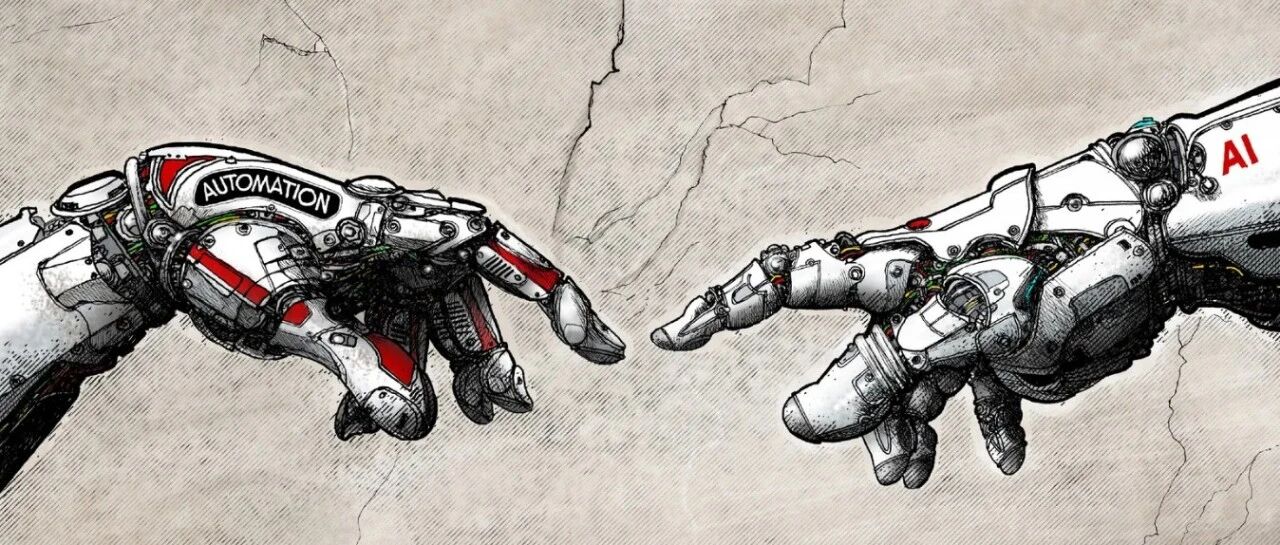
卢德谬误

Search documents
研客专栏 | 2028“AI末日论”的历史反驳
对冲研投· 2026-02-26 07:52
Core Viewpoint - The article argues against the pessimistic predictions of an AI-driven apocalypse in 2028, emphasizing the resilience and adaptability of human society in the face of technological change [2][3]. Group 1: Historical Perspectives on Technology and Society - John Maynard Keynes' 1930 work suggests that technological advancements could lead to a significant increase in living standards, with people working only 15 hours a week by 2030, similar to the AI apocalypse narrative [4]. - Keynes underestimated human desires, positing that as basic needs are met, new and more expensive desires will emerge, thus creating new jobs even as old ones are eliminated by AI [4][5]. - Bertrand Russell's "In Praise of Idleness" argues that technological progress should reduce necessary working hours, but in reality, it has led to job losses and overwork, contradicting the ideal of increased leisure time [6][7]. Group 2: Economic and Social Dynamics - The article highlights that the fear of job loss due to AI is often based on outdated notions of work, where losing a job equates to losing purchasing power rather than gaining leisure [7][8]. - The concept of leisure is framed as a "civilizational asset" rather than a "political liability," suggesting that technological advancements can free humans from mundane tasks, allowing for creativity and innovation [6][7]. - The article critiques the notion that AI will lead to a sudden collapse of the job market, arguing that societal structures are more resilient and capable of adapting to changes in productivity [8][9]. Group 3: The Role of AI in Future Employment - The "Solow Paradox" indicates that while technological advancements are significant, their impact on productivity and employment is gradual, countering the notion of an immediate AI-induced crisis [8][9]. - The article posits that AI's impact on employment will be less severe than macroeconomic factors and that businesses will adapt through various means, including fiscal expansion and changes in work hours [9][10]. - David Graeber's "Bullshit Jobs" suggests that many jobs created in modern capitalism lack real value, and AI could eliminate these roles without harming overall productivity, leading to a more efficient economy [10][11]. Group 4: Future Implications of AI - The emergence of AI presents an opportunity for a shift from a job-centered economy to a human-centered one, potentially leading to concepts like Universal Basic Income (UBI) [11]. - The article concludes that the predictions of an AI apocalypse are based on a fragile assumption that all jobs are essential, while in reality, many roles are unnecessary and could be replaced by AI without negative consequences [10][11]. - Ultimately, the article emphasizes that the true potential of AI will only be realized if it leads to a significant release of leisure time, comparable to the contributions of past industrial revolutions [11].


国金宏观:2028“AI末日论”的历史反驳
Xin Lang Cai Jing· 2026-02-26 02:37
Core Viewpoint - The 2028 AI apocalypse prediction is a thought experiment that underestimates human resilience and adaptability in the face of technological change [3][20][32] Group 1: Historical Perspectives on Technology and Society - John Maynard Keynes' 1930 work suggests that by 2030, living standards could increase by 4-8 times, with humans only needing to work 15 hours a week, paralleling the AI apocalypse narrative of mass unemployment [5][22] - Bertrand Russell's "In Praise of Idleness" argues that technological advancements should reduce necessary labor time, yet the reality has been increased work hours and job losses, highlighting a disconnect between theory and practice [8][26] - Robert Solow's "Solow Paradox" indicates that while technology progresses, its impact on productivity is gradual, suggesting that fears of rapid job loss due to AI may be overstated [12][28] Group 2: The Nature of Work and Value - David Graeber's "Bullshit Jobs" critiques the notion that all jobs are socially valuable, arguing that many roles exist merely to maintain stability, and AI could eliminate these without harming productivity [30][31] - The concept of leisure as a "civilizational asset" rather than a "political liability" suggests that technological progress can free humans from mundane tasks, allowing for greater creativity and innovation [8][26] - The fear of an AI-driven apocalypse stems from a lack of new value anchors, as AI challenges the traditional notion of work equating to worth, necessitating a shift towards a more human-centered approach [32][31]
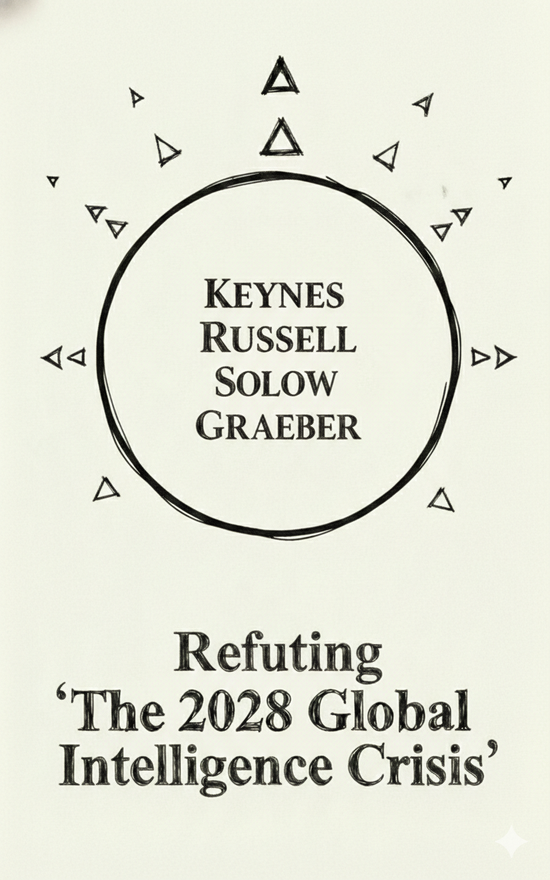
2028“AI末日论”的历史反驳
SINOLINK SECURITIES· 2026-02-26 02:27
1. Report Industry Investment Rating - Not provided in the document 2. Core View of the Report - Citrini Research's 2028 AI doomsday prophecy is a perfect brainstorm, but the real - world economy is a super - chaotic system. Prophets often underestimate human beings' self - adaptive ability. There is no reason to be overly pessimistic about the AI era [2][4][15] 3. Summary by Relevant Catalogs John Keynes - "Economic Possibilities for our Grandchildren": Endless Human Desires - Keynes in 1930 predicted that by 2030, living standards would increase 4 - 8 times and humans would work 15 hours a week, similar to Citrini's AI doomsday theory. However, this view underestimates the expansion of human desires. AI may eliminate old jobs, but human desires will create new ones [6] - The AI doomsday theory assumes that humans will stop striving and enjoy leisure passively, which does not conform to social development logic. "Freedom" and "fairness" are the core drivers and ultimate goals of economic development [7][8] Bertrand Russell - "In Praise of Idleness": Leisure as a "Civilization Asset" rather than a "Political Liability" - "In Praise of Idleness" is like the origin of the 2028 AI doomsday prophecy but with a milder tone. The real - world response to technological progress is different from Russell's assumption, and the AI doomsday theory over - worries about the loss of purchasing power due to job loss [9] - Leisure is a "civilization asset" that can be transformed into creativity. The political system will take measures to hedge against high unemployment, and the AI doomsday theory ignores this spontaneous adjustment [10] - Both "In Praise of Idleness" and the AI doomsday theory have flaws, and the resilience of the social structure is stronger than expected [11] Robert Solow - "The Solow Paradox": Inertia of Production Relations - The AI doomsday theory criticizes "The Solow Paradox" and warns that the "invisibility" of technology progress may bring huge impacts. However, historical experience shows that the transformation of technology into productivity is relatively slow, and the so - called "doomsday" will be offset by the "time - lag effect" [12] - The impact of AI on employment and production relations is less significant than macro - factors and the 2020 public health event. Enterprises are complex interest - game entities, and AI may face resistance. Even if production relations change, human participation will become a scarce asset [13] David Graeber - "On the Phenomenon of Bullshit Jobs: A Work Theory": Ending Meaningless Bullshit Jobs - "On the Phenomenon of Bullshit Jobs" directly refutes the AI doomsday theory. AI can be a trigger for efficiency regression by replacing meaningless jobs, rather than a catalyst for social collapse [14] - AI provides an opportunity for re - distribution, forcing society to shift from "job - centered" to "people - centered". The so - called "doomsday" is actually the end of "bullshit jobs" and a shattering of the collective perception of "everyone must be busy" [15]
2028“AI末日论”的历史反驳(国金宏观钟天)
雪涛宏观笔记· 2026-02-26 02:13
Core Viewpoint - The 2028 AI apocalypse prediction is a thought experiment that underestimates human resilience and adaptability in the face of technological change [3][6]. Group 1: Historical Perspectives - John Maynard Keynes' 1930 work suggests that technological advancements could lead to a significant increase in living standards, with people working only 15 hours a week by 2030, similar to the AI apocalypse narrative that predicts mass unemployment due to AI [7][8]. - Bertrand Russell's "In Praise of Idleness" argues that technological progress should reduce necessary labor time, yet the reality has been increased work hours and job losses, indicating a disconnect between technological potential and societal adaptation [10][11]. - Robert Solow's "Solow Paradox" highlights that while technology progresses, its impact on productivity is gradual, suggesting that fears of rapid unemployment due to AI may be overstated [13][14]. Group 2: The Role of AI in Society - David Graeber's "Bullshit Jobs" critiques the notion that all jobs are essential, positing that AI could eliminate meaningless positions, leading to a more efficient society rather than a collapse [16][17]. - The report emphasizes that AI's role should be viewed as a catalyst for efficiency rather than a threat to societal structure, challenging the assumption that job loss equates to loss of value [16][17]. Group 3: Economic Adaptation - The article argues that human society is a complex adaptive system, capable of adjusting to technological disruptions, and that the predicted "apocalypse" may not materialize due to this inherent resilience [6][18]. - It suggests that the transition to an AI-driven economy could lead to a re-evaluation of work and value, potentially paving the way for concepts like Universal Basic Income (UBI) as society shifts from job-centric to human-centric models [17].