卤味刺客

Search documents
让人上瘾的「高铁零食刺客」,抱不上春运的大腿
36氪· 2026-02-09 10:45
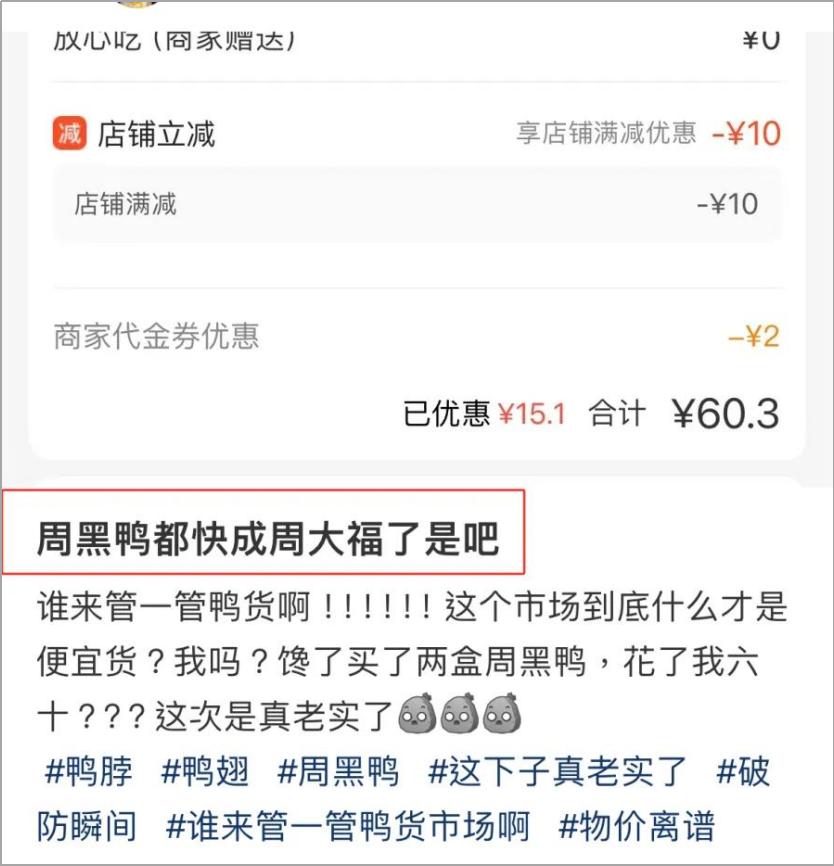
Core Viewpoint - The article discusses the decline of the three major duck brands in the Chinese snack market, highlighting their struggles with performance, store closures, and the challenges posed by changing consumer preferences and market saturation [4][11]. Group 1: Performance and Market Dynamics - The three major duck brands, Zhou Hei Ya, Jue Wei, and Huang Shang Huang, have seen significant declines in performance, with Jue Wei expected to report a loss of 160 to 220 million yuan in 2025, marking its first annual loss [9][10]. - The market capitalization of these brands has dropped from several hundred billion to only tens of billions [10]. - In the first half of 2025, over 5,300 stores were closed among the three brands, indicating a severe contraction in their retail presence [11]. Group 2: Brand Strategies and Market Positioning - Zhou Hei Ya aimed for a high-end positioning, maintaining a direct sales model and premium pricing, with average transaction values above 60 yuan from 2017 to 2020 [7][18]. - Huang Shang Huang, as the first listed company in the industry, reached a peak revenue of over 2.4 billion yuan in 2020 but has since struggled to maintain its growth trajectory [14][15]. - Jue Wei adopted an aggressive expansion strategy, reaching over 10,000 stores within 14 years, but has faced challenges in profitability and market perception [22][24]. Group 3: Consumer Behavior and Market Trends - The rapid growth of the duck snack market has slowed, with the market size expected to reach 157.3 billion yuan in 2024, reflecting a drastic decline in growth rate to 3.7% compared to over 15% in previous years [38]. - Consumers are increasingly price-sensitive, with the most common spending range for duck snacks being 20-30 yuan, while the major brands often price their products significantly higher [41]. - The emergence of local brands and new competitors offering lower-priced alternatives has intensified competition, leading to a shift in consumer preferences [49][52]. Group 4: Required Changes for Recovery - To regain market share, the brands need to embrace significant changes, including breaking away from negative perceptions of being overpriced and homogeneous [58]. - Innovations in product offerings and marketing strategies are essential, as seen with Zhou Hei Ya's introduction of a 9.9 yuan snack series and Jue Wei's new product lines [58][60]. - A focus on operational efficiency and cost management is crucial, as the brands must adapt to a more competitive and cost-sensitive market environment [64][66].


让人上瘾的“高铁零食刺客”,抱不上春运的大腿
3 6 Ke· 2026-02-05 10:40
Core Viewpoint - The "Duck Kings" in the marinated food industry, including Zhou Hei Ya, Jue Wei, and Huang Shang Huang, are facing significant challenges as consumer preferences shift, leading to declining sales and store closures. Group 1: Industry Performance - The marinated food industry is experiencing a slowdown, with the market size expected to reach 157.3 billion yuan in 2024, reflecting a drastic decline in growth rate to 3.7% compared to over 15% in previous years [17]. - Jue Wei is projected to incur its first annual loss, estimated between 160 million to 220 million yuan in 2025, marking a significant downturn for the company [1][2]. - The three major brands have closed over 5,300 stores in the first half of 2025, indicating a severe contraction in their retail presence [1][2]. Group 2: Company Strategies and Changes - Zhou Hei Ya has shifted its strategy by introducing lower-priced products, such as a 9.9 yuan "satisfying series," to attract younger consumers [29]. - Jue Wei has diversified its offerings by launching new product lines, including a series of snacks and a new cooking method called "first marinate then grill" [29]. - Huang Shang Huang has expanded its business model to include dining options, such as hot marinated dishes and rice, to reposition itself in the market [31]. Group 3: Consumer Behavior and Market Dynamics - Consumer preferences have shifted towards more affordable options, with the most common spending range for marinated food being 20-30 yuan, which contrasts sharply with the higher prices of the "Duck Kings" [19]. - New entrants in the market, such as local brands and snack giants, are capturing consumer interest by offering unique flavors and experiences, further challenging the established brands [25][23]. - The perception of the "Duck Kings" has deteriorated, with consumers viewing them as overpriced and lacking innovation, leading to a decline in brand loyalty [21][29]. Group 4: Future Outlook and Recommendations - To regain market share, the "Duck Kings" need to embrace significant changes, including refining their operations and breaking away from outdated consumer perceptions [28][35]. - Implementing a strategic reserve system for raw materials could help manage cost fluctuations, which is crucial for maintaining profitability [35]. - Focusing on closing underperforming stores and reallocating resources to high-potential locations will be essential for future growth [36].