鸭掌

Search documents
让人上瘾的「高铁零食刺客」,抱不上春运的大腿
3 6 Ke· 2026-02-09 11:00
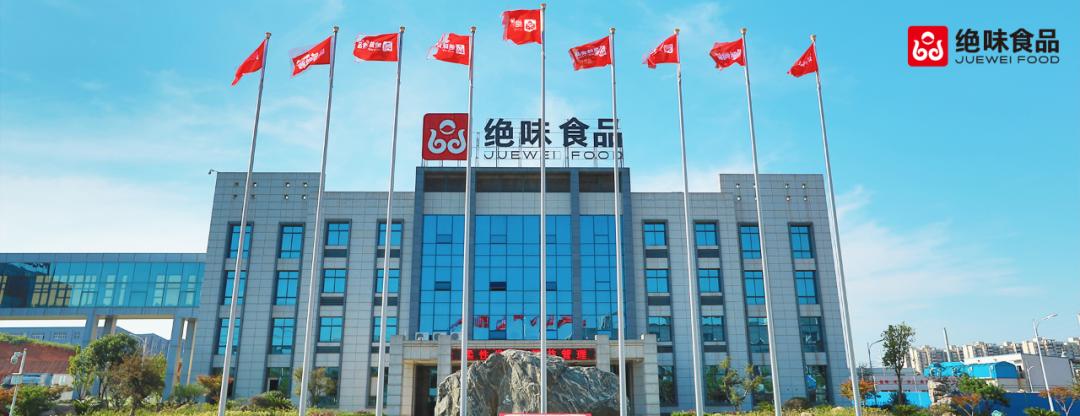
Core Viewpoint - The spring transportation season has seen a decline in the popularity of "marinated snacks," particularly the three major duck brands, which are facing performance downturns and store closures due to market saturation and changing consumer preferences [2][3][8]. Group 1: Company Performance - The three major duck brands, Zhou Hei Ya, Jue Wei, and Huang Shang Huang, have experienced significant declines in performance, with Jue Wei projected to lose between 160 million to 220 million yuan in 2025, marking its first annual loss [6][19]. - The market capitalization of these brands, once in the hundreds of billions, has now dwindled to tens of billions, and over 5,300 stores were closed in the first half of 2025 alone [6][19]. - Zhou Hei Ya, despite its high-end positioning, saw its net profit drop by over 94% in 2022, while Huang Shang Huang's store count fell below 2,898 by mid-2025, lower than in 2019 [19][21]. Group 2: Market Dynamics - The marinated snack market is experiencing a slowdown, with the market size expected to reach 157.3 billion yuan in 2024, reflecting a drastic decline in growth rate to 3.7% compared to over 15% in previous years [21][23]. - Consumer behavior has shifted, with a preference for lower-priced options; the most common spending range for marinated snacks is 20-30 yuan, while the major brands often exceed this price point [23][25]. - The competitive landscape has evolved, with local brands and snack giants entering the marinated snack market, offering similar or better value propositions, thus diluting the unique selling points of the major brands [25][27]. Group 3: Strategic Changes - To regain market share, the major brands are attempting various marketing strategies, including collaborations with popular culture and introducing new product lines [30][32]. - There is a push towards redefining their product offerings, with Zhou Hei Ya and Jue Wei introducing lower-priced items and expanding into hot marinated dishes to attract younger consumers [34][36]. - Operational efficiency is becoming crucial, with brands needing to close underperforming stores and focus resources on profitable locations to improve overall performance [38][41].


让人上瘾的「高铁零食刺客」,抱不上春运的大腿
36氪· 2026-02-09 10:45
Core Viewpoint - The article discusses the decline of the three major duck brands in the Chinese snack market, highlighting their struggles with performance, store closures, and the challenges posed by changing consumer preferences and market saturation [4][11]. Group 1: Performance and Market Dynamics - The three major duck brands, Zhou Hei Ya, Jue Wei, and Huang Shang Huang, have seen significant declines in performance, with Jue Wei expected to report a loss of 160 to 220 million yuan in 2025, marking its first annual loss [9][10]. - The market capitalization of these brands has dropped from several hundred billion to only tens of billions [10]. - In the first half of 2025, over 5,300 stores were closed among the three brands, indicating a severe contraction in their retail presence [11]. Group 2: Brand Strategies and Market Positioning - Zhou Hei Ya aimed for a high-end positioning, maintaining a direct sales model and premium pricing, with average transaction values above 60 yuan from 2017 to 2020 [7][18]. - Huang Shang Huang, as the first listed company in the industry, reached a peak revenue of over 2.4 billion yuan in 2020 but has since struggled to maintain its growth trajectory [14][15]. - Jue Wei adopted an aggressive expansion strategy, reaching over 10,000 stores within 14 years, but has faced challenges in profitability and market perception [22][24]. Group 3: Consumer Behavior and Market Trends - The rapid growth of the duck snack market has slowed, with the market size expected to reach 157.3 billion yuan in 2024, reflecting a drastic decline in growth rate to 3.7% compared to over 15% in previous years [38]. - Consumers are increasingly price-sensitive, with the most common spending range for duck snacks being 20-30 yuan, while the major brands often price their products significantly higher [41]. - The emergence of local brands and new competitors offering lower-priced alternatives has intensified competition, leading to a shift in consumer preferences [49][52]. Group 4: Required Changes for Recovery - To regain market share, the brands need to embrace significant changes, including breaking away from negative perceptions of being overpriced and homogeneous [58]. - Innovations in product offerings and marketing strategies are essential, as seen with Zhou Hei Ya's introduction of a 9.9 yuan snack series and Jue Wei's new product lines [58][60]. - A focus on operational efficiency and cost management is crucial, as the brands must adapt to a more competitive and cost-sensitive market environment [64][66].
有友食品(603697):Q3持续业绩超预期 新品新渠道共振
Xin Lang Cai Jing· 2025-11-03 08:33
Core Insights - The company reported a revenue of 1.25 billion in the first three quarters of 2025, representing a year-on-year increase of 40.4% [1] - The net profit attributable to shareholders reached 170 million, up 43.3% year-on-year, while the net profit excluding non-recurring items was 150 million, reflecting a 47% increase [1] - In Q3 2025, the company achieved a revenue of 470 million, a year-on-year growth of 32.7%, and a net profit of 65 million, which is a 44.5% increase year-on-year [1] Revenue Growth - The company has embraced new retail channels and introduced innovative products, contributing to significant revenue growth despite high base effects [1] - Revenue growth rates for the quarters are as follows: 28% in Q3 2024, 42.9% in Q4 2024, 39.2% in Q1 2025, 52.5% in Q2 2025, and 32.7% in Q3 2025 [1] - The introduction of two new products in the membership supermarket channel has performed well, with one product achieving monthly sales exceeding 10 million [1] Profitability Metrics - The gross margin decreased by 2 percentage points to 27% in Q3 2025, primarily due to lower margins in high-growth channels like snack wholesale and membership supermarkets [2] - The expense ratios for sales, management, and R&D were 8.3%, 2.7%, and 0.2%, respectively, showing a decline compared to the previous year [2] - The net profit margin improved by 1.2 percentage points to 13.8% in Q3 2025, indicating strong profitability performance [2] Strategic Initiatives - The company focuses on "product innovation + channel expansion" as its core growth drivers, seeking structural breakthroughs in traditional retail channels [3] - There is an ongoing effort to deepen cooperation with leading membership supermarket clients and expand the product range to mitigate operational risks associated with single product dependency [3] - The company aims for a revenue growth target of no less than 20% for 2025, with expectations to exceed this target [3] Future Outlook - The company anticipates revenue of 1.62 billion, 1.94 billion, and 2.21 billion for 2025-2027, with year-on-year growth rates of 37.2%, 19.5%, and 14% respectively [3] - Profit projections for the same period are 215 million, 274 million, and 320 million, with corresponding growth rates of 36.7%, 27.6%, and 16.6% [3] - The company maintains a "buy" rating based on recent product and channel expansion developments [3]

关店,关店,关店,行业寒意平等地传递给卤味三巨头
3 6 Ke· 2025-09-29 07:26
Core Insights - The article highlights the transition of the braised food industry from a focus on rapid expansion to a phase of contraction and optimization, indicating a shift away from prioritizing scale [1][23]. Industry Overview - The once-thriving "three giants" of the braised food industry—Juewei Foods, Zhou Hei Ya, and Huang Shang Huang—are now facing declining revenues and are closing stores as a unified strategy for self-rescue [2][9]. - The industry is experiencing a significant slowdown, with the market size projected to grow only 3.7% in 2024, a stark contrast to the previous average growth rate of over 15% before 2021 [18]. Company Performance - Juewei Foods reported a revenue of 28.2 billion yuan in the first half of the year, but this represented a decline of 15.57% [7]. - Zhou Hei Ya's revenue decreased by 2.93% to 12.23 billion yuan, while Huang Shang Huang's revenue fell by 7.19% to 9.84 billion yuan [7]. - Juewei Foods' net profit dropped by 40.71% to 1.75 billion yuan, while Zhou Hei Ya's net profit surged by 228% to 1.08 billion yuan [10]. Business Model Challenges - The franchise model that propelled Juewei Foods' rapid growth is now a source of crisis, as aggressive store closures have led to a significant drop in revenue [8][9]. - The average monthly sales per store for Juewei Foods have decreased from approximately 37,000 yuan in 2023 to about 21,000 yuan currently [21]. Competitive Landscape - New entrants like "Quzhou Duck Head" are gaining market share by offering lower prices and better value, highlighting a shift in consumer preferences towards cost-effective options [19][20]. - The traditional giants are struggling with high pricing strategies, which have alienated consumers and allowed competitors to thrive [13][15]. Strategic Shifts - Companies are exploring diversification and innovation to find new growth avenues, with Juewei Foods launching new product lines and Huang Shang Huang acquiring stakes in frozen food businesses [24][25]. - Zhou Hei Ya is adapting by introducing a mix of fresh and packaged products to cater to changing consumer demands [25]. Consumer Trends - The underlying demand for braised food remains focused on taste, affordability, and convenience, but the methods to meet these demands are evolving [26].
7000名游客挤爆政府食堂!
券商中国· 2025-05-02 15:16
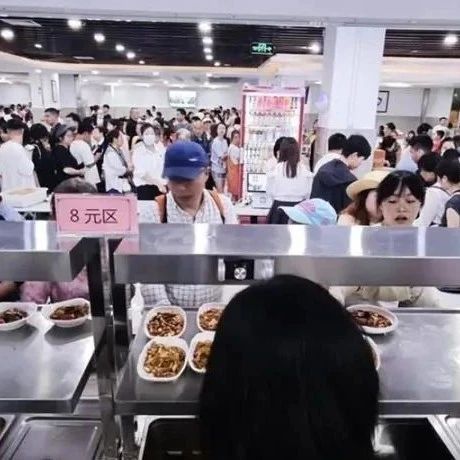
Core Viewpoint - The article highlights the initiative of various local governments in China, particularly in Chongqing's Rongchang District, to open government canteens to the public during the May Day holiday, providing affordable meals and enhancing the tourism experience [2][4][6]. Group 1: Rongchang Government Canteen - On May 1, the Rongchang government canteen served approximately 7,000 visitors, a significant increase from the usual 800 daily diners [2]. - The canteen utilized 1,200 pounds (600 kilograms) of rice and served over 1,500 pounds (around 800 kilograms) of pork to meet the high demand [2][3]. - The canteen offered a variety of local dishes at prices ranging from 3 to 18 yuan, promoting local cuisine [3]. Group 2: Broader Government Initiatives - Other regions, including Hubei's Chibi and Zhejiang's Quzhou, also opened government canteens during the holiday to provide low-cost dining options for tourists [4][5]. - The canteens aimed to alleviate dining pressure and enhance the overall tourist experience by offering meals at cost price, with breakfast priced at 10 yuan and lunch at 20 yuan [4]. - Quzhou's government canteen offered a standard meal for 18 yuan, featuring a mix of dishes, and required pre-purchased meal tickets due to limited seating [5].
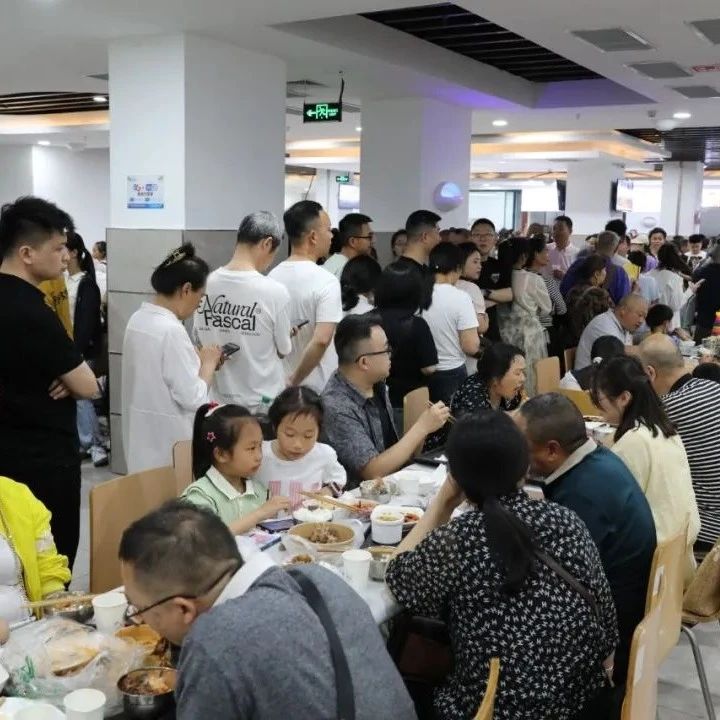
热搜第一!“每份菜3元至18元”,7000名游客挤爆政府食堂!
凤凰网财经· 2025-05-02 14:11
Core Viewpoint - The article highlights the various initiatives taken by local governments in China during the "May Day" holiday to provide free services, including open government canteens and free parking, to enhance the experience of tourists and citizens. Group 1: Chongqing Rongchang Government Canteen - On May 1, the Chongqing Rongchang government canteen served approximately 7,000 visitors, a significant increase from the usual 800 daily diners [2] - The canteen utilized 1,200 pounds (600 kg) of rice and served over 1,500 pounds (about 800 kg) of pork throughout the day [2] - The canteen offered over 20 local dishes at affordable prices, with each dish ranging from 3 to 18 yuan, emphasizing quality and local flavor [2] Group 2: Free Parking Initiatives - In Suzhou, 35,000 parking spaces across 356 government and enterprise units were made available for free starting May 1 [4] - Jiangsu's Donghai County government canteen provided free parking and served a popular 10 yuan meal that quickly sold out due to high demand [5] - Multiple cities in Hubei, including Jingmen and Xiangyang, opened their government parking lots for free, providing around 17,000 and 28,000 parking spaces respectively [11][12] Group 3: Broader Government Initiatives - Various local governments across Jiangsu, Zhejiang, and Hubei implemented similar measures, including free access to public restrooms and the provision of umbrellas for visitors [5][10] - The initiatives aimed to alleviate common issues faced by tourists, such as parking difficulties and access to clean facilities, thereby enhancing the overall visitor experience during the holiday [10][11]