
卤味食品

Search documents
让人上瘾的「高铁零食刺客」,抱不上春运的大腿
3 6 Ke· 2026-02-09 11:00
Core Viewpoint - The spring transportation season has seen a decline in the popularity of "marinated snacks," particularly the three major duck brands, which are facing performance downturns and store closures due to market saturation and changing consumer preferences [2][3][8]. Group 1: Company Performance - The three major duck brands, Zhou Hei Ya, Jue Wei, and Huang Shang Huang, have experienced significant declines in performance, with Jue Wei projected to lose between 160 million to 220 million yuan in 2025, marking its first annual loss [6][19]. - The market capitalization of these brands, once in the hundreds of billions, has now dwindled to tens of billions, and over 5,300 stores were closed in the first half of 2025 alone [6][19]. - Zhou Hei Ya, despite its high-end positioning, saw its net profit drop by over 94% in 2022, while Huang Shang Huang's store count fell below 2,898 by mid-2025, lower than in 2019 [19][21]. Group 2: Market Dynamics - The marinated snack market is experiencing a slowdown, with the market size expected to reach 157.3 billion yuan in 2024, reflecting a drastic decline in growth rate to 3.7% compared to over 15% in previous years [21][23]. - Consumer behavior has shifted, with a preference for lower-priced options; the most common spending range for marinated snacks is 20-30 yuan, while the major brands often exceed this price point [23][25]. - The competitive landscape has evolved, with local brands and snack giants entering the marinated snack market, offering similar or better value propositions, thus diluting the unique selling points of the major brands [25][27]. Group 3: Strategic Changes - To regain market share, the major brands are attempting various marketing strategies, including collaborations with popular culture and introducing new product lines [30][32]. - There is a push towards redefining their product offerings, with Zhou Hei Ya and Jue Wei introducing lower-priced items and expanding into hot marinated dishes to attract younger consumers [34][36]. - Operational efficiency is becoming crucial, with brands needing to close underperforming stores and focus resources on profitable locations to improve overall performance [38][41].


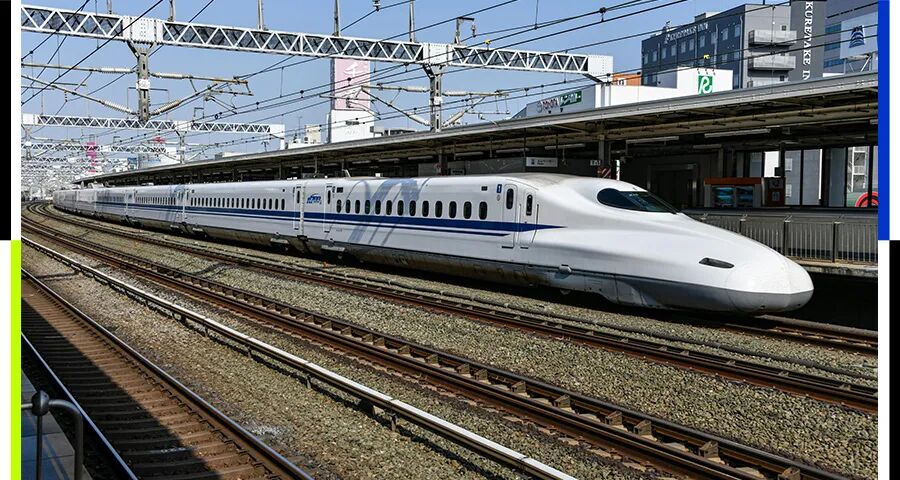
让人上瘾的「高铁零食刺客」,抱不上春运的大腿
36氪· 2026-02-09 10:45
Core Viewpoint - The article discusses the decline of the three major duck brands in the Chinese snack market, highlighting their struggles with performance, store closures, and the challenges posed by changing consumer preferences and market saturation [4][11]. Group 1: Performance and Market Dynamics - The three major duck brands, Zhou Hei Ya, Jue Wei, and Huang Shang Huang, have seen significant declines in performance, with Jue Wei expected to report a loss of 160 to 220 million yuan in 2025, marking its first annual loss [9][10]. - The market capitalization of these brands has dropped from several hundred billion to only tens of billions [10]. - In the first half of 2025, over 5,300 stores were closed among the three brands, indicating a severe contraction in their retail presence [11]. Group 2: Brand Strategies and Market Positioning - Zhou Hei Ya aimed for a high-end positioning, maintaining a direct sales model and premium pricing, with average transaction values above 60 yuan from 2017 to 2020 [7][18]. - Huang Shang Huang, as the first listed company in the industry, reached a peak revenue of over 2.4 billion yuan in 2020 but has since struggled to maintain its growth trajectory [14][15]. - Jue Wei adopted an aggressive expansion strategy, reaching over 10,000 stores within 14 years, but has faced challenges in profitability and market perception [22][24]. Group 3: Consumer Behavior and Market Trends - The rapid growth of the duck snack market has slowed, with the market size expected to reach 157.3 billion yuan in 2024, reflecting a drastic decline in growth rate to 3.7% compared to over 15% in previous years [38]. - Consumers are increasingly price-sensitive, with the most common spending range for duck snacks being 20-30 yuan, while the major brands often price their products significantly higher [41]. - The emergence of local brands and new competitors offering lower-priced alternatives has intensified competition, leading to a shift in consumer preferences [49][52]. Group 4: Required Changes for Recovery - To regain market share, the brands need to embrace significant changes, including breaking away from negative perceptions of being overpriced and homogeneous [58]. - Innovations in product offerings and marketing strategies are essential, as seen with Zhou Hei Ya's introduction of a 9.9 yuan snack series and Jue Wei's new product lines [58][60]. - A focus on operational efficiency and cost management is crucial, as the brands must adapt to a more competitive and cost-sensitive market environment [64][66].
绝味食品首亏 卤味产品缘何卖不动了?
凤凰网财经· 2026-02-07 10:57
Core Viewpoint - The article highlights that 2025 marks a critical turning point for the Chinese marinated food industry, with leading companies like Juewei Foods facing significant challenges, including their first annual loss since going public, indicating a shift from rapid growth to a competitive market focused on existing resources [4][9]. Group 1: Performance of Listed Companies - Juewei Foods has reported a significant decline in performance, with a net reduction of over 4,000 stores from 14,969 in mid-2024 to approximately 10,713 by January 2026, reflecting a substantial contraction [5][6]. - Other leading companies like Zhou Hei Ya and Huang Shang Huang are also closing stores, but they are doing so strategically to optimize operations and improve efficiency, with Zhou Hei Ya closing nearly 600 stores in the first half of 2025 [8][9]. - Huang Shang Huang is projected to achieve a net profit of 70 million to 90 million yuan in 2025, representing a year-on-year increase of 73.57% to 123.16%, attributed to diversifying its product offerings [8]. Group 2: Market Trends and Challenges - The marinated food market is expected to grow only slightly, with a projected market size of 1,620 billion yuan in 2025, reflecting a growth rate of less than 3%, a significant drop from previous years [4][9]. - The industry is experiencing increased competition from pre-packaged meat snacks and other food categories, which are capturing market share from traditional marinated food chains like Juewei [4][12]. - The lack of product innovation and high prices are major factors contributing to declining sales, with Juewei's products being perceived as expensive compared to community marinated food shops [11][12]. Group 3: Strategic Responses and Future Directions - Companies are responding to market pressures by introducing lower-priced meal packages to attract consumers, with Juewei offering options like a 28 yuan meal set [11]. - The industry is urged to consider international expansion and tap into underdeveloped markets in lower-tier cities, as there remains significant potential for consumer growth [13]. - There is a growing trend towards diversification in product offerings to meet the varied demands of consumers, including targeting specific demographics and occasions [13].
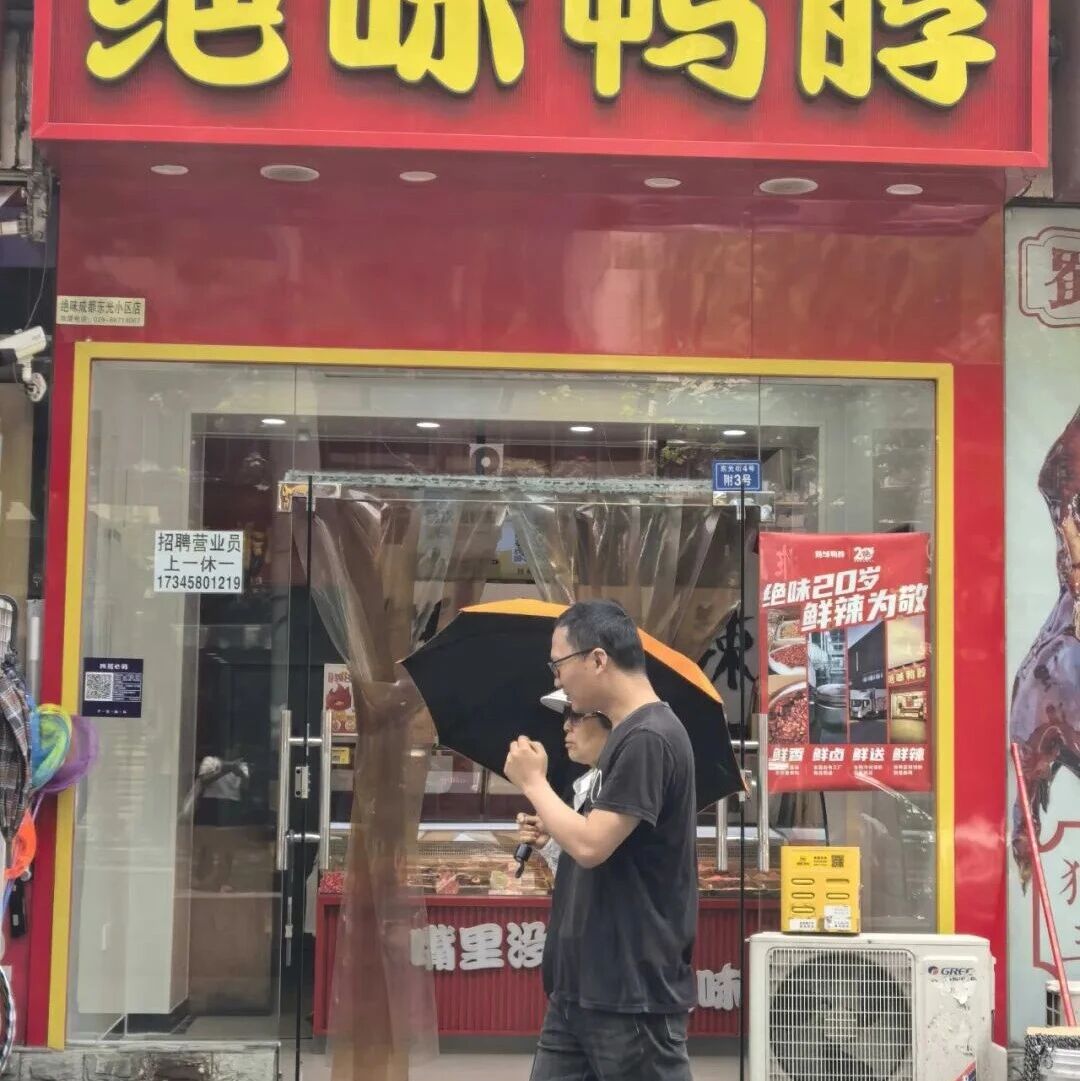
从零食转向热菜 卤味头部品牌“煮热”新赛道
Mei Ri Shang Bao· 2026-02-05 22:23
Core Insights - The opening of Huang Shang Huang's first hot marinated food store marks a significant entry into the hot marinated food market, joining other brands like Zhou Hei Ya, Jue Wei, and Jiu Jiu Ya, which are also expanding into this segment to combat declining performance in traditional marinated food sales [2][3] Company Developments - Huang Shang Huang's hot marinated food store emphasizes "fresh hot marinated food, no overnight sales," offering a variety of products including main dishes, cold dishes, and beverages, with meal sets priced at 23.9 yuan and 8.9 yuan for hot marinated noodle sets [2] - Jue Wei has launched the "Jue Wei Hot Marinated Cup," featuring a core secret hot marinated broth and customizable ingredients, with prices ranging from 4 to 30 yuan, achieving over 800,000 sales on Douyin [2] - Zhou Hei Ya has introduced a sub-brand "3 Jin Ban. Xiao Guo Xian Lu," which includes traditional duck products and new items like five-spice marinated goose, while upgrading some stores to "Jiu Jiu Ya. Hot Pot Fresh Marinated" [3] Industry Trends - The entry of major marinated food brands into the hot marinated market is a response to declining revenues, with Jue Wei reporting a 15.04% year-on-year drop in total revenue to 4.26 billion yuan and a 36.07% decline in net profit to 280 million yuan for Q3 2025 [3] - Huang Shang Huang's revenue decreased by 5.08% to 1.379 billion yuan, while net profit increased by 28.59% to 101 million yuan in the same period, indicating a trend of profit growth despite revenue decline [3] - Zhou Hei Ya's revenue for the first half of the year was 1.223 billion yuan, down 2.9%, but net profit surged by 228% to approximately 107.94 million yuan, highlighting a pattern of "profit growth without revenue growth" across the industry [3] Competitive Landscape - Analysts suggest that the collective shift of the "three giants" in marinated food towards hot marinated products is a strategic move to revitalize their businesses amid stagnant growth in traditional cold marinated food [4] - The current competition is intensifying as these brands aim to transition from being perceived as snack brands to full-fledged dining options, necessitating stronger supply chains and product planning that aligns with consumer dining experiences [4]
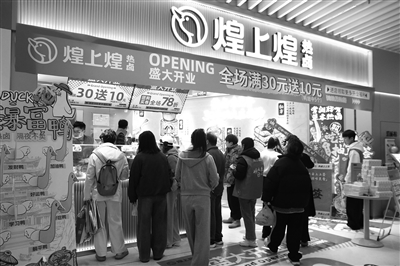
让人上瘾的“高铁零食刺客”,抱不上春运的大腿
3 6 Ke· 2026-02-05 10:40
Core Viewpoint - The "Duck Kings" in the marinated food industry, including Zhou Hei Ya, Jue Wei, and Huang Shang Huang, are facing significant challenges as consumer preferences shift, leading to declining sales and store closures. Group 1: Industry Performance - The marinated food industry is experiencing a slowdown, with the market size expected to reach 157.3 billion yuan in 2024, reflecting a drastic decline in growth rate to 3.7% compared to over 15% in previous years [17]. - Jue Wei is projected to incur its first annual loss, estimated between 160 million to 220 million yuan in 2025, marking a significant downturn for the company [1][2]. - The three major brands have closed over 5,300 stores in the first half of 2025, indicating a severe contraction in their retail presence [1][2]. Group 2: Company Strategies and Changes - Zhou Hei Ya has shifted its strategy by introducing lower-priced products, such as a 9.9 yuan "satisfying series," to attract younger consumers [29]. - Jue Wei has diversified its offerings by launching new product lines, including a series of snacks and a new cooking method called "first marinate then grill" [29]. - Huang Shang Huang has expanded its business model to include dining options, such as hot marinated dishes and rice, to reposition itself in the market [31]. Group 3: Consumer Behavior and Market Dynamics - Consumer preferences have shifted towards more affordable options, with the most common spending range for marinated food being 20-30 yuan, which contrasts sharply with the higher prices of the "Duck Kings" [19]. - New entrants in the market, such as local brands and snack giants, are capturing consumer interest by offering unique flavors and experiences, further challenging the established brands [25][23]. - The perception of the "Duck Kings" has deteriorated, with consumers viewing them as overpriced and lacking innovation, leading to a decline in brand loyalty [21][29]. Group 4: Future Outlook and Recommendations - To regain market share, the "Duck Kings" need to embrace significant changes, including refining their operations and breaking away from outdated consumer perceptions [28][35]. - Implementing a strategic reserve system for raw materials could help manage cost fluctuations, which is crucial for maintaining profitability [35]. - Focusing on closing underperforming stores and reallocating resources to high-potential locations will be essential for future growth [36].
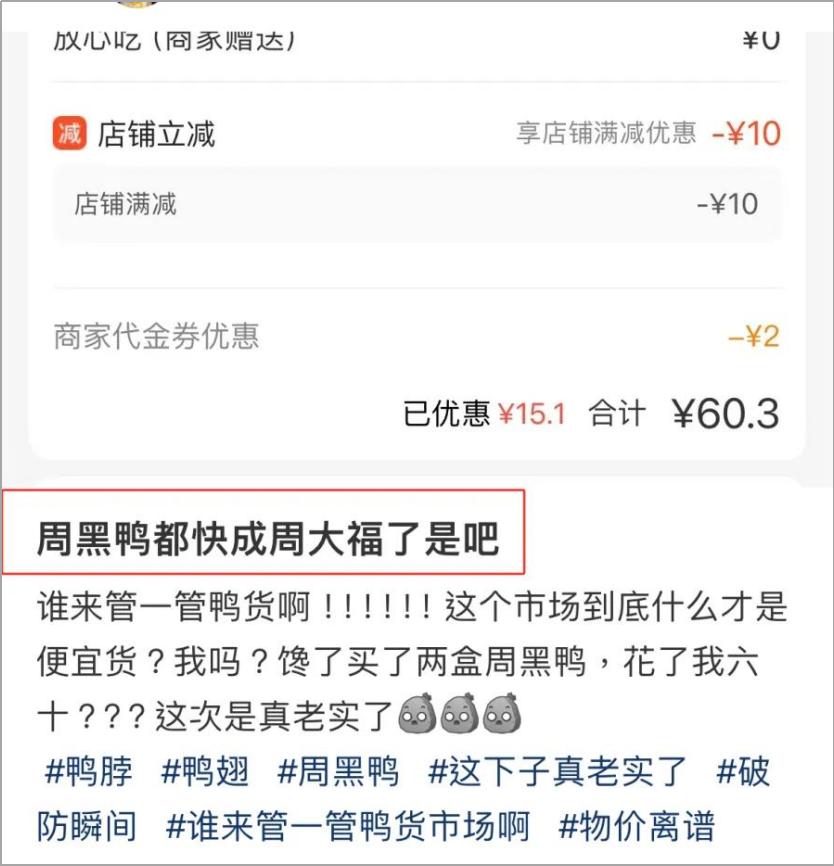
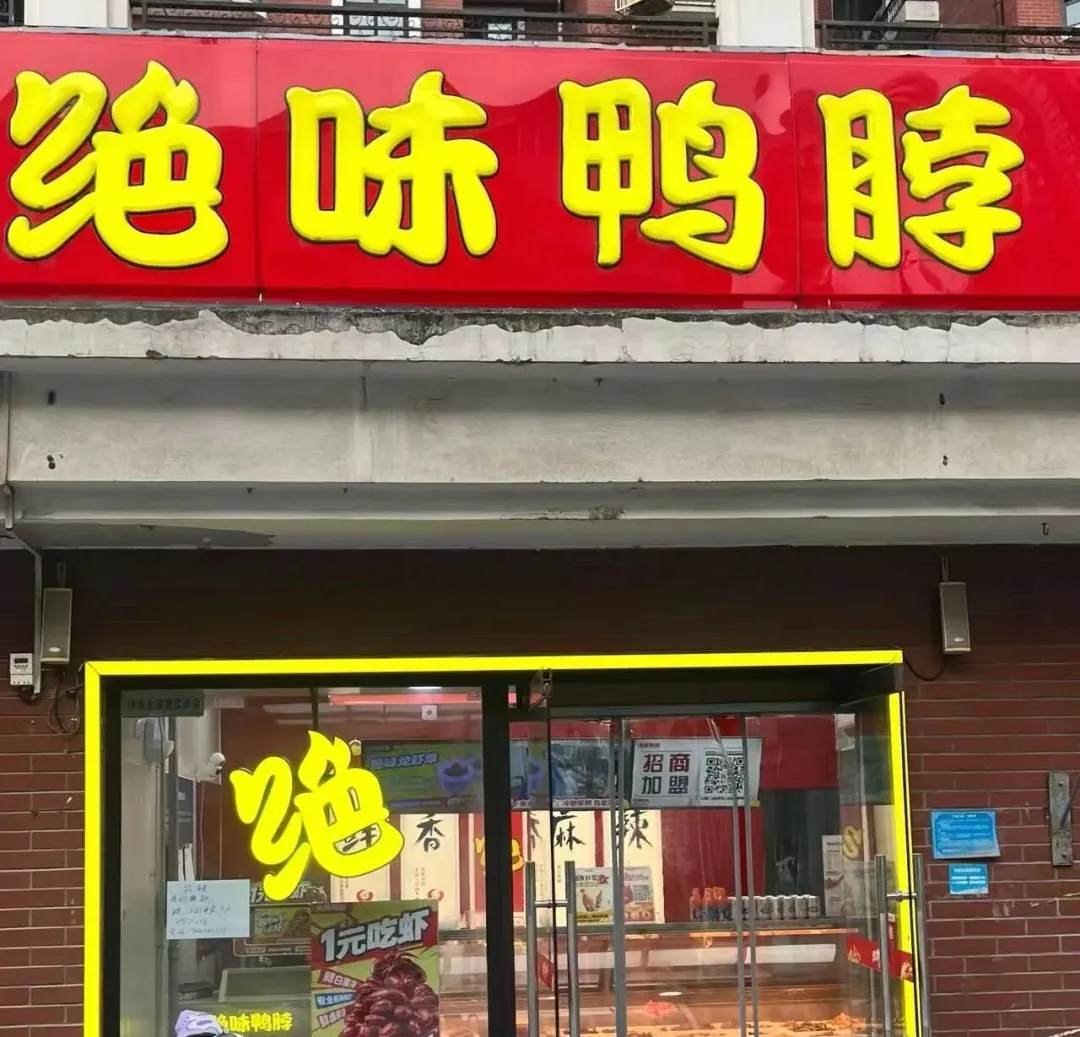
卤味巨头突然被曝!一年半关店超4000家,上市以来首次亏损,很多人吃过
Qi Lu Wan Bao· 2026-02-02 11:47
Core Viewpoint - ST Juewei, known as the "Duck Neck King," is facing its first annual loss since its listing, with a projected revenue decline of 12.09% to 15.29% for 2025, amounting to between 5.3 billion and 5.5 billion yuan [1][3] Financial Performance - The company expects a net loss of 160 million to 220 million yuan for 2025, a significant drop from a profit of 227 million yuan in the previous year, marking the lowest profit level since its listing in 2017 [1][3] - In the first three quarters of 2025, ST Juewei reported a net profit of 280 million yuan, indicating a substantial fourth-quarter loss of approximately 440 million to 500 million yuan [1][3] Contributing Factors - The company attributes its performance decline to increased non-operating expenses and losses from investments accounted for under the equity method, with the investment sector being a key area of concern [3] - Financial issues have previously led to scrutiny, including unaccounted renovation fees of 700 million yuan, resulting in the company being labeled as "ST" [4][5] Industry Comparison - The performance of the "three giants" in the marinated food sector shows a widening disparity, with Huang Shang Huang projecting a net profit increase of 73.57% to 123.16% for 2025, while Zhou Hei Ya reported a significant profit growth of 228% in the first half of 2025 [3] - As of mid-2024, ST Juewei had the highest number of stores among its competitors, with 14,969 locations, but has since seen a net decrease of over 4,000 stores in a year and a half [3]
卤味三巨头半年闭店超5300家
凤凰网财经· 2026-02-01 12:08
Core Viewpoint - The performance of the "three giants" in the marinated food industry shows a stark contrast, with Huangshanghuang and Zhouheiya experiencing profit growth, while Juewei Foods recorded its first annual loss since its listing [2][5]. Group 1: Company Performance - Huangshanghuang expects a net profit of 70 million to 90 million yuan for 2025, representing a year-on-year growth of 73.57% to 123.16% [4]. - Zhouheiya has not yet released its full-year forecast but reported a total revenue of 1.223 billion yuan and a net profit of 108 million yuan for the first half of 2025, marking a significant year-on-year increase of 228.0% [4]. - In contrast, Juewei Foods anticipates a revenue of 5.3 billion to 5.5 billion yuan for 2025, a decline of 12.09% to 15.29% year-on-year, and a net loss of 160 million to 220 million yuan [5]. Group 2: Store Count and Market Dynamics - Juewei Foods had the highest number of stores among the three giants, with 14,969 stores as of mid-2024, but has since seen a significant reduction, with only 10,713 stores remaining by January 2026, a decrease of over 4,000 stores [6]. - Zhouheiya and Huangshanghuang also closed stores, with Zhouheiya reducing its count to 2,864 stores by mid-2025, closing nearly 600 stores, and Huangshanghuang closing over 700 stores in the same period [6]. - Collectively, the three giants closed more than 5,300 stores within approximately six months [7].
卤味三巨头半年闭店超5300家
2 1 Shi Ji Jing Ji Bao Dao· 2026-02-01 08:04
Core Viewpoint - The performance of the "three giants" in the marinated food industry shows a stark contrast, with Huangshanghuang and Zhouheiya experiencing profit growth, while Juewei Foods reports its first annual loss since going public. Group 1: Financial Performance - Huangshanghuang expects a net profit of 70 million to 90 million yuan for 2025, representing a year-on-year growth of 73.57% to 123.16% [1] - Zhouheiya has not yet released its full-year forecast but reported a total revenue of 1.223 billion yuan and a net profit of 108 million yuan for the first half of 2025, marking a significant year-on-year increase of 228.0% [1] - Juewei Foods anticipates a revenue of 5.3 billion to 5.5 billion yuan for 2025, a decline of 12.09% to 15.29% year-on-year, and expects a net loss of 160 million to 220 million yuan [2] Group 2: Store Count and Expansion - Juewei Foods had the highest number of stores among the three giants, with 14,969 stores as of mid-2024, but has since closed over 4,000 stores, reducing its count to 10,713 by January 20, 2026 [3][4] - Zhouheiya and Huangshanghuang also closed stores, with Zhouheiya reducing its count to 2,864 stores and Huangshanghuang closing over 700 stores in the first half of 2025 [3] Group 3: Market Challenges - Juewei Foods attributes its poor performance to structural adjustments in the consumer industry, increased operating expenses, and investment losses impacting its profitability [2] - The overall market for marinated foods is facing challenges, leading to significant store closures across the three major brands [4]
卤味三巨头半年闭店超5300家
21世纪经济报道· 2026-02-01 07:57
Core Viewpoint - The performance of the "three giants" in the marinated food industry shows a stark contrast, with Huangshanghuang and Zhouheiya experiencing profit growth, while Juewei Foods recorded its first annual loss since its listing [1][3]. Group 1: Company Performance - Huangshanghuang expects a net profit of 70 million to 90 million yuan for 2025, representing a year-on-year growth of 73.57% to 123.16% [2]. - Zhouheiya has not yet released its full-year forecast, but its mid-year report indicates a total revenue of 1.223 billion yuan and a net profit of 108 million yuan for the first half of 2025, marking a significant year-on-year increase of 228.0% [2]. - In contrast, Juewei Foods anticipates a revenue of 5.3 billion to 5.5 billion yuan for 2025, a decline of 12.09% to 15.29% year-on-year, and a net loss of 160 million to 220 million yuan [3]. Group 2: Store Count and Market Dynamics - Juewei Foods had the highest number of stores among the three giants, with 14,969 stores as of mid-2024, but has since closed over 4,000 stores, reducing its count to 10,713 by January 2026 [4]. - Zhouheiya and Huangshanghuang have also been closing stores, with Zhouheiya reducing its count to 2,864 stores and Huangshanghuang closing over 700 stores in the first half of 2025 [4]. - Collectively, the three giants have closed more than 5,300 stores within approximately six months [4].

新浪财经资讯AI速递:昨夜今晨财经热点一览 丨2026年1月28日
Xin Lang Cai Jing· 2026-01-27 23:08
Group 1: Gold Investment Insights - Financial expert Li Bei has liquidated her gold holdings, stating that gold is not worth investing in for the next 10 to 20 years due to a reversal in central bank buying logic and high valuation, leading to high opportunity costs [1] - The appreciation of the RMB may lead to a decline in RMB-denominated gold prices, further supporting her stance [1] - Li's views have sparked debate, with some arguing she may miss out on recent price increases, while others question her reasoning [1] Group 2: Precious Metals Fund Activity - E Fund's gold-themed LOF and Guotou Silver LOF announced a suspension of A-class share subscriptions and regular investment services starting January 28 to protect investor interests and maintain fund stability [2] - The recent surge in precious metal prices has led to high trading prices and premium rates in the secondary market, but signs of short-term price corrections are emerging [2] - Industry insiders caution that the current market sentiment is driven by emotions, advising investors to remain rational and avoid chasing high prices [2] Group 3: Dollar Index Decline - The US dollar index has fallen to a nearly four-year low, influenced by market speculation of potential US-Japan currency intervention and structural risks within the dollar itself [3] - Concerns over the politicization of the Federal Reserve, expanding fiscal deficits, and policy uncertainty have led investors to short the dollar [3] - Record costs for hedging against dollar depreciation risks and increased trading volumes indicate that devaluation has become a mainstream trading expectation [3] Group 4: Student Housing Investment Surge - The Hong Kong government has increased enrollment quotas for non-local students, driving a surge in demand for student housing, with a shortfall of over 70,000 beds [4] - Capital is rapidly flowing into the sector, with various domestic and foreign institutions acquiring hotels and converting them into student dormitories, providing stable rental income and high occupancy rates [4] - The market outlook remains strong for the coming years, with low short-term risks of oversupply [4] Group 5: Corporate Developments - Vanke's two bond extension proposals received 100% approval, with plans to repay 40% of principal and interest while extending the remaining 60% for one year [5] - The company's largest shareholder, Shenzhen Metro Group, announced a loan of up to 2.36 billion yuan to support liquidity and repay public market bond principal and interest [5] - ST Joy's expected first net loss since listing in 2025 is attributed to operational pressures, investment losses, and increased non-recurring expenses, prompting a strategic shift towards focusing on niche markets [6] Group 6: Semiconductor Price Increases - The semiconductor industry is experiencing a price surge across the entire supply chain, with companies like Zhongwei Semiconductor announcing price increases of 15% to 50% due to tight chip supplies and rising costs [10] - Previous announcements from Guokai Micro indicate price hikes of up to 80%, driven by significant increases in raw material costs such as silver and copper [10] - The pressure from rising costs is now affecting passive components like capacitors and resistors [10] Group 7: Macro Prudential Management - The People's Bank of China held a macro prudential work meeting to summarize and deploy related tasks, emphasizing the importance of macro prudential management in preventing systemic financial risks and maintaining financial stability [9] - The meeting outlined plans to strengthen the central bank's macro prudential management functions, improve work mechanisms, and expand policy coverage [9] - The goal is to proactively assess risks and innovate policy tools to support the stability of the financial system and the construction of a financial powerhouse [9]