印度税改

Search documents
借关税压力倒逼改革,莫迪突击式减税、加速简政放权
Hua Er Jie Jian Wen· 2025-08-26 07:36
Core Viewpoint - The Indian government is proactively implementing a series of urgent reforms in response to a proposed 50% tariff increase on Indian goods by the U.S. Department of Homeland Security, effective August 27 [1][6]. Group 1: Tax Reform - The proposed Goods and Services Tax (GST) reform will reduce the number of tax categories from four to two, lowering rates from 12% and 28% to 5% and 18% for certain goods [2]. - The government anticipates that the GST reduction will stimulate consumer spending, particularly in essential goods like food and clothing, with IDFC First Bank estimating a potential 0.6 percentage point increase in nominal GDP growth within 12 months [2]. Group 2: Deregulation Efforts - In addition to GST reform, the government is focusing on "next-generation reforms" aimed at reducing corporate compliance costs and eliminating redundant laws, with two high-level committees established to drive these initiatives [3][4]. - The current complex tax system and bureaucratic hurdles have long been viewed as barriers to business, with existing labor laws discouraging the establishment of larger factories due to high compliance costs [5]. Group 3: Economic Context and Reform Catalyst - The tariff threat from the Trump administration has unexpectedly acted as a catalyst for reform, with economists suggesting that conventional policy tools are insufficient, necessitating more challenging reforms [6]. - Current macroeconomic indicators in India remain stable, providing a conducive environment for implementing significant reforms aimed at fostering high growth in the future [7].
俄乌和谈进程开启,全球股市上涨,印度“一马当先”
Hua Er Jie Jian Wen· 2025-08-18 06:52
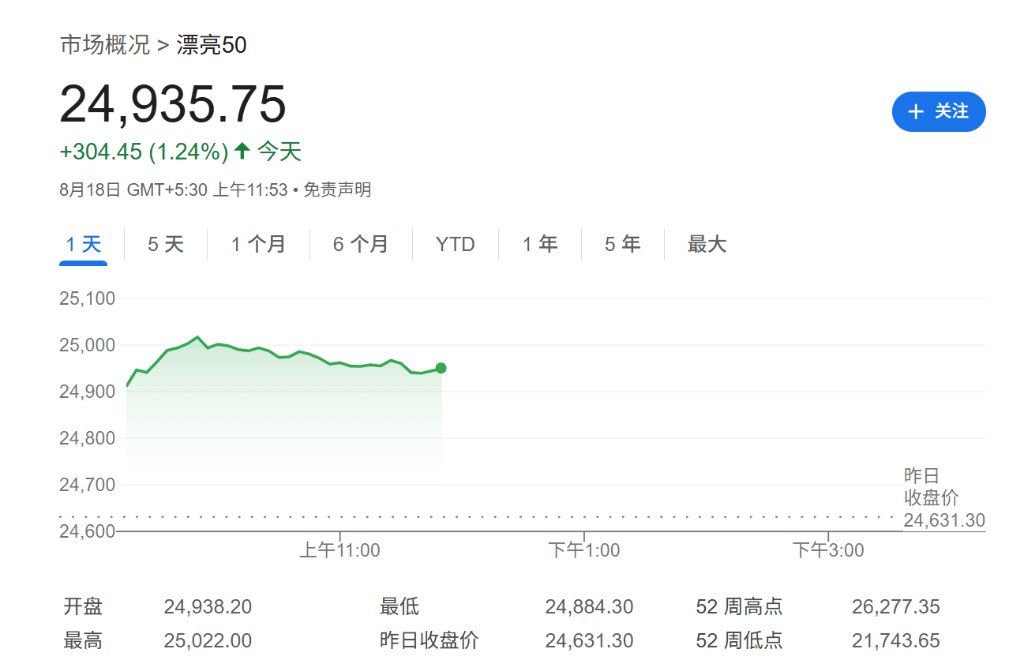
Group 1 - The core point of the news is the positive developments in U.S.-Russia relations, particularly regarding the meeting between Trump and Putin, which has led to increased investor optimism in Asian markets, especially in India [1][5] - The upcoming meeting between Trump and Ukrainian President Zelensky is anticipated to provide further insights into the peace process and market direction [4][5] - The Indian government has proposed a significant reduction in the Goods and Services Tax (GST), which is expected to boost the economy and consumer demand, leading to a notable increase in the Nifty 50 index [1][6][7] Group 2 - The proposed GST reform will simplify the tax structure from four rates to two, benefiting consumers and small businesses, and is expected to have a limited impact on government revenue [6][7] - Analysts predict that the tax cuts will enhance overall demand and improve profit outlooks for various sectors, including daily consumer goods, automobiles, and retail [7] - The positive sentiment in the Indian market is further supported by diplomatic engagements, such as the upcoming visit of Chinese officials, which adds to the growth narrative [7]