危机思维

Search documents
陈道丽:“危机时代下,躬身入局”,才是领导力
Di Yi Cai Jing Zi Xun· 2025-12-12 09:49
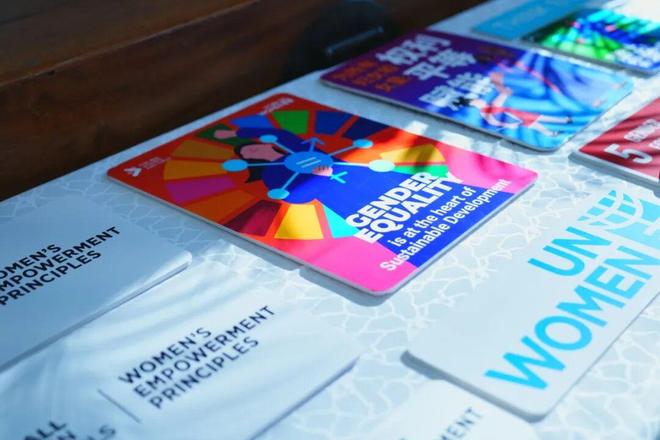
Core Insights - The summit held by UN Women on December 5 focuses on how gender equality can become a new engine for corporate growth, marking the 30th anniversary of the Beijing Declaration and the 15th anniversary of the Women's Empowerment Principles (WEPs) [1] Group 1: Gender Equality as a Business Driver - Promoting gender equality is not only a social welfare issue but also a direct driver for companies to enhance profitability, improve talent retention, and optimize ESG performance. Companies with stronger gender inclusivity have a 63% higher likelihood of increased profitability and a 60% higher chance of improved talent retention [3] - The discussion on reshaping leadership for long-term competitiveness and sustainable development highlighted the need for leaders to adapt to rapid technological changes and external uncertainties [3] Group 2: Leadership in Crisis - In the current complex macro environment, the role of female leadership has evolved, with more women taking on CEO positions during economic downturns. This shift reflects a belief that women possess crisis management skills [5][6] - The concept of "Glass Cliff" suggests that women are often appointed to leadership roles during high-risk situations, which can lead to structural biases against them if they fail [6] Group 3: Interactive Leadership - The importance of "hands-on" leadership is emphasized, where leaders engage directly with their teams rather than relying solely on positional authority. This interactive approach fosters shared goals and collective responsibility [9] - Female leaders are noted for their ability to create inclusive visions that allow team members to grow while achieving organizational missions, which is crucial in today's collaborative business environment [9] Group 4: Bridging Cognitive Gaps - Effective leadership challenges often lie in bridging cognitive gaps among diverse team members. Empathy, rather than persuasion, is key to achieving this [10] - A case study illustrates how a leader successfully navigated cross-cultural management challenges by actively learning and engaging with team members, thereby building a common knowledge base and fostering collaboration [10][11] Group 5: Systemic Integration of Women's Leadership - When companies systematically integrate the advantages of female leadership into their strategies and operations, gender equality transforms from a social responsibility into a business engine that drives innovation, resilience, and long-term sustainable development [13]

黄仁勋的焦虑:5万亿市值也怕破产,天天“战战兢兢”
Huan Qiu Wang Zi Xun· 2025-12-05 03:39
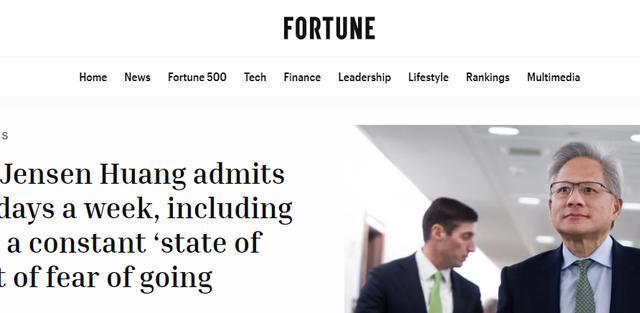
Core Insights - The CEO of Nvidia, Jensen Huang, works seven days a week, driven by anxiety over potential company failure, which he attributes to his entrepreneurial beginnings and past challenges faced in the 1990s [1][4] Group 1: Company Background - Nvidia's current success is largely attributed to its AI chip technology, positioning it as an industry leader [4] - Huang's past experience with a technical defect while developing chips for Sega led to a significant investment that saved the company, instilling a mindset of urgency and fear of failure [4] Group 2: Leadership Philosophy - Huang believes that the fear of failure is a stronger motivator than the desire for success, which influences his work ethic and company culture [4] - He emphasizes the importance of resilience, encouraging others to embrace challenges as a foundation for strength [4] Group 3: Family Involvement - Huang's children have joined Nvidia, contributing to a family-oriented work environment that reflects a continuous commitment to the company's mission [4] Group 4: Market Position - The company's market valuation has reached $5 trillion, which Huang views not as a destination but as a responsibility to maintain its leadership position [4]