
卷

Search documents
对话周其仁:AI替代不了“你真正的喜欢”
3 6 Ke· 2026-01-05 01:28
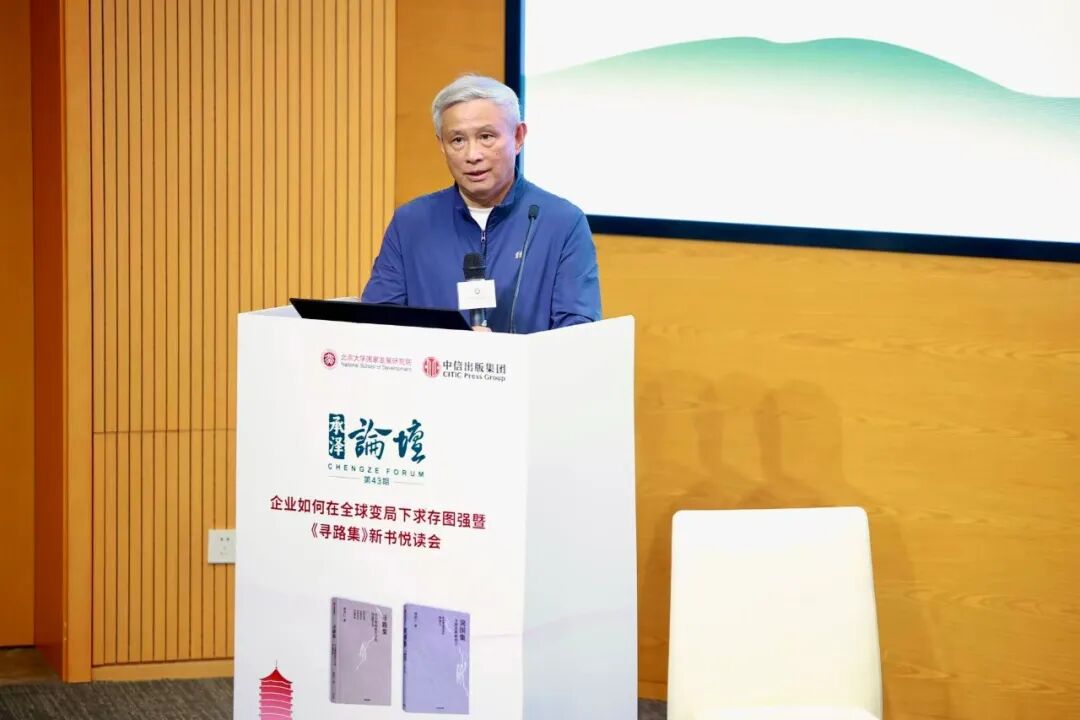
Core Insights - The interview with Professor Zhou Qiren from Peking University highlights his unique approach to economics, emphasizing practical business experiences over abstract theories [1][2] - Zhou believes that companies must navigate their own paths in uncertain environments, advocating for a focus on customer needs rather than merely competing with rivals [4][10] Group 1: Research Methodology - Zhou emphasizes the importance of real-world research, stating that understanding comes from engaging with actual business practices rather than theoretical frameworks [2][4] - He encourages a mindset of inquiry and debate, suggesting that true insights emerge from discussions and challenges to prevailing views [1][4] Group 2: Business Strategies - Zhou's new book, "Seeking Path Collection," discusses various strategies for companies to thrive amidst uncertainty, advising them to adapt based on their specific circumstances [4][6] - He highlights the significance of understanding customer needs and positioning, arguing that many companies fail because they do not prioritize customer insights [10][15] Group 3: Market Competition - Zhou views the current competitive environment, referred to as "卷" (competition), as a double-edged sword, suggesting that while it can drive prices down, it can also lead to unhealthy market practices [4][5] - He warns against focusing solely on competitors, advocating for a customer-centric approach that prioritizes service quality over speed [11][15] Group 4: Global Market Positioning - Zhou argues that companies should not rigidly separate domestic and international markets but should instead seek opportunities based on customer demand globally [19][20] - He notes that many businesses can replicate successful strategies from their home markets in international contexts, emphasizing the need for adaptability [21][20] Group 5: Innovation and Government Role - Zhou critiques the notion that innovation can be mandated by government policies, suggesting that true innovation arises from grassroots efforts and real-world applications [22][24] - He believes that local governments should focus on their unique strengths rather than trying to replicate successful models from other regions [22][25]

千万不要放赖式躺平
Hu Xiu· 2025-06-23 00:33
Core Viewpoint - The article discusses the balance between "striving" (卷) and "lying flat" (躺平) in one's career and life, emphasizing that both states have their appropriate times and contexts [1][2][5]. Group 1: Striving vs. Lying Flat - In times when one cannot strive effectively, lying flat can serve as a means of energy accumulation and preparation for future opportunities [3][5]. - The analogy of sailors navigating through storms illustrates that when conditions are too challenging, it may be wiser to lie flat and wait for better circumstances rather than struggle unnecessarily [4][8]. - The article warns against a passive form of lying flat, which involves giving up responsibilities and relying on others, as this is seen as an undesirable attitude [9][11]. Group 2: Personal Experiences and Reflections - The author shares personal experiences of lying flat during transitional periods in life, highlighting that such moments can be used for self-improvement and learning [12][13]. - The importance of having a clear sense of purpose and direction is emphasized, suggesting that understanding one's goals can mitigate feelings of anxiety during challenging times [22][21]. - The narrative includes reflections on historical figures and their wisdom, which can inspire individuals to maintain a proactive and positive attitude even in the face of setbacks [19][20].