
历史文化旅游

Search documents
游客逛太原热衷“访古寻迹”
Xin Lang Cai Jing· 2026-02-23 00:08
Core Insights - The cultural tourism market in Taiyuan is experiencing rapid growth during the Spring Festival, with visitors seeking to explore the city's rich history and cultural heritage [1][2] - Taiyuan is developing into a "City of Museums," with over 100 museums established, providing a cultural landmark for both locals and tourists [1] - The integration of modern technology such as 3D, AR, and VR in exhibitions enhances the visitor experience, making historical artifacts more engaging and interactive [2] Group 1 - Visitors are increasingly interested in understanding the historical and cultural significance of Taiyuan, with many planning their trips around visits to museums and historical sites [1][2] - The popularity of the TV series "Tai Ping Nian" has sparked greater interest in the history of the Five Dynasties and Ten Kingdoms, positioning Taiyuan as a new focal point for cultural tourism [2] - Tourists are looking for deeper experiences rather than just photo opportunities, indicating a shift towards more meaningful cultural exploration [2][3] Group 2 - Experts suggest that exploring historical sites in Taiyuan provides valuable spiritual nourishment and knowledge, enhancing the overall travel experience [3] - The city's long history, dating back 5,000 years, is a significant draw for visitors, with many expressing amazement at the depth of its cultural heritage [2][3] - The trend indicates a growing demand for cultural tourism that emphasizes historical education and personal enrichment [2][3]
春晚“F4”的“出生地”太有实力了!坐火车去可享限时优惠!
Xin Lang Cai Jing· 2026-02-20 10:21
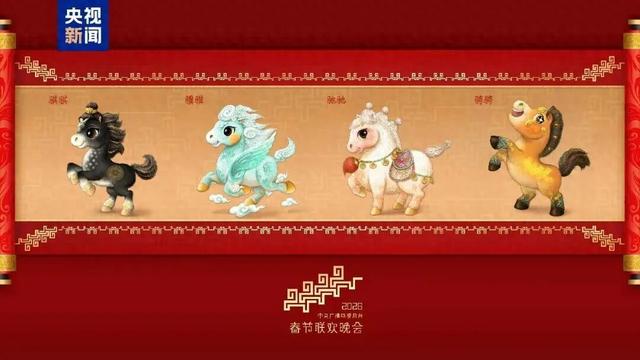
Group 1 - The four mascots for the Year of the Horse, named "Qiqi," "Jiji," "Chichi," and "Chengcheng," were introduced during the 2026 Spring Festival Gala and affectionately referred to as the "F4" by netizens [1] - Each mascot embodies a rich historical and cultural significance, representing different eras and styles of Chinese horse culture [3][12][26] - The mascots are linked to various historical artifacts and locations, such as the "Qiqi" inspired by the Western Zhou Dynasty's "Gui Gongzi" bronze artifact, and "Jiji" based on the Han Dynasty's "Bronze Galloping Horse" [5][12] Group 2 - The city of Baoji, known as the "Hometown of Bronze Ware," is highlighted for its historical significance and the abundance of bronze artifacts, enhancing the cultural context of the "Qiqi" mascot [7] - The railway stations in Baoji are optimizing facilities for travelers during the Spring Festival, including special waiting areas and medical support [9] - The "Jiji" mascot is inspired by the "Bronze Galloping Horse," which is a national treasure and symbolizes the cultural heritage of Wuwei, where it was discovered [12][14] Group 3 - The "Chichi" mascot draws inspiration from the Tang Dynasty's "Three-Flower Horse," showcasing the artistic heritage of Xi'an, which is home to significant historical sites [17][22] - Xi'an's railway stations are enhancing passenger experiences with additional services and cultural activities during the Spring Festival [22][24] - The "Chengcheng" mascot represents the Przewalski's horse, a symbol of ecological conservation and the harmonious coexistence of humans and nature [26][28] Group 4 - The Dunhuang West Lake Protection Area serves as a trial zone for the rewilding of Przewalski's horses, showcasing the region's unique landscapes and cultural heritage [28][30] - The local railway station in Dunhuang is actively promoting cultural tourism by providing information and discounts to travelers, enhancing the overall travel experience [30]

广西烟火 | 北海老街:中西合璧共潮生
Guang Xi Ri Bao· 2026-01-19 02:31
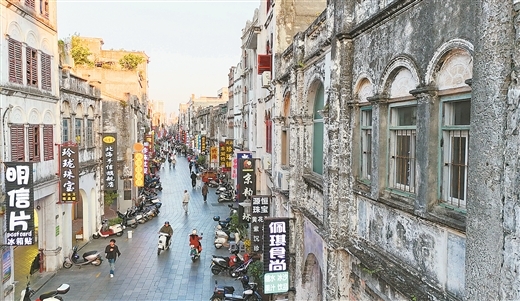
Core Viewpoint - The article highlights the transformation and cultural significance of Beihai Old Street, showcasing its historical roots and modern revitalization efforts, blending tradition with contemporary experiences [1][4]. Group 1: Historical Significance - Beihai Old Street, known as "Old Town," dates back to the Daoguang era of the Qing Dynasty, with key streets like Zhuhai Road, Shajizhai, and Zhongshan Road forming the city's initial layout [1][3]. - The core area, Zhuhai Road, originally named Shengping Street, was a bustling commercial hub during the late Qing and Republican eras, featuring consulates and various traditional establishments [1]. Group 2: Cultural Revitalization - Since 2005, Beihai has initiated a restoration project for the old town, focusing on preserving historical artifacts and improving urban infrastructure, transforming the area into a cultural and tourism hub [4]. - The old street has received multiple accolades, including being recognized as the "longest T-shaped stage" by the Shanghai Guinness World Records and designated as a "national-level night cultural and tourism consumption gathering area" [4]. Group 3: Modern Attractions - The coffee shop Guolian Sheng, which took over three years to restore, features over 2,000 antique items, attracting young visitors who enjoy the blend of history and modern café culture [2]. - Local businesses, such as the sugar water shop run by local resident Pang Weishan, have adapted to modern trends while maintaining traditional flavors, indicating a successful integration of old and new [4].
“星耀船政跨年夜”活动举办
Xin Lang Cai Jing· 2026-01-02 23:43
Core Viewpoint - The article highlights the upcoming large-scale New Year's Eve event at the China Shipbuilding Cultural Scenic Area, emphasizing its theme of "one city landmark, two extreme romances" and its integration of historical depth with festive warmth [1] Group 1: Event Details - The event is scheduled for December 31, 2025, and aims to transform the historical site into a new public celebration space [1] - The celebration will feature artistic lighting that highlights the historical architecture, allowing visitors to appreciate the beauty and significance of industrial civilization [1] Group 2: Activities and Attractions - The event will include a festive market and food area offering local delicacies, such as small hot pots, to enhance the celebratory atmosphere [1] - A main stage weighing 35,000 tons will host performances, including traditional Fujian opera and various music styles like national trend, rock, and electronic music, providing a rich cultural experience for attendees [1]
陕南行二题
Xin Lang Cai Jing· 2025-12-24 00:16
Core Viewpoint - The article highlights the historical and cultural significance of Mancanguan, a town in Shaanxi Province, emphasizing its rich heritage and the impact of its geographical location on its development and future prospects [4][6]. Group 1: Historical Significance - Mancanguan was historically a vital hub for material exchange among the provinces of Shaanxi, Hubei, Henan, and Sichuan, thriving as a water and land port before the construction of the Longhai Railway [4]. - The town was bustling with commerce, featuring numerous guilds, markets, and cultural venues, showcasing a vibrant merchant culture [4]. Group 2: Cultural Heritage - The town is home to unique architectural features such as the dual opera houses, which reflect the cultural interplay between the Qin and Chu regions, offering a rich cultural experience [4][5]. - Mancanguan's historical sites, including the Xu Xiangqian Memorial and various temples, contribute to its cultural richness and historical narrative [5][6]. Group 3: Natural Beauty and Tourism - The surrounding mountainous landscape and the scenic beauty of the area, including the Taoyun Temple located at a high altitude, attract visitors seeking both adventure and tranquility [10][11]. - The article describes the picturesque views and diverse flora along the hiking trails, enhancing the appeal of Mancanguan as a tourist destination [11][12]. Group 4: Future Development - The strategic location of Mancanguan, with the establishment of high-speed rail and highways, indicates a focus on future development and potential growth in tourism and commerce [6].
四川阆中必游景点揭秘:古城区与白塔湖风光赏心悦目
Sou Hu Cai Jing· 2025-10-10 10:44
Core Viewpoint - Sichuan Langzhong is a historically rich city known for its beautiful natural scenery, long-standing cultural heritage, and abundant tourism resources [2] Group 1: Overview of Tourist Attractions - The ancient city wall of Langzhong, approximately 4.5 kilometers long, is one of the best-preserved ancient city walls in Sichuan, dating back to the Sui Dynasty [4] - Zhang Fei Temple, located outside the east gate of the ancient city, commemorates the famous general from the Three Kingdoms period and features a grand architectural design [4] - The Confucian Temple, also known as Wen Miao, was established during the Southern Song Dynasty and is one of the best-preserved ancient temples in China [5] - Zhang Fei Temple Park, situated in the northeast of the ancient city, integrates history, culture, and natural scenery, featuring several attractions related to Zhang Fei [6] - Nanjin Pass Ancient Town, founded in the Eastern Jin Dynasty, retains numerous ancient buildings from the Ming and Qing Dynasties, offering visitors a glimpse into historical lifestyles [8] - Tiangongyuan, located in the southeast of the ancient city, is a tourist destination that combines religious, cultural, and natural attractions [9] Group 2: Tourism Features - Langzhong's culinary culture is rich and unique, with local specialties such as dried tofu, pickles, and lamb noodles that leave a lasting impression [10] - The local folk culture is vibrant, with various traditional activities during festivals like Spring Festival, Lantern Festival, and Dragon Boat Festival, showcasing the area's cultural richness [10] - Langzhong is a birthplace of multiple religions, including Taoism, Buddhism, and Islam, providing a deep cultural foundation for visitors to explore different faiths [12] Group 3: Travel Tips - Langzhong is easily accessible by various transportation methods, including planes, trains, and buses, with dedicated tourist lines connecting to attractions [13] - The city offers excellent accommodation options, including hotels, inns, and guesthouses, catering to different needs and budgets [14] - Recommended travel itineraries include one-day tours of the ancient city wall, Zhang Fei Temple, and Confucian Temple, as well as multi-day tours incorporating additional attractions and local cuisine [15]
皖南古村与十里画廊
Jin Rong Shi Bao· 2025-06-06 05:09
Core Insights - The article highlights the historical and cultural significance of the ancient villages in Anhui Province, particularly in the regions of Shexian and Yixian, showcasing their unique architectural styles and rich heritage [1][2][3][4][5] Summary by Sections Historical Significance - Shexian has been a political, economic, and cultural center since the Qin Dynasty, with a history spanning over 1400 years, making it a key location for Huizhou culture and commerce [1] - Xixinan Village, established during the Tang Dynasty, retains over a hundred Ming and Qing Dynasty buildings, showcasing exquisite craftsmanship in stone, brick, and wood carvings [2] Architectural Features - The villages are characterized by distinct Hui-style architecture, with features such as white walls and black tiles, which have become a symbol of the region [1][4] - Hongcun, a UNESCO World Heritage site, is noted for its unique artificial water system that has been functional for over 600 years, preventing flooding and enhancing the village's aesthetic appeal [3][4] Natural Environment - The picturesque landscapes surrounding these villages, including lush greenery and flowing rivers, create a serene environment that attracts numerous tourists [2][3][5] - The New Anjiang Ten-Mile Gallery is a notable scenic area where the natural beauty of mountains and rivers complements the traditional villages [3] Tourism and Cultural Experience - The ancient villages serve as a cultural hub, where visitors can engage with local traditions, enjoy regional cuisine, and experience the tranquil rural lifestyle [5] - The unique architectural and natural features of these villages have made them popular filming locations for various films, further enhancing their appeal to tourists [5]