压力测试机制

Search documents
证券公司压力测试机制建设与实践路径
Zhong Guo Zheng Quan Bao· 2025-12-08 12:16
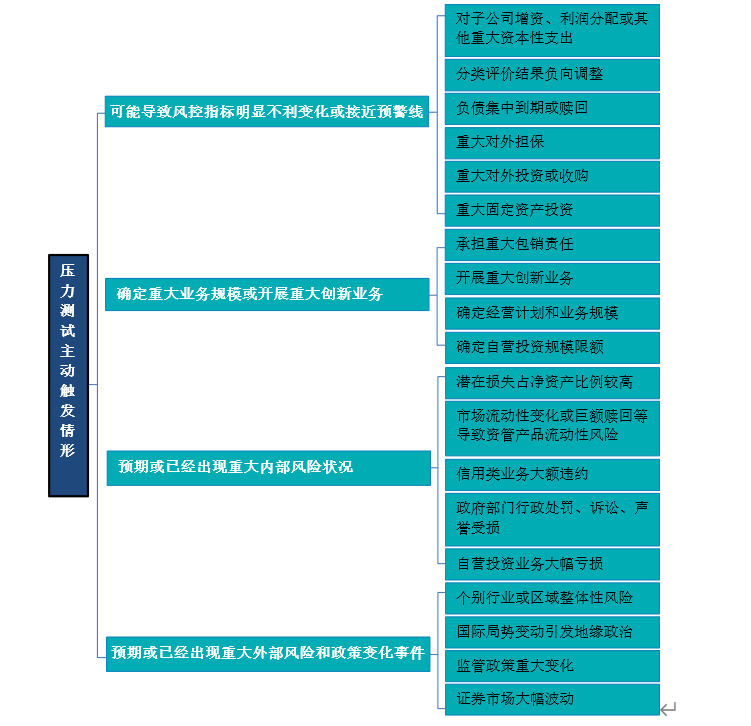
Core Viewpoint - The central financial work meeting in October 2023 emphasized the importance of early identification, warning, exposure, and resolution of risks in the financial sector, highlighting the need for effective pressure testing as a proactive risk management method [1] Group 1: Building a Pressure Testing Management System - The foundation of pressure testing involves creating and continuously improving a risk factor library, stress scenario library, and transmission model library, ensuring unified management of models and parameters [2] - A comprehensive support system comprising organization, regulations, data, models, and information technology is essential for the effective implementation of pressure testing [2] Group 2: Systematic Advancement of Pressure Testing Mechanisms - A comprehensive coverage mechanism for pressure testing should be established, encompassing all business areas and subsidiaries, while considering the interrelation of various risks [3] - The company should conduct annual and semi-annual comprehensive pressure tests, including all key businesses, and ensure that subsidiaries are integrated into the group’s comprehensive pressure testing [3] Group 3: Establishing a Normalized Mechanism - A proactive trigger mechanism for pressure testing should be set up to identify potential risks and effectively prevent and resolve them [4] - Specific triggering conditions and standards should be established, including quantitative thresholds related to net assets and significant market fluctuations [6] Group 4: Enhancing Model Quantification Capabilities - The scientific effectiveness of pressure testing relies on rigorous measurement methods and precise valuation techniques, necessitating a comprehensive modeling system that combines quantitative and qualitative analyses [7][8] - Continuous optimization of model evaluation and validation is crucial to ensure that the models accurately reflect market risks [9] Group 5: Building an Integrated Information System - An integrated information system is vital for enhancing the quality and efficiency of pressure testing, featuring modules for parameter management, factor management, scenario management, model management, testing management, and report management [10][11] Group 6: Strengthening Result Application and Transformation - The core value of pressure testing lies in applying results to risk management and business decision-making, establishing a layered reporting process to ensure relevant stakeholders receive appropriate information [12] - Results from pressure testing should inform business decisions, risk limit settings, and proactive risk management strategies [13] Conclusion - The construction of a pressure testing mechanism is a crucial step for securities companies to enhance risk management capabilities and achieve high-quality development, contributing positively to the stability and healthy development of the capital market [14]


美联储鲍曼:将很快公布压力测试机制调整
Sou Hu Cai Jing· 2025-10-14 14:30
Core Viewpoint - The Federal Reserve's Vice Chair for Supervision, Bowman, plans to announce adjustments to the stress testing mechanism soon, which is expected to be welcomed by Wall Street banks [1] Group 1: Stress Testing Adjustments - The Federal Reserve is gradually rolling out proposals to improve the stress testing process, with a new round of proposals expected to be released in about a week [1] - Banks have long called for modifications to capital requirement-related rules, arguing that these regulations are overly burdensome and restrict business operations [1] Group 2: Basel III Proposal - The new proposal for the U.S. version of the Basel III final framework is currently under discussion with the Federal Deposit Insurance Corporation and the Office of the Comptroller of the Currency [1] - Regulatory agencies have largely abandoned the old version proposed two years ago, with plans to unveil the new version as early as the first quarter of 2026 [1]
美联储召开首次银行资本公开会议,AI首度写入监管议程
第一财经· 2025-07-24 03:09
Core Viewpoint - The Federal Reserve is initiating significant reforms in capital regulation, focusing on transparency and external participation to reshape regulatory paths and alleviate constraints on credit and innovation in the financial system [1][2]. Group 1: Key Discussion Topics - The meeting's core topics included stress testing mechanisms, the calculation methods for the Global Systemically Important Banks (GSIB) surcharge, the implementation path for Basel III Endgame, and potential reforms to the supplementary leverage ratio (eSLR) [4]. - Participants criticized existing rules as overly complex and costly, with a consensus against increasing capital levels, advocating instead for simplified regulations [4][5]. - As of Q1 2025, U.S. large banks held $196 billion in excess capital, representing 16% of their total capital, indicating a backdrop of sufficient capital within the banking system [4]. Group 2: AI in Regulatory Discussions - Artificial intelligence (AI) was introduced as a new topic in banking regulation discussions, with OpenAI's CEO highlighting its rapid integration into financial services, particularly in payments, consulting, and risk management [7]. - The dialogue is seen as the Federal Reserve's proactive response to the risks associated with AI in finance, emphasizing the need for vigilance against potential consumer fraud [8]. Group 3: Regulatory Focus and Future Directions - The Federal Reserve aims to enhance regulatory transparency and incorporate diverse perspectives from various economic sectors, as stated by Vice Chair Michelle Bowman [8]. - The meeting reflects a shift in regulatory focus from Wall Street to the general public, as indicated by recent comments from Treasury Secretary Scott Bessent [8].
美联储召开首次银行资本公开会议:阿尔特曼受邀出席、鲍威尔保持低调
Di Yi Cai Jing· 2025-07-24 02:00
Core Insights - The Federal Reserve is moving towards faster implementation of capital regulatory reforms, despite opposition, with a goal to finalize rules before Powell's term ends [2][3] Group 1: Regulatory Focus - The recent Federal Reserve meeting discussed key topics such as stress testing mechanisms, the calculation of GSIB surcharge, the implementation path for Basel III Endgame, and potential reforms to the eSLR [3][4] - Analysts noted that there was a consensus among participants to simplify regulations rather than increase capital levels, highlighting the complexity and high costs of current rules [3][4] - As of Q1 2025, U.S. large banks are expected to hold $196 billion in excess capital, representing 16% of their total capital, indicating a robust capital position that may be constraining credit and innovation [3] Group 2: AI in Regulatory Discussion - AI was introduced as a new topic in the regulatory agenda, with OpenAI's CEO discussing its rapid integration into financial services and the potential risks it poses, such as consumer fraud [5] - The dialogue around AI is seen as a proactive response from the Federal Reserve to address emerging financial risks associated with technological advancements [5] Group 3: Leadership and Transparency - Federal Reserve Chair Powell remained low-profile during the meeting, engaging privately with select attendees, amidst external pressures from the Trump administration regarding financial regulation [6] - Bowman emphasized the need for a diverse perspective in future regulatory frameworks, aiming for increased transparency and market feedback as key objectives of the current review [6]