
原油库存去化

Search documents
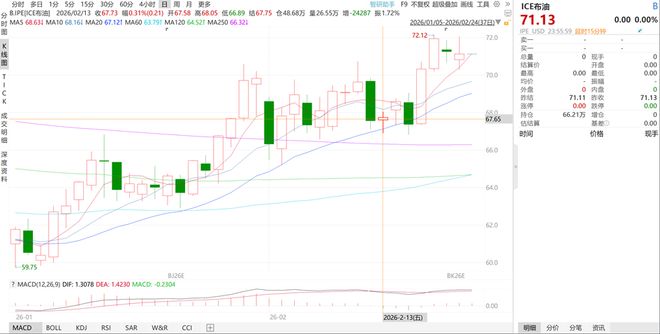
【事件分析】春节期间地缘不稳定性带动布油价格创近期新高
Xin Lang Cai Jing· 2026-02-24 01:34
Group 1 - The core viewpoint of the articles highlights the significant impact of the U.S.-Iran conflict on oil prices, with Brent crude oil futures rising from $67.45 per barrel to $71.61 per barrel, marking a 6% increase during the Chinese New Year period [1][2] - The geopolitical risk premium has shifted from a "one-time shock" to a "normalized premium," indicating a trend of rising oil prices that are easier to increase than to decrease [2][4] - The U.S.-Iran relationship has reached a tense state characterized by simultaneous negotiations and military posturing, with the potential for military action looming [2][4] Group 2 - The mechanisms through which the U.S.-Iran conflict affects oil prices include geopolitical risk premium, shipping safety in the Strait of Hormuz, and changes in Iranian oil exports, which can lead to a reduction in global supply [4][6] - Historical data shows that during the U.S.-Iran conflict in June 2025, Brent crude oil prices increased by approximately $15 per barrel due to geopolitical risks, reflecting a rise of over 20% [4] - The current oil market fundamentals remain loose, but expectations of supply tightening are increasing, especially after OPEC+ announced unexpected production cuts [4][8] Group 3 - The market is currently experiencing high volatility and sensitivity due to geopolitical tensions, with a focus on the potential military action window around February 23-24 [7][8] - If military action occurs, Brent crude prices may break through key resistance levels, while a return to negotiations could lead to a technical correction in oil prices [7][8] - In the medium term, oil prices are expected to remain high due to supply-demand dynamics and geopolitical factors, with support from unexpected declines in U.S. oil inventories and OPEC+ production cuts [8]

能源日报-20250729
Guo Tou Qi Huo· 2025-07-29 13:00
Report Industry Investment Ratings - Crude oil: Not explicitly stated, but the analysis implies a short - term upward support situation [2] - Fuel oil: ☆☆☆, indicating a relatively clear bearish trend according to the star - rating system [1] - Low - sulfur fuel oil: ☆☆, suggesting a bearish trend [1] - Asphalt: Not explicitly stated, with a neutral view on supply and weak demand but some price support [3] - LPG: ★☆☆, representing a bearish bias [1] Core View - The macro - economic and geopolitical factors have an impact on the energy market, with different products showing various trends. The overall energy market is affected by factors such as inventory changes, production adjustments, and demand fluctuations. The prices of these energy products generally follow the trend of crude oil to some extent, but each has its own supply - demand characteristics [2][3][4] Summary by Directory Crude Oil - Since the second half of the year, global crude oil inventory has decreased by 1.9%, refined oil inventory has increased by 1.4%, and the overall petroleum inventory has decreased by 0.7% after increases in the first and second quarters. There are expectations for a more relaxed balance sheet after OPEC+ production returns. There are positive macro - economic expectations from trade agreements and negotiations. The short - term market has upward support [2] Fuel Oil & Low - sulfur Fuel Oil - Macro and geopolitical news boosts oil prices, but fuel - related futures' cracking spreads are expected to be under pressure. In July, the arrival volume in the Singapore market increased by 22.5% month - on - month to 6.55 million tons, and the demand for ship refueling weakened. The cracking spreads are likely to be in a weak and volatile state [2] Asphalt - The planned production in August decreased compared to July, but there are signs of potential production increases. Demand recovery is delayed in the South due to typhoons and is weak in the North. The inventory reduction rhythm has slowed down. The supply increase space is considered neutral, demand has a weak reality but a repair expectation, and the price is supported by low inventory and follows the crude oil trend with limited upward space [3] LPG - Traders are cautious about potential CP price cuts at the end of the month. Exports increase and put pressure on the overseas market. The import cost decline improves chemical profit margins, and the PDH operating rate has room to rise. The supply is relatively loose, and the market is under pressure, showing a weak and volatile trend [4]