
反事实推理

Search documents
让Agent学会「先试再做」:微软提出Computer-Using World Model,教智能体理解动作的后果
机器之心· 2026-03-08 10:04
Core Insights - The article discusses the limitations of current GUI agents in performing tasks within desktop software, highlighting their inability to predict the outcomes of actions before execution [2][5][30] - It introduces the Computer-Using World Model (CUWM) developed by Microsoft's research team, which aims to enhance the decision-making capabilities of AI agents by allowing them to simulate potential outcomes before taking action [7][30] Group 1: CUWM Overview - CUWM enables agents to predict the next state of a software interface based on a current screenshot and a proposed action, allowing for a more informed decision-making process [9][12] - The model focuses on understanding changes in the system state rather than generating visually accurate images, which improves efficiency in predicting outcomes [18][30] - Training data for CUWM is derived from real software interactions, creating structured training samples that include interface changes and corresponding actions [20] Group 2: Decision-Making Process - The CUWM process involves two stages: generating a textual description of changes and then applying those changes to create a predicted next state of the UI [24][26] - In experiments, agents using CUWM can evaluate multiple candidate actions and select the one that best aligns with the task goal, significantly reducing trial-and-error in real environments [22][30] - This approach shifts the burden of trial-and-error from the real environment to an internal simulation, enhancing the agent's ability to plan actions effectively [26][30] Group 3: Implications for AI Development - The evolution of AI capabilities is moving from understanding and expression to decision-making, where the focus is on the effectiveness of actions rather than just the correctness of responses [28][30] - The ability to evaluate potential outcomes before executing actions represents a significant advancement in AI, transforming it from a reactive tool to an active decision-maker in digital environments [30]



英伟达Alpamayo再进化!反事实推理VLA,安全性能提升很可观
自动驾驶之心· 2026-01-07 01:07
Core Insights - The article discusses the development of the Counterfactual Vision-Language-Action (CF-VLA) model, which incorporates self-reflective reasoning to enhance the safety and accuracy of autonomous driving systems [3][54]. - CF-VLA aims to address the limitations of existing Vision-Language-Action (VLA) models by enabling them to reflect on their planned actions and make necessary adjustments before execution [10][54]. Group 1: Model Development - CF-VLA introduces a self-reflective reasoning loop that allows the model to analyze and correct its planned actions based on potential outcomes [10][54]. - The model generates time-segmented meta-actions to summarize driving intentions and performs counterfactual reasoning to identify unsafe behaviors [3][10]. - A "rollout-filter-label" data processing pipeline is designed to extract high-value scenarios from the model's rollout results, enhancing the training process [11][15]. Group 2: Performance Improvements - Experiments show that CF-VLA improves trajectory accuracy by up to 17.6% and safety metrics by 20.5% compared to baseline models [14][54]. - The model demonstrates adaptive reasoning capabilities, activating counterfactual reasoning primarily in complex scenarios, thus optimizing computational resources [16][54]. - The integration of counterfactual reasoning transforms the model's reasoning from descriptive to causal self-correction, significantly enhancing its decision-making process [15][54]. Group 3: Data Utilization - The training dataset includes approximately 11.6 million 20-second video clips, providing a diverse range of driving behaviors [8][35]. - The meta-action training set consists of 433,000 20-second clips and 801,000 8.4-second samples, with a validation set of 39,000 video clips [8][35]. - The counterfactual reasoning dataset typically contains 200,000 samples, which are crucial for training the model's reflective capabilities [8][35]. Group 4: Experimental Results - The CF-VLA model was evaluated on a large proprietary dataset comprising 80,000 hours of human driving data from 25 countries, covering various driving conditions [35][36]. - Key performance metrics include minimum average displacement error (MinADE), minimum final displacement error (MinFDE), and collision rates, which indicate the model's effectiveness in real-world scenarios [37][41]. - The results indicate that CF-VLA consistently outperforms traditional models in both trajectory accuracy and safety, demonstrating the effectiveness of its self-reflective reasoning approach [42][45].

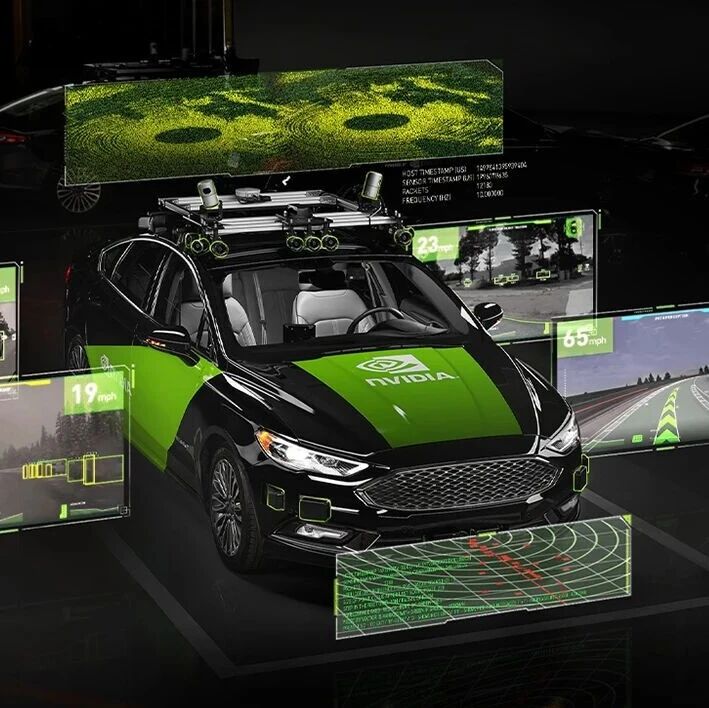
英伟达用千万Clip搞定了反事实推理VLA!安全指标提升了20%......
自动驾驶之心· 2026-01-05 03:33
Core Insights - The article discusses the development of the Counterfactual Vision-Language-Action (CF-VLA) model, which incorporates self-reflective reasoning to enhance the safety and accuracy of autonomous driving systems [3][56] - CF-VLA aims to address the limitations of existing Vision-Language-Action (VLA) models by enabling them to reflect on their planned actions before execution, thereby improving decision-making in complex driving scenarios [10][56] Group 1: Model Development - CF-VLA introduces adaptive reasoning and self-reflection capabilities, allowing the model to adjust its actions based on potential outcomes identified through counterfactual reasoning [3][10] - The model generates time-segmented meta-actions to summarize driving intentions and utilizes these to perform counterfactual reasoning, identifying unsafe behaviors and correcting them before final trajectory generation [3][10] - The "rollout-filter-label" data processing pipeline is designed to extract high-value scenarios from the model's rollout results, enhancing the training process for counterfactual reasoning [11][14] Group 2: Performance Metrics - Experiments on large-scale driving datasets show that CF-VLA improves trajectory accuracy by up to 17.6% and safety metrics by 20.5% compared to baseline models [14][56] - The model demonstrates adaptive reasoning capabilities, activating counterfactual reasoning primarily in complex scenarios, thus optimizing computational resources during testing [16][48] - The introduction of meta-actions significantly enhances the model's performance, reducing minimum average displacement error (MinADE) and minimum final displacement error (MinFDE) by approximately 9% compared to pure trajectory models [43][44] Group 3: Practical Applications - CF-VLA's self-reflective capabilities allow it to make context-specific corrections, improving safety and traffic efficiency in various driving scenarios, such as avoiding congestion and responding to pedestrians [57] - The model's ability to dynamically decide when to engage in reasoning helps maintain a balance between computational efficiency and decision-making quality [21][48] - The findings suggest that counterfactual self-reflection can effectively bridge reasoning and control in autonomous driving systems, providing a framework for future advancements in the field [56][57]
遇到难题,大脑如何临场应变
Ke Ji Ri Bao· 2025-06-19 07:48
Core Insights - The human brain excels at breaking down complex problems into manageable tasks and adapting strategies in real-time to ensure successful outcomes [1][2][5] Group 1: Experiment and Findings - Researchers from MIT designed an experiment involving 150 volunteers to understand how the brain adapts to complex decision-making tasks [3] - Participants were tasked with determining the path of an invisible ball in a maze, using auditory cues to guide their judgments, which proved to be a challenging task [4] - The study revealed that most participants did not rely on a single strategy but instead adapted their approach based on the situation, demonstrating a combination of "layered" and "counterfactual" reasoning strategies [4] Group 2: Implications of the Research - The findings suggest that when faced with complex problems, the human brain makes practical choices under limited resources rather than striving for perfection [5] - An AI trained to perform the same task adopted similar "good enough" strategies when subjected to constraints akin to those faced by humans, indicating that this adaptive approach may not be exclusive to human cognition [4]