自动驾驶技术

Search documents
从卖车到卖服务:特斯拉FSD彻底转向订阅制,每月99美元订阅成唯一选项
Hua Er Jie Jian Wen· 2026-01-14 08:44
Core Insights - Tesla is shifting from a one-time sale model for its Full Self-Driving (FSD) system to a subscription-based model, with a monthly fee of $99 starting February 14 [1][2] - This change aims to lower the entry barrier for potential users, eliminating the need for an upfront payment of approximately $8,000 in the U.S. market [2] - The transition comes as Tesla faces declining sales and aims to focus more on technology-driven projects like FSD, autonomous taxis, and robotics to create new revenue streams [1][2] Subscription Model Benefits - The subscription model allows users to experience the FSD system without the high initial cost, requiring about 6.7 years of continuous subscription to match the cost of the original one-time purchase [2] - Despite being labeled as "Full Self-Driving," the technology still requires human supervision and frequent intervention, indicating it remains a driver assistance feature rather than true autonomous driving [2]

英伟达Alpamayo再进化!反事实推理VLA,安全性能提升很可观
自动驾驶之心· 2026-01-07 01:07
Core Insights - The article discusses the development of the Counterfactual Vision-Language-Action (CF-VLA) model, which incorporates self-reflective reasoning to enhance the safety and accuracy of autonomous driving systems [3][54]. - CF-VLA aims to address the limitations of existing Vision-Language-Action (VLA) models by enabling them to reflect on their planned actions and make necessary adjustments before execution [10][54]. Group 1: Model Development - CF-VLA introduces a self-reflective reasoning loop that allows the model to analyze and correct its planned actions based on potential outcomes [10][54]. - The model generates time-segmented meta-actions to summarize driving intentions and performs counterfactual reasoning to identify unsafe behaviors [3][10]. - A "rollout-filter-label" data processing pipeline is designed to extract high-value scenarios from the model's rollout results, enhancing the training process [11][15]. Group 2: Performance Improvements - Experiments show that CF-VLA improves trajectory accuracy by up to 17.6% and safety metrics by 20.5% compared to baseline models [14][54]. - The model demonstrates adaptive reasoning capabilities, activating counterfactual reasoning primarily in complex scenarios, thus optimizing computational resources [16][54]. - The integration of counterfactual reasoning transforms the model's reasoning from descriptive to causal self-correction, significantly enhancing its decision-making process [15][54]. Group 3: Data Utilization - The training dataset includes approximately 11.6 million 20-second video clips, providing a diverse range of driving behaviors [8][35]. - The meta-action training set consists of 433,000 20-second clips and 801,000 8.4-second samples, with a validation set of 39,000 video clips [8][35]. - The counterfactual reasoning dataset typically contains 200,000 samples, which are crucial for training the model's reflective capabilities [8][35]. Group 4: Experimental Results - The CF-VLA model was evaluated on a large proprietary dataset comprising 80,000 hours of human driving data from 25 countries, covering various driving conditions [35][36]. - Key performance metrics include minimum average displacement error (MinADE), minimum final displacement error (MinFDE), and collision rates, which indicate the model's effectiveness in real-world scenarios [37][41]. - The results indicate that CF-VLA consistently outperforms traditional models in both trajectory accuracy and safety, demonstrating the effectiveness of its self-reflective reasoning approach [42][45].


Lucid携手Uber发布豪华无人出租车丨直击CES
Xin Lang Cai Jing· 2026-01-06 02:59
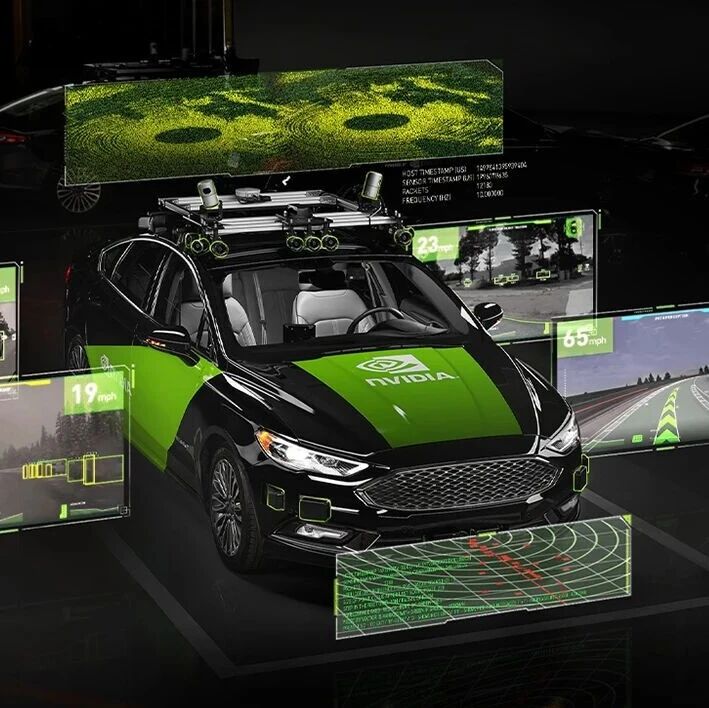
Core Viewpoint - The collaboration between Lucid, Uber, and Nuro aims to launch a production-level autonomous taxi, Robotaxi, based on the Lucid Gravity SUV, with commercial operations expected to start in late 2026 [1][2][3]. Group 1: Product and Technology - The Robotaxi is built on the Lucid Gravity all-electric SUV platform and features a new generation sensor array, including high-resolution cameras, solid-state LiDAR sensors, and radar, providing 360-degree perception capabilities [1][3]. - The vehicle utilizes the NVIDIA Drive AGX Thor computing platform for real-time AI processing and advanced autonomous driving support, accommodating up to six passengers with interactive screens for personalized settings [1][3]. Group 2: Market Deployment and Financial Aspects - The three companies plan to deploy over 20,000 Lucid vehicles equipped with Nuro Driver Level 4 autonomous driving systems over the next six years, covering multiple global markets [1][2][3]. - Uber plans to invest hundreds of millions of dollars into Nuro and Lucid as part of this collaboration, which is significant for Lucid as it seeks cash flow support [2][4].


回望2025·实物见变迁丨车轮上的新体验——2025年汽车“智变”里的科技跃迁
Xin Hua She· 2025-12-22 01:37
Core Insights - The article discusses the rapid adoption of intelligent driving technologies in the Chinese automotive industry, highlighting the shift from traditional driving to smart driving experiences by 2025 [1][2]. Group 1: Market Trends - By the third quarter of 2025, new passenger cars equipped with Level 2 (L2) driving assistance features saw a year-on-year sales increase of 21.2%, with a penetration rate of 64%, indicating that over 6 out of every 10 new cars sold have basic smart driving capabilities [1]. - The focus of consumers is shifting from single highway scenarios to complex urban environments, with a growing preference for driving assistance systems that can handle city traffic and intersections [2]. Group 2: Technological Advancements - Continuous technological breakthroughs and rapidly decreasing costs are driving the smart driving revolution, with hardware costs halving every two years and user experience expected to improve tenfold in the same period [3]. - The Chinese smart driving market is at a critical turning point in 2025, transitioning from "technology validation" to "scene implementation," with L2 features becoming standard across all vehicle models [3]. Group 3: Industry Dynamics - The market is experiencing intense competition, leading to a significant industry reshuffle where only companies with technical strength and mass production experience will survive [4]. - The focus of market competition is shifting towards user experience, cost control, and product ecosystem, with a predicted market structure that will be characterized by significant stratification and specialization [5].
特斯拉辟谣“加州禁售30天”报道:销售业务将照常进行
Sou Hu Cai Jing· 2025-12-18 00:42
Core Viewpoint - Tesla has refuted reports regarding a 30-day sales ban in California, following a judge's ruling that the company misled consumers about its driver assistance technology [1][2]. Group 1: Regulatory Actions - The California Department of Motor Vehicles (DMV) initially planned to enforce a penalty against Tesla but decided to postpone it for 90 days to allow the company time for compliance [2]. - The ruling is related to the use of the term "Autopilot," which the DMV and the judge have classified as a consumer protection issue [2]. Group 2: Company Response - Tesla stated that no consumers had raised concerns about the terminology, but emphasized the need to comply with the ruling to avoid penalties [2]. - The company reassured that its sales operations in California would continue unaffected [2]. Group 3: Public Reaction - The ruling has sparked strong discontent among Tesla's fanbase, with some suggesting that the company should withdraw from the California market [3]. - Supporters highlighted Tesla's contributions to job creation, engineering, and innovation in California, arguing that the state does not deserve such contributions [3]. Group 4: Terminology Changes - Tesla has been using the terms "Autopilot" and "FSD (Full Self-Driving)" for years, but earlier this year, it added "Supervised" to the "FSD" name to potentially avoid future disputes [3].
景林资产第三季增持阿里巴巴和拼多多等
Zheng Quan Shi Bao Wang· 2025-11-11 00:42
Group 1 - The core viewpoint of the article highlights that Jinglin Asset's US stock holdings surged to $4.44 billion by the end of Q3 2025, a significant increase from $2.873 billion in Q2 [1] - Jinglin Asset made substantial investments in WeRide, acquiring 2.68 million shares, as the company accelerates its transition from technology research and development to commercialization in the autonomous driving sector [1] - The firm increased its positions in the hotel and e-commerce sectors, with Atour becoming the second-largest addition in Q3, acquiring over 2.08 million shares, while also boosting its holdings in Huazhu [1] Group 2 - Jinglin Asset has also increased its stakes in major e-commerce giants Alibaba and Pinduoduo, with Alibaba's stock price soaring 94% this year, supported by strong cash flow from its core business, which funds investments in cloud computing, streaming, and AI chips [1] - The company has completely divested from several key stocks, including Daqo New Energy, Trip.com, BeiGene, and Hesai Technology [1]


Mobileye上调全年业绩展望
Ge Long Hui A P P· 2025-10-23 14:21
Core Insights - Mobileye Global Inc. reported third-quarter financial results for the fiscal year 2025, with revenue reaching $504 million, representing a year-over-year growth of 4% [1] - The company reported a diluted earnings per share of -$0.12, while the adjusted diluted earnings per share was $0.09 [1] - Mobileye raised its full-year revenue guidance for fiscal year 2025 to a range of $1.845 billion to $1.885 billion, expecting a year-over-year growth rate of 12% to 14% [1]

惠誉下调美国25%行业前景评级至“恶化”;住房租赁,有“法”可依了;京东两个月投4家具身智能公司;深圳“东方金钰大厦”被拍卖丨每经早参
Mei Ri Jing Ji Xin Wen· 2025-07-21 22:03
Group 1 - The People's Bank of China conducted a reverse repurchase operation of 342.5 billion yuan for a 7-day term [3] - The U.S. stock market showed mixed results with the Dow Jones down 0.04%, Nasdaq up 0.38%, and S&P 500 up 0.14% [4] - International precious metals futures saw a general increase, with COMEX gold futures rising by 1.55% to $3410.3 per ounce and COMEX silver futures up 2.02% to $39.24 per ounce [5] Group 2 - International oil prices slightly declined, with WTI crude oil down 0.41% to $65.78 per barrel and Brent crude down 0.36% to $69.03 per barrel [6] - European stock indices closed mixed, with Germany's DAX up 0.08% to 24307.8 points, France's CAC40 down 0.31% to 7798.22 points, and the UK's FTSE 100 up 0.23% to 9012.99 points [7] Group 3 - The State Council of China announced the implementation of the "Housing Rental Regulations" effective from September 15, 2025, aimed at regulating rental activities and promoting high-quality development in the housing rental market [8] - The Ministry of Commerce of China expressed strong opposition to the EU's sanctions against Chinese companies and financial institutions in the 18th round of sanctions against Russia [8] Group 4 - BYD celebrated the rollout of its 13 millionth new energy vehicle, with domestic sales exceeding 2.113 million units in the first half of 2025, a year-on-year increase of 31.5% [15] - JD.com made significant investments in three leading companies in the field of embodied intelligence, indicating a strong focus on technological innovation [16] Group 5 - Dingdong Maicai announced its "4G" strategy to differentiate itself in the market, focusing on quality products and services to escape homogenization [20] - China Petroleum & Chemical Corporation (Sinopec) invested in Fengdeng Green Energy Environmental Protection Co., becoming its second-largest shareholder, which will support the construction of "waste-free parks" [23] Group 6 - GoerTek submitted an application for listing on the Hong Kong Stock Exchange, which is expected to attract more investor attention [24] - Wenyan Zhixing and Lenovo collaborated to launch a high-performance computing platform, which is anticipated to enhance competitiveness in the autonomous driving sector [26]

当下自动驾驶的技术发展,重建还有哪些应用?
自动驾驶之心· 2025-06-29 08:19
Core Viewpoint - The article discusses the evolving landscape of 4D annotation in autonomous driving, emphasizing the shift from traditional SLAM techniques to more advanced methods for static element reconstruction and automatic labeling [1][4]. Group 1: Purpose and Applications of Reconstruction - The primary purposes of reconstruction are to create 3D maps from lidar or multiple cameras and to output vector lane lines and categories [5][6]. - The application of 4D annotation in static elements remains broad, with a focus on lane markings and static obstacles, which require 2D spatial annotations at each timestamp [1][6]. Group 2: Challenges in Automatic Annotation - The challenges in 4D automatic annotation include high temporal consistency requirements, complex multi-modal data fusion, difficulties in generalizing dynamic scenes, conflicts between annotation efficiency and cost, and high demands for scene generalization in production [8][9]. - These challenges hinder the iterative efficiency of data loops in autonomous driving, impacting the system's generalization capabilities and safety [8]. Group 3: Course Structure and Content - The course on 4D automatic annotation covers a comprehensive curriculum, including dynamic obstacle detection, SLAM reconstruction principles, static element annotation based on reconstruction graphs, and the end-to-end truth generation process [9][10][17]. - Each chapter includes practical exercises to enhance understanding and application of the algorithms discussed [9][10]. Group 4: Instructor and Target Audience - The course is led by an industry expert with extensive experience in multi-modal 3D perception and data loop algorithms, having participated in multiple production delivery projects [21]. - The target audience includes researchers, students, and professionals looking to transition into the data loop field, requiring a foundational understanding of deep learning and autonomous driving perception algorithms [24][25].