反对台独

Search documents
为两岸关系和平发展带来正能量
Xin Lang Cai Jing· 2026-02-06 21:01
Core Viewpoint - The cross-strait forum held by the Kuomintang and the Communist Party on February 3 in Beijing is seen as a positive step towards enhancing cross-strait relations and addressing the needs of the Taiwanese people [1][2]. Group 1: Forum Outcomes - The forum focused on three main topics: "Cross-Strait Tourism Exchange Cooperation," "Cross-Strait Industrial Exchange Cooperation," and "Cross-Strait Environmental and Sustainable Development Exchange Cooperation," resulting in 15 common opinions [1][2]. - The common opinions emphasize the need to restore normal exchanges between the two sides, signaling a desire for improved understanding and peace in the Taiwan Strait [1][2]. Group 2: Perspectives on Future Cooperation - Experts suggest that future cooperation could extend beyond tourism and healthcare to include e-commerce logistics, infrastructure, cultural creativity, and more, benefiting Taiwanese youth, small and medium enterprises, and the general public [2]. - The forum is viewed as a valuable communication channel amid rising tensions in the Taiwan Strait, advocating for investment in economic development rather than military expenditures [2]. Group 3: Call for Policy Changes - There is a call for the Democratic Progressive Party to recognize public sentiment and lift unreasonable restrictions on cross-strait exchanges, reflecting a strong desire for cooperation among the populace [2].
热评两岸丨国共两党智库论坛是一个好的开始
Yang Shi Xin Wen Ke Hu Duan· 2026-02-05 02:24
Core Viewpoint - The recent Cross-Strait Forum marks a significant step in the institutionalized communication between the Kuomintang and the Communist Party, aiming to foster positive developments in cross-strait relations amidst a complex geopolitical landscape [1][3]. Group 1: Forum Significance - The forum is seen as a hopeful beginning for cross-strait relations, injecting positive energy into the development of ties between the two sides [1]. - It serves as a platform for dialogue and cooperation, reflecting the desire of the Taiwanese people for better communication and interaction with the mainland [3]. Group 2: Historical Context - The forum builds on a decade-long history of dialogue initiated in 2006, which has led to various achievements such as direct flights and increased tourism from the mainland to Taiwan [3]. - Previous forums have focused on pressing issues for the people, and this year's forum continues that tradition with discussions on tourism, industry cooperation, and sustainable development [3]. Group 3: Public Sentiment and Political Dynamics - The current political climate in Taiwan, characterized by the Democratic Progressive Party's push for independence, has heightened public desire for peace and development, which the forum aims to address [4]. - The forum is viewed as a grassroots movement to encourage participation in cross-strait cooperation, countering the DPP's narrative [4]. Group 4: Future Outlook - The forum's discussions emphasize the importance of adhering to the "1992 Consensus" and opposing independence, which are seen as essential for guiding the future of cross-strait relations [5]. - There is a growing recognition among Taiwanese citizens that cooperation and dialogue can lead to better living conditions, outweighing the costs of confrontation [6].

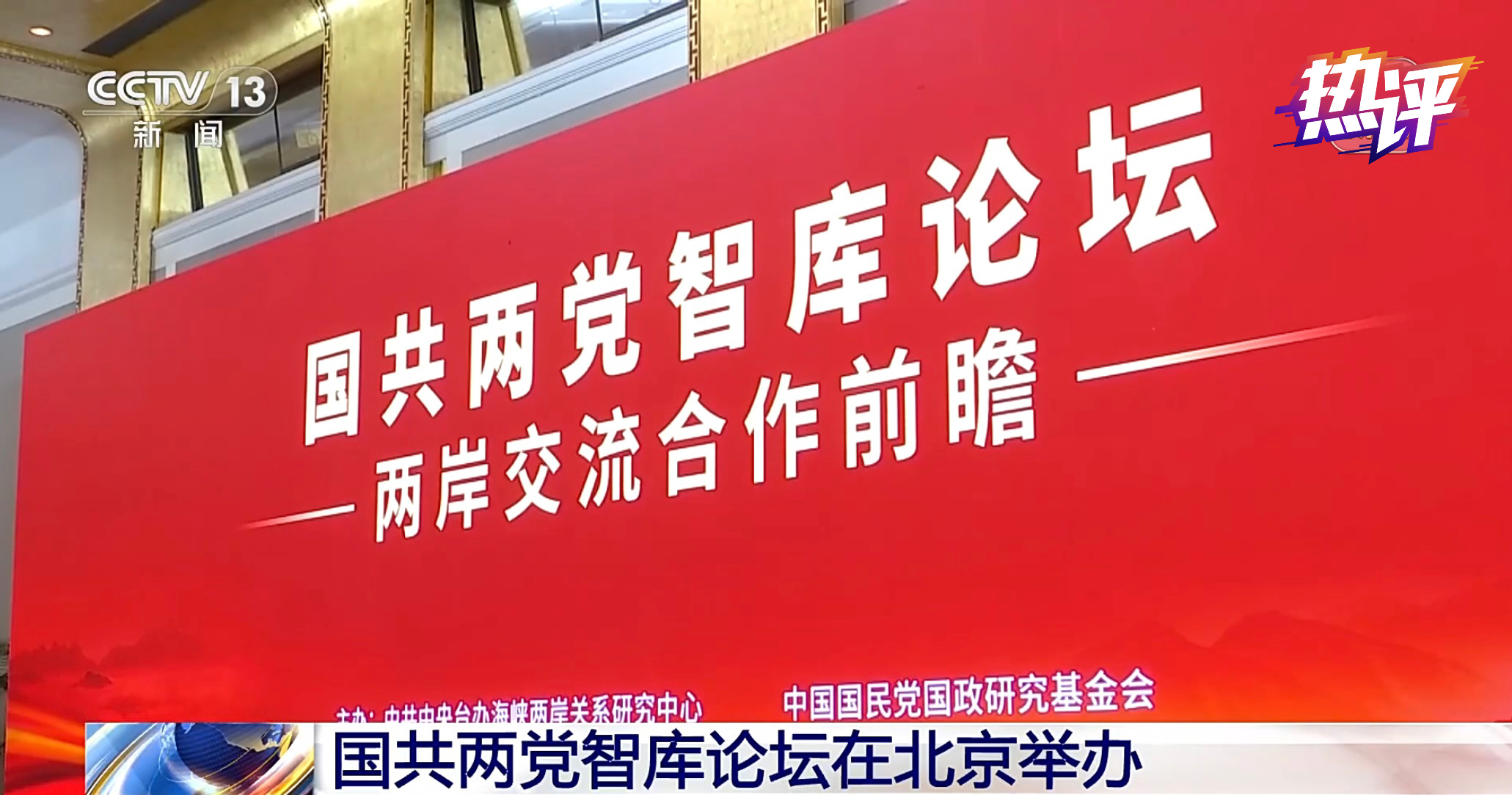
“国共交流为两岸寒冬带来暖流”,岛内各界热议国共两党智库论坛释放正向信号
Xin Lang Cai Jing· 2026-02-05 00:40
Core Viewpoint - The resumption of institutional exchanges between the Kuomintang (KMT) and the Communist Party of China (CPC) marks a significant step towards enhancing cross-strait relations, emphasizing the importance of the "1992 Consensus" and opposition to "Taiwan independence" as the political foundation for dialogue and cooperation [1][2][3]. Group 1: Political Foundations - The "1992 Consensus" and opposition to "Taiwan independence" are highlighted as the essential political basis for continued exchanges between the KMT and CPC, which are deemed crucial for the peaceful development of cross-strait relations [1][2]. - Wang Huning, a senior CPC official, emphasized the need to strengthen communication with various Taiwanese parties and groups to promote peace and development across the strait [1]. Group 2: Economic Cooperation - The forum discussed various topics, including tourism, industrial cooperation, and sustainable development, aiming to normalize personnel exchanges between the two sides [4][5]. - The KMT's vice chairman, Hsiao Bi-khim, reiterated the importance of economic collaboration, referencing historical statements about "earning the world's money" through cross-strait cooperation [5]. Group 3: Public Sentiment and Identity - KMT Chair Zheng Li-wen expressed the need for reconciliation and communication to reduce misjudgments and avoid conflicts, emphasizing that identity recognition among the Taiwanese public is rooted in cultural and historical contexts [3]. - Zheng criticized the Democratic Progressive Party (DPP) for its long-standing push for "de-Sinicization," which she believes has contributed to a decline in the number of Taiwanese identifying as Chinese [3]. Group 4: Responses and Reactions - The DPP's response to the forum's outcomes was dismissive, claiming that the KMT's proposals do not align with the needs of the Taiwanese people, while the KMT argued that improved cross-strait communication is essential for peace [6]. - The forum's outcomes were viewed positively by various analysts, suggesting that it could lead to practical policy implementations and a revival of non-sensitive exchanges between the two sides [4][5].
国共两党智库论坛是一个好的开始
Jing Ji Guan Cha Wang· 2026-02-04 14:49
Core Viewpoint - The recent cross-strait forum between the Kuomintang and the Communist Party is seen as a significant step towards restoring communication and cooperation between Taiwan and mainland China, amidst a complex and tense situation in the Taiwan Strait [1][2]. Group 1: Forum Significance - The forum is described as a "good start" that injects positive energy into cross-strait relations, reflecting the hopes of the people for improved communication and cooperation [1]. - The event marks the resumption of institutionalized exchanges between the two parties after a decade, aiming to address the needs and concerns of the people on both sides [2]. Group 2: Key Discussions and Outcomes - The forum focused on three main topics: tourism exchange, industrial cooperation, and environmental sustainability, with over a hundred representatives and experts participating [2]. - Five areas of common opinions were proposed, demonstrating the commitment of both parties to peace in the Taiwan Strait and the welfare of the people [2]. Group 3: Political Context - The forum is positioned as a response to the increasing desire for peace and development among the Taiwanese public, contrasting with the independence agenda of the Democratic Progressive Party (DPP) [2]. - The DPP's actions are portrayed as leading to a state of anxiety and fear regarding cross-strait relations, highlighting a disconnect between the party and mainstream public opinion in Taiwan [2][3]. Group 4: Future Aspirations - The forum's discussions emphasized the importance of adhering to the "1992 Consensus" and opposing "Taiwan independence" as a foundation for guiding cross-strait relations [3]. - There is a call for deeper integration and cooperation to enhance the well-being of all Chinese people, including those in Taiwan, with an emphasis on the benefits of dialogue and collaboration [3].
视频丨坚持“九二共识” 反对“台独”分裂 国共两党智库论坛释放清晰信号
Yang Shi Xin Wen Ke Hu Duan· 2026-02-04 01:36
Group 1 - The forum held in Beijing focused on "Prospects for Cross-Strait Exchange and Cooperation," emphasizing the need for collaboration to promote peaceful development of cross-strait relations and to create conditions for deeper exchanges in various fields [1][5] - Participants discussed three main topics: tourism exchange, industrial cooperation, and environmental sustainability, proposing 15 common opinions aimed at enhancing collaboration in areas such as tourism, healthcare, artificial intelligence, precision machinery, disaster prevention, and energy conservation [1][5] - The forum marked a significant step in restoring institutionalized exchanges between the Kuomintang and the Communist Party after nearly a decade, signaling a commitment to strengthen interactions based on the "1992 Consensus" and opposing "Taiwan independence" [1][11] Group 2 - The Vice Chairman of the Kuomintang National Policy Research Foundation highlighted the complex situation in the Taiwan Strait since the Democratic Progressive Party took office in 2016, calling for unity among compatriots to improve livelihoods and work towards national rejuvenation [3] - The Director of the Renewable Energy Center at the National Development and Reform Commission emphasized the importance of green and low-carbon development initiatives discussed at the forum, which could benefit both sides of the strait [7] - The founding chairperson of the Taiwan Tourism Exchange Association expressed hopes that the forum would strengthen cross-strait exchanges through tourism, creating positive possibilities for future development [9]
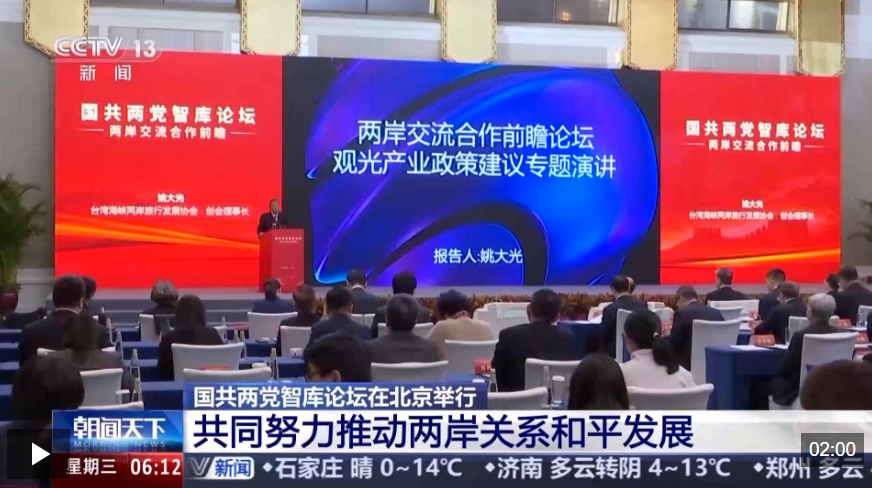
坚持“九二共识” 反对“台独”分裂 国共两党智库论坛释放清晰信号
Yang Shi Xin Wen· 2026-02-03 23:24
Group 1 - The forum held in Beijing focused on "Prospects for Cross-Strait Exchange and Cooperation," emphasizing the need for collaboration to promote peaceful development of cross-strait relations and create conditions for deeper exchanges in various fields [1][2] - Participants discussed three main topics: tourism exchange, industrial cooperation, and environmental sustainability, proposing 15 common opinions aimed at enhancing collaboration in areas such as tourism, healthcare, artificial intelligence, precision machinery, disaster prevention, and energy conservation [1] - The forum highlighted the importance of maintaining positive interactions between the Kuomintang and the Communist Party, which is seen as beneficial for deepening cross-strait exchanges and improving the welfare of people on both sides [1][2] Group 2 - The forum marked a significant resumption of institutionalized exchanges between the Kuomintang and the Communist Party after nearly a decade, signaling a commitment to strengthen communication and cooperation based on the "1992 Consensus" and opposition to "Taiwan independence" [2] - Experts expressed optimism that the discussions would lead to practical measures for green and low-carbon development, benefiting both sides of the strait [2]
总台海峡时评:国共两党重启机制化交流,有力引领两岸关系发展方向
Xin Lang Cai Jing· 2026-02-03 17:46
Group 1 - The forum held on February 3 in Beijing marked the resumption of institutionalized exchanges between the Kuomintang (KMT) and the Communist Party of China (CPC) after ten years, responding to the urgent expectations of both sides for stability in the Taiwan Strait and improved cross-strait relations [1][4] - The forum emphasized the importance of adhering to the "1992 Consensus" and opposing "Taiwan independence" as essential foundations for dialogue and peaceful interactions between the two sides, with KMT Vice Chairman Hsiao Hsu-tsen expressing hopes for harmonious integration and mutual prosperity [4][5] - The forum aimed to normalize cross-strait exchanges and cooperation, aligning with the mainstream public opinion in Taiwan, where over 70% of the population desires engagement with the mainland, reflecting a strong demand for collaboration across various sectors [5] Group 2 - The discussions at the forum focused on practical topics such as tourism and industrial cooperation, proposing 15 joint recommendations to address the pressing needs of Taiwan's industries and public [5] - The successful restart of the "KMT-CPC Forum" is seen as a significant beginning, with expectations that it will foster broader support for dialogue and cooperation, encouraging more people in Taiwan to participate in national unity and shared development [5]
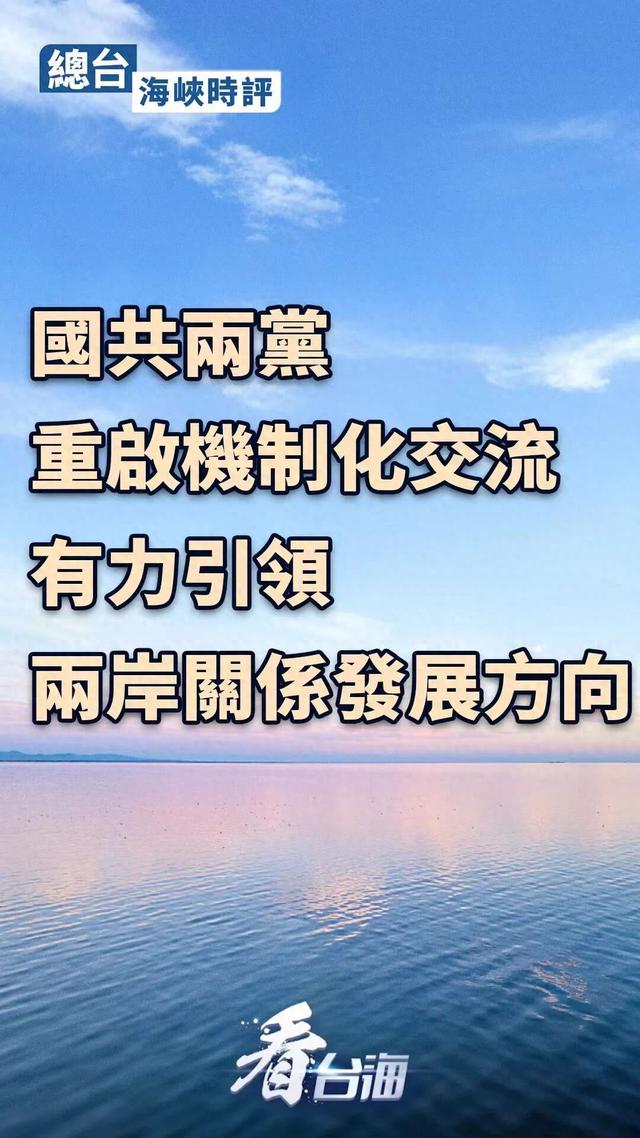
国共两党智库论坛在京开幕
Xin Hua She· 2026-02-03 12:22
Group 1 - The forum titled "Prospects for Cross-Strait Exchange and Cooperation" was co-hosted by the Taiwan Affairs Office of the Central Committee and the Kuomintang's National Policy Research Foundation, with over 100 representatives from various sectors attending [1][2] - Song Tao, Director of the Taiwan Affairs Office, emphasized the importance of adhering to the "1992 Consensus" and opposing "Taiwan independence" as a political foundation for the development of cross-strait relations [1] - The forum aims to deepen integration and promote cooperation between the two sides, focusing on improving the welfare of all Chinese people, including those in Taiwan [1] Group 2 - KMT Vice Chairman Hsiao Hsu-tsen highlighted the shared heritage of the Chinese nation and the need for mutual cooperation to revitalize China, emphasizing the importance of maintaining communication channels between the two sides [2] - Various experts and representatives, including those from the Taiwan Strait Travel Development Association and the National Development and Reform Commission, delivered specialized speeches at the forum [2]
时隔近10年 国共两党恢复机制化交流
Xin Lang Cai Jing· 2026-01-30 03:10
Core Viewpoint - The upcoming Cross-Strait Forum on February 3 in Beijing marks the resumption of institutionalized exchanges between the Kuomintang (KMT) and the Communist Party of China (CPC) after nearly a decade, focusing on enhancing cross-strait communication and cooperation amidst ongoing tensions [1][9]. Group 1: Forum Details - The forum will gather around 40 Taiwanese experts and scholars, including KMT Vice Chairman Hsiao Hsu-tsen, to discuss key areas such as tourism, industry, technology, healthcare, and environmental sustainability [2][4]. - The theme of the forum is "Prospects for Cross-Strait Exchange and Cooperation," aiming to address pressing issues that concern the Taiwanese public, particularly in sectors like AI, high-tech, green energy, and disaster relief [4][5]. Group 2: Political Context - The forum is seen as a critical step in consolidating cross-strait consensus and fostering communication, especially in light of the Democratic Progressive Party's (DPP) efforts to suppress cross-strait exchanges [5][10]. - Public sentiment in Taiwan indicates a strong desire for restored cross-strait communication, with dissatisfaction towards the DPP's restrictive policies on exchanges [9][10]. Group 3: Implications for Cross-Strait Relations - The forum is expected to serve as a platform for civil society to engage in dialogue, promoting the idea that opposition to "Taiwan independence" and adherence to the "1992 Consensus" can facilitate cooperation [15]. - The resumption of the KMT-CPC forum is viewed as a means to provide a different choice for Taiwan's society, steering cross-strait relations towards peaceful and integrated development [9][14].
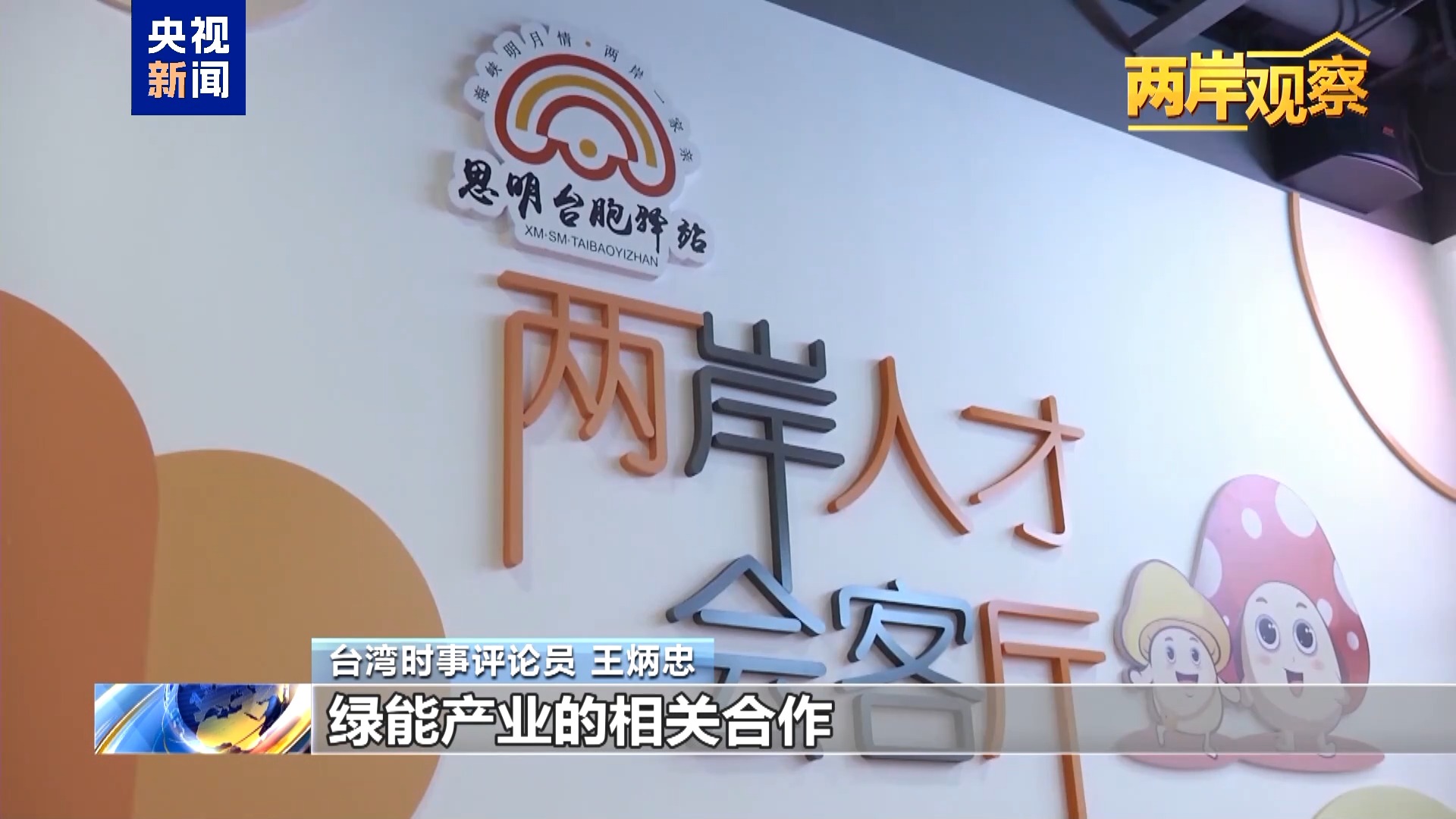
两岸观察丨时隔近10年 国共两党恢复机制化交流
Yang Shi Xin Wen Ke Hu Duan· 2026-01-30 02:45
Core Viewpoint - The upcoming Cross-Strait Forum on February 3 in Beijing marks the resumption of institutionalized exchanges between the Kuomintang (KMT) and the Communist Party of China (CPC) after nearly a decade, focusing on enhancing cross-strait communication and cooperation amidst increasing tensions and political pressures from the Democratic Progressive Party (DPP) [1][8]. Group 1: Forum Details - The forum will feature around 40 Taiwanese experts and scholars, including KMT Vice Chairman Hsiao Hsu-tsen, and will discuss key areas such as tourism, industry, technology, healthcare, and environmental sustainability [2][4]. - The theme of the forum is "Prospects for Cross-Strait Exchange and Cooperation," aiming to address the pressing needs and concerns of the Taiwanese public regarding cross-strait relations [1][2]. Group 2: Political Context - The forum is seen as a critical step in consolidating cross-strait consensus and fostering communication, especially in light of the DPP's ongoing suppression of cross-strait exchanges and its promotion of anti-China sentiments [4][8]. - Public sentiment in Taiwan indicates a strong desire for the restoration of cross-strait exchanges, with many expressing dissatisfaction with the DPP's restrictive policies [8][9]. Group 3: Historical Significance - The KMT and CPC established a dialogue mechanism in 2006, leading to various forums that addressed significant issues such as direct flights, tourism, and agricultural cooperation, which have played a vital role in the development of cross-strait relations [6][13]. - The upcoming forum is viewed as a revival of this dialogue, potentially encouraging more Taiwanese citizens to engage with mainland China and reinforcing the recognition of the "1992 Consensus" [13][14]. Group 4: Societal Impact - The forum is expected to serve as a model for grassroots movements in Taiwan, promoting dialogue and cooperation against the backdrop of political tensions, and emphasizing a people-centered approach to cross-strait relations [14]. - It aims to provide a platform for addressing the concerns of the Taiwanese populace, thereby contributing to a more stable and peaceful cross-strait relationship [11][14].