叙利亚重建

Search documents
普京:俄方主张恢复叙利亚领土完整
Xin Hua She· 2026-01-28 22:41
Core Viewpoint - The meeting between Russian President Putin and Syrian Transitional Government President Ahmad Sharrah emphasizes Russia's support for Syria's territorial integrity and its readiness to cooperate on reconstruction efforts in various sectors [1]. Group 1: Meeting Highlights - Putin reaffirmed Russia's consistent stance on restoring Syria's territorial integrity and expressed close attention to the efforts of the Syrian transitional government [1]. - The meeting took place in the Kremlin, where both leaders discussed the progress made since Sharrah's last visit to Russia, highlighting active collaboration in industries such as industrial, sports, medical, and construction sectors [1]. - Sharrah indicated that there are numerous topics for discussion between Syria and Russia, expressing hope for fruitful outcomes from their talks [1]. Group 2: Reconstruction Efforts - Putin stated that Russia is prepared to engage in cooperation with Syria regarding reconstruction efforts [1]. - Sharrah acknowledged the significant challenge of territorial unity and emphasized Syria's ongoing efforts to achieve this goal, recognizing Russia's important role in stabilizing the situation in Syria and the region [1].
国际观察丨政局剧变一年后 叙利亚形势如何
Xin Hua She· 2025-12-08 03:21
Core Viewpoint - The Syrian transitional government has made progress in both internal and external affairs over the past year since the political upheaval, but it still faces significant challenges including security instability, severe counter-terrorism issues, and slow reconstruction efforts [1]. Internal Affairs - The Syrian transitional government has implemented various measures in political, security, and economic domains to stabilize the domestic situation and consolidate its power [2]. - In the political realm, the government has held national dialogue meetings, developed a "constitutional declaration," and conducted legislative elections to strengthen its governance framework [2]. - In terms of security, the government has facilitated ceasefires and reconciliations among different armed groups, including agreements with the Syrian Democratic Forces and the Druze community [2]. - Economically, the government has improved electricity supply by securing natural gas and oil from countries like Azerbaijan, Qatar, and Russia [2]. Diplomatic Efforts - The transitional government is actively seeking to enhance relations with regional countries and major powers like the US and Russia, aiming for a pragmatic and balanced foreign policy [3]. - Regionally, Syria is working to gain support from Turkey, Saudi Arabia, and Qatar, and is improving relations with neighboring countries such as Jordan, Lebanon, Iraq, Egypt, and the UAE [3]. - Notably, Saudi Arabia has announced a $5.6 billion investment agreement with Syria, and Qatar has pledged to assist in resolving Syria's debt issues [3]. - Internationally, the government is seeking recognition and support, with recent high-level meetings between Syrian President Ahmad Sharrah and Russian President Vladimir Putin emphasizing continued friendly relations [3]. Challenges - Despite some progress, the transitional government faces multiple challenges, including political and security instability, with ongoing demands for federalism from minority groups [5]. - The counter-terrorism situation remains critical, as the government conducts large-scale operations against ISIS and other terrorist organizations, while foreign terrorist fighters continue to pose a threat [5]. - External security threats persist, particularly from Israel, which has occupied strategic areas in Syria, leading to stalled negotiations [6]. - Reconstruction efforts are hindered by ongoing economic crises and sanctions, with rising prices for essential goods impacting the population's living conditions [6].
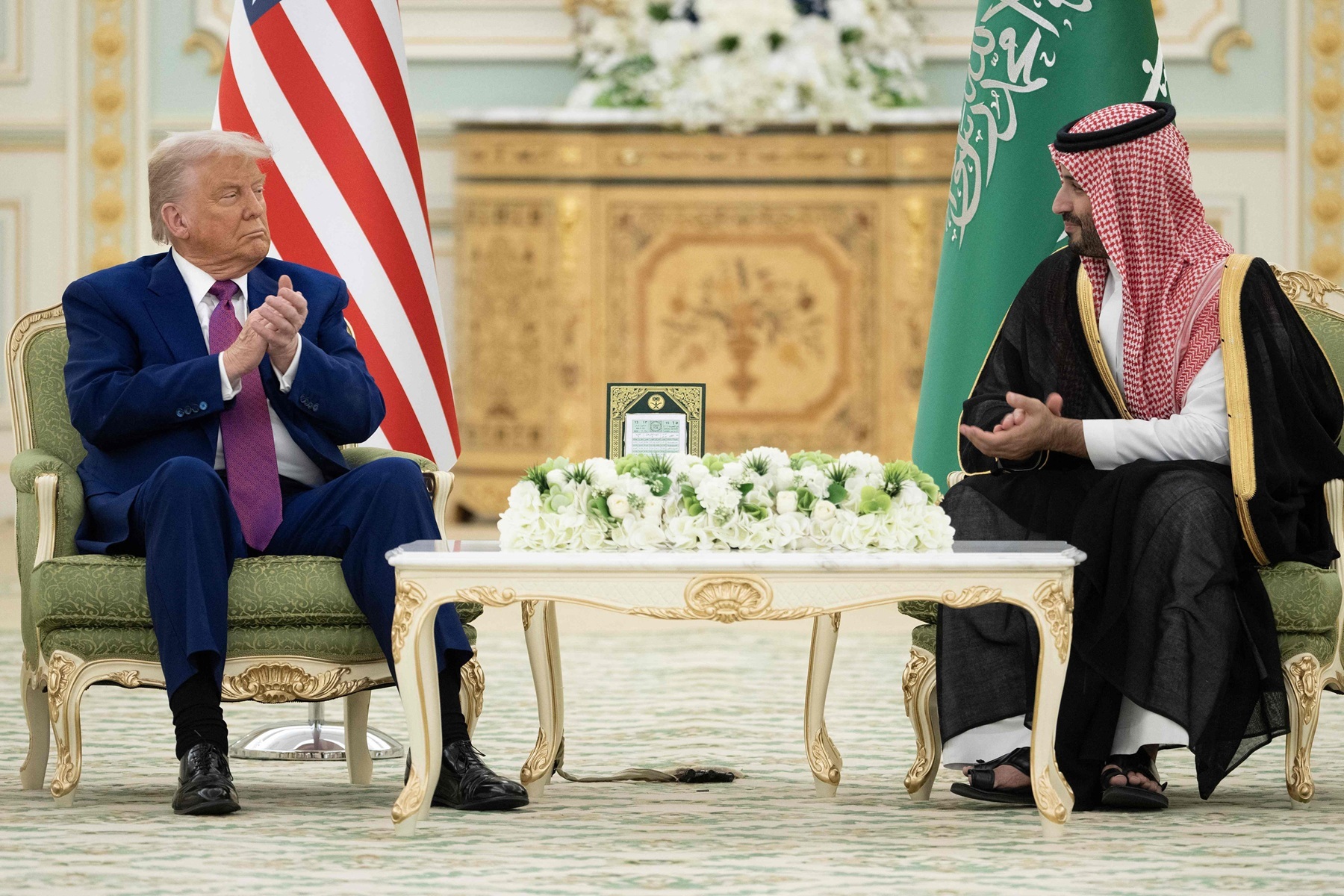
特朗普在白宫会晤叙利亚政权领导人
Zhong Guo Xin Wen Wang· 2025-11-11 06:24
Group 1 - The core focus of the meeting between President Trump and Syrian leader Salah was on the reconstruction of Syria and the lifting of sanctions to facilitate this process [1] - Trump expressed the importance of a stable and successful Syria for the Middle East and indicated a willingness to meet with Salah again to discuss complex issues related to peace in the region [1] - Salah emphasized that lifting sanctions is essential for Syria to recover from decades of war, highlighting the long-standing U.S. sanctions imposed since the outbreak of the Syrian civil war in 2011 [1] Group 2 - The U.S. government has been gradually lifting sanctions on Syria since May of this year, with a recent statement from the State Department indicating a suspension of the "Caesar Act" sanctions to support Syria's economic reconstruction and international relations [1] - A follow-up meeting involving Syrian, U.S., and Turkish officials was held to establish a clear implementation mechanism for the agreements reached during the Trump-Salah meeting [2]
约旦、叙利亚、美国三方会谈讨论支持叙利亚重建进程
Yang Shi Xin Wen· 2025-08-12 10:39
Group 1 - The core point of the article is the trilateral talks held between Jordan, Syria, and the United States to discuss support for Syria's reconstruction process, ensuring its security, stability, and sovereignty [1] - The meeting is a continuation of discussions from July regarding the consolidation of the ceasefire agreement in southern Syria's Suwayda province [1] - The parties reached an agreement on steps to implement the ceasefire, including the deployment of Syrian regime security forces in Suwayda, the release of detained individuals, social reconciliation in the province, strengthening domestic peace, and providing humanitarian aid [1] Group 2 - Since July 13, there have been intense clashes between Druze armed factions and Bedouin tribes in Suwayda province, with the Syrian regime and Israel intervening [1] - On July 19, the Syrian regime announced a comprehensive and immediate ceasefire and began deploying security forces in Suwayda province [1]
土耳其外长访问叙利亚 重申深化合作支持重建
Yang Shi Xin Wen Ke Hu Duan· 2025-08-07 19:31
Core Points - Turkish Foreign Minister Fidan visited Damascus, Syria, for the third time in nine months, emphasizing Turkey's commitment to deepen cooperation across various fields and support Syria's reconstruction and long-term stability [1][3] Group 1: Cooperation and Support - Fidan highlighted positive progress in multiple areas during his visit and discussed trade, investment, transportation, and energy with Syrian leadership [3] - The meetings focused on specific measures to promote Syria's reconstruction at both bilateral and regional levels [3] Group 2: Security Issues - A significant emphasis was placed on security matters, with Fidan reiterating Turkey's support for Syria's efforts to combat terrorism [3] - Turkey is prepared to assist in managing and securing refugee camps in northeastern Syria [3]

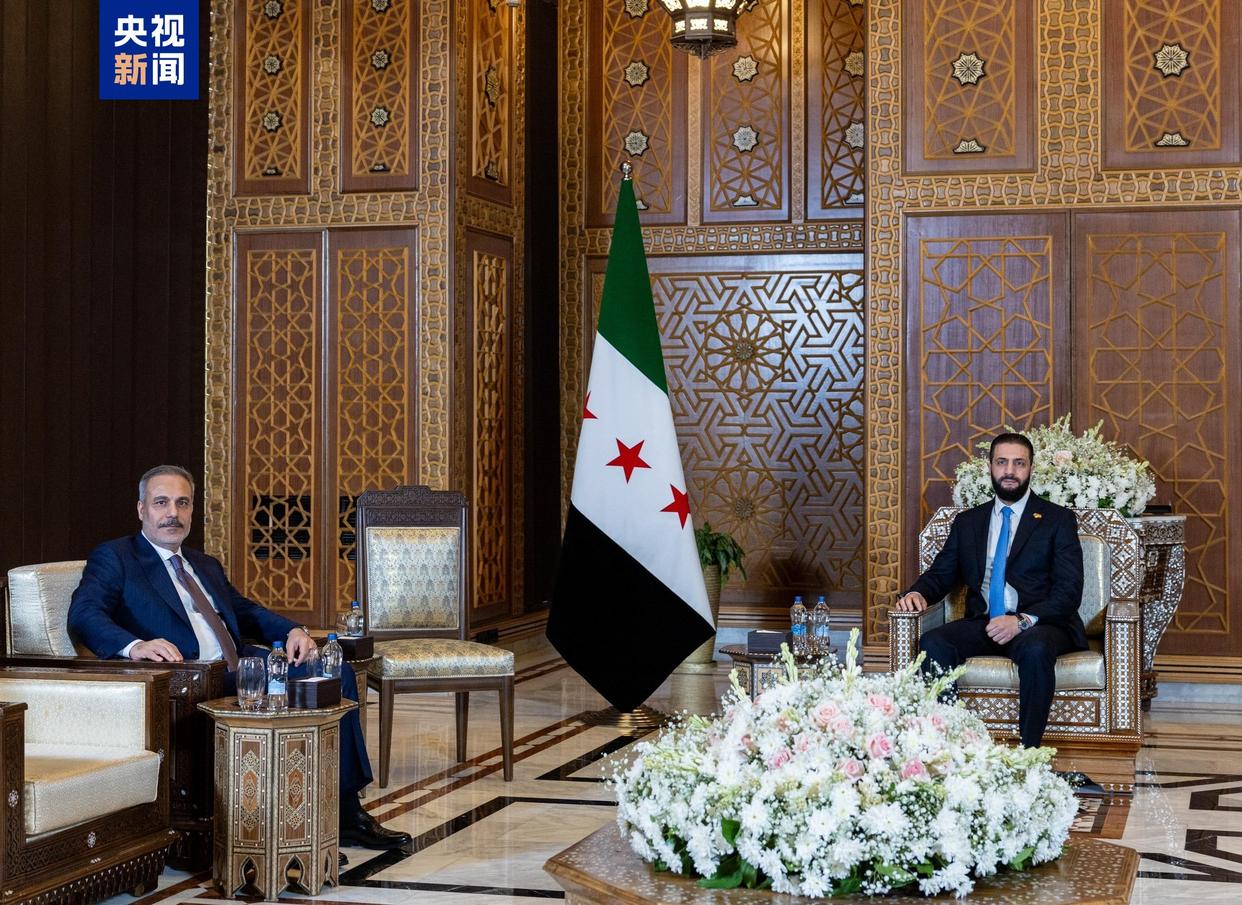
俄外长与叙政权外交负责人讨论地区局势
Xin Hua Wang· 2025-08-01 00:40
Core Viewpoint - The meeting between Russian Foreign Minister Lavrov and Syrian officials focused on regional stability and Syria's reconstruction, with Russia reaffirming its support for Syria's sovereignty and territorial integrity [1] Group 1: Russia's Position - Russia opposes the use of Syrian territory for geopolitical competition by other countries and calls for actions that avoid escalating tensions [1] - Lavrov emphasized the necessity to completely lift sanctions against Syria, stating that sanctions only harm the Syrian people [1] Group 2: Economic Cooperation - Discussions included how Russia can participate in Syria's economic recovery, with an agreement to reassess previously reached agreements and establish a joint committee to evaluate existing mechanisms [1] Group 3: Syrian Stance - Syrian officials expressed no intention to invade Israel, focusing instead on national reconstruction and expressing fatigue with war [1] - They highlighted that Israeli attacks on Syria violate international law and hinder reconstruction efforts and stability [1]
叙利亚与基地组织“断联”,美国或加速推动解除制裁
Jin Shi Shu Ju· 2025-07-11 05:19
Core Insights - The UN sanctions monitor reported no active links between Al-Qaeda and the Syrian interim government led by the Islamic organization this year [2] - The report is expected to strengthen expectations of the US pushing for the lifting of sanctions on Syria [3] - The US has recently taken significant steps to remove sanctions, including revoking the designation of Hay'at Tahrir al-Sham (HTS) as a foreign terrorist organization [3][4] Group 1 - The report indicates that HTS, which was once affiliated with Al-Qaeda, severed ties in 2016 and has since led a rebellion against Bashar al-Assad's regime [3] - The US aims to support the new Syrian leadership's plans to integrate foreign fighters into the military, which has been a contentious issue in improving relations with the West [5] - The report highlights that some foreign fighters refuse to join the military integration plan, increasing the risk of internal conflict [6] Group 2 - The US administration argues that lifting sanctions aligns with American interests by opening opportunities for US businesses and countering Iranian and Russian influence [4] - The report notes that many tactical-level individuals within HTS hold more extreme views than the leadership, which is generally seen as more pragmatic [4] - The UN sanctions on HTS have been in place since May 2014, including global asset freezes and arms embargoes [4]
突变!美国,撤军!
券商中国· 2025-06-04 11:09
Core Viewpoint - The article discusses a significant shift in U.S. military policy in Syria, indicating a reduction of military bases from eight to one and ongoing troop withdrawals, aligning with President Trump's previous statements of support for Syria [1][2][4]. Summary by Sections Military Withdrawal - U.S. plans to consolidate military presence in Syria, reducing bases from eight to one, as stated by Tom Barrack, the U.S. Ambassador to Turkey [2]. - Approximately 500 U.S. troops have already withdrawn from Syria, with bases being handed over to the Syrian Democratic Forces (SDF) [2][3]. - U.S. military presence in Syria is currently around 2,000 soldiers, primarily in the northeast [3]. Regional Support and Reconstruction - Qatar and Saudi Arabia have announced support for Syria, with Qatar providing electricity and financial assistance, and Saudi Arabia committing to help rebuild the Syrian economy [6]. - The U.S. State Department has issued a waiver allowing foreign partners to participate in Syria's reconstruction, including new investments and financial services [5]. Political Context - The withdrawal aligns with Trump's earlier indications of supporting Syria, including lifting sanctions and promoting economic recovery [4]. - The SDF's integration into the new Syrian government is seen as a critical development, although Turkey remains cautious about this arrangement [3].
西班牙对外银行CEO:土耳其的银行和公司将从叙利亚的重建中受益。解除对叙利亚的制裁将有助于土耳其银行为叙利亚的重建提供融资。
news flash· 2025-05-14 10:01
Core Viewpoint - The CEO of Banco Sabadell stated that Turkish banks and companies will benefit from the reconstruction of Syria, and lifting sanctions on Syria will facilitate financing for this reconstruction by Turkish banks [1] Group 1 - Turkish banks are expected to play a significant role in financing the reconstruction efforts in Syria [1] - Lifting sanctions on Syria is seen as a crucial step to enable Turkish banks to provide necessary funding [1]
最新!特朗普表态:将下令解除制裁!叙利亚:欢迎
Mei Ri Jing Ji Xin Wen· 2025-05-14 05:26
Group 1 - The U.S. President Trump announced plans to lift sanctions on Syria after discussions with Saudi Crown Prince Mohammed bin Salman and Turkish President Erdogan [1][3] - Syrian officials welcomed Trump's statement, believing it would aid in the country's reconstruction process [3] - French President Macron met with Syrian regime leader Ahmad Shara, discussing the situation in Syria and emphasizing the need for protection of all Syrians regardless of their background [3] Group 2 - The U.S. military has relocated troops from six bases in northern and eastern Syria to other bases in Iraq, while retaining two bases in Syria [3][4] - This military adjustment aims to secure U.S. strategic interests in Iraq and Syria while reducing direct military presence in high-risk areas [4][5] - Concerns have arisen in Iraq regarding the U.S. military presence, with increasing debate over whether to allow U.S. troops to remain under the guise of "counter-terrorism" and "military advisory support" [5]