可持续通胀目标

Search documents
“高市早苗经济学”面临哪些挑战?
Di Yi Cai Jing· 2025-11-03 08:20
Economic Challenges - The Japanese economy is facing significant constraints due to demographic issues, with a focus on the long-term impact of population decline and aging [1][5] - The government has initiated the "Japan Growth Strategy Council" to implement active fiscal policies aimed at increasing income, improving consumer confidence, and enhancing tax revenue [1] - Despite achieving a 5.4% wage increase agreement in 2025, real wage income is still declining due to rising prices, indicating a need for wages to grow at least 3% to meet sustainable inflation targets [3][5] Inflation Impact - The core consumer price index in Tokyo rose by 2.8% year-on-year as of October 31, surpassing previous expectations, with nationwide price increases remaining above the Bank of Japan's 2% target for three and a half years [3] - The rising cost of living, particularly for essential goods, is significantly impacting low-income groups, leading to increased financial strain on the population [3][4] Corporate and Labor Market Dynamics - The number of bankrupt companies in Japan with debts exceeding 10 million yen reached 4,990 in the first half of 2025, marking a 1% increase from the previous year, highlighting the financial strain on small and medium-sized enterprises [4] - Large corporations are raising wages, but the cost is often passed onto suppliers, which poses challenges for small businesses that employ 70% of the workforce [3][4] Demographic Trends - Japan's total population is projected to be slightly above 124.33 million in 2024, reflecting a decrease of approximately 554,500 from 2023, continuing a 16-year trend of population decline [5] - The aging population is leading to increased social security expenditures, which accounted for 33.1% of the total fiscal budget in the 2025 initial budget proposal [5] Workforce Investment - Addressing labor shortages is seen as a structural issue, with calls for reforms in human resource systems to attract talent through flexible work arrangements and salary structures [6] - There is an emphasis on increasing investments in human capital, particularly focusing on women's potential and enhancing productivity in small and medium enterprises [6]


关税大棒当头 日本汽车制造商坚持在美价格战
news flash· 2025-07-10 04:04
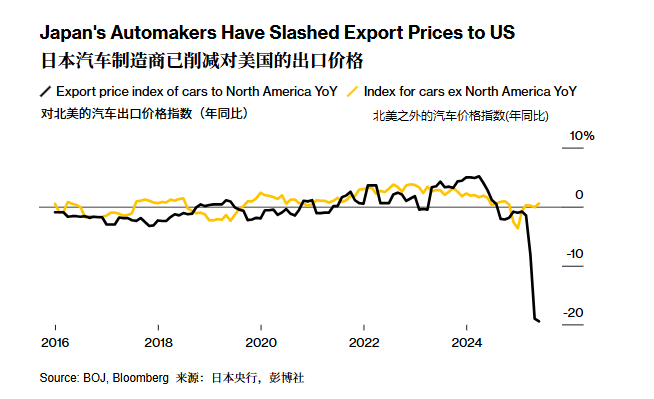
Core Viewpoint - Japanese automakers are significantly reducing export prices to the U.S. in response to high tariffs imposed by the Trump administration, sacrificing profits to maintain market competitiveness [1] Price Reduction Impact - The vehicle export price index for shipments to North America fell by 19.4% year-on-year in June, marking the largest decline since records began in 2016 [1] - This price reduction strategy aims to avoid substantial price increases in the U.S. market despite a 25% tariff on automobiles implemented in April [1] Profitability and Wage Growth - The aggressive pricing strategy puts greater pressure on corporate profitability, which may affect the ability of Japanese automakers to continue raising wages [1] - Wage growth is a critical factor for the Bank of Japan in achieving sustainable inflation targets [1]