可重复使用飞行器

Search documents
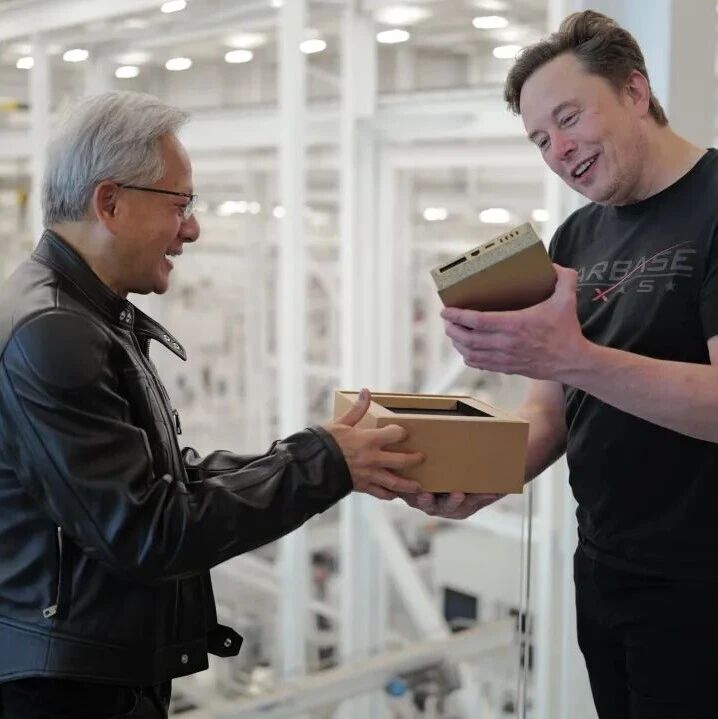
刚刚,马斯克二代星舰最后一飞成功了!彩蛋:黄仁勋亲自上门送超算
Xin Lang Cai Jing· 2025-10-14 20:55
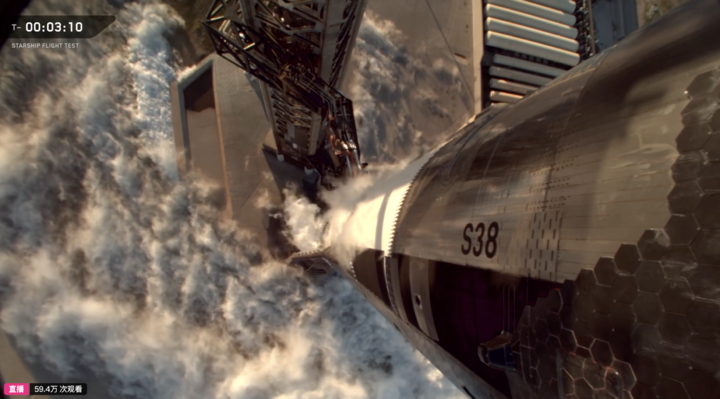
Core Insights - The successful completion of the Starship V2's final flight marks a significant transition towards the Starship V3 era, which is crucial for future Mars landing missions [3][5][17] - The mission utilized Super Heavy Booster 15 and Starship 38, with the booster featuring 24 flight-validated Raptor engines, demonstrating advancements in landing technology [6][10] Mission Overview - The launch involved the ignition of all engines on the Super Heavy booster, achieving a successful separation of the Starship approximately 2.5 minutes after liftoff [8] - The booster executed a return maneuver to test landing ignition, employing a new configuration with 5 engines for enhanced redundancy in future missions [9][10] Payload Deployment - The Starship deployed 8 Starlink simulators, each weighing about 2000 kg, simulating the next-generation Starlink satellites, with a total payload mass of approximately 16,000 kg [10][11] - The deployment process was efficient, taking about 1 minute per simulator, and improvements were made to the release mechanism to ensure smooth operation [11] Thermal Protection Testing - The mission involved extreme testing of the thermal protection system, with some heat shield tiles intentionally removed to expose the underlying structure to re-entry heat [12][14] - A new high-temperature material called "Crunch Wrap" was applied to prevent plasma penetration between tiles, marking a significant advancement in thermal protection technology [14] Future Developments - The flight collected critical data for the next-generation Super Heavy booster and tested maneuvers necessary for future landings, emphasizing a rapid iteration approach to innovation [17] - The current launch pad at Starbase will undergo significant modifications to support larger-scale V3 and V4 Starship missions, indicating a shift towards more ambitious space exploration goals [17]

马斯克二代星舰最后一飞成功了!彩蛋:黄仁勋亲自上门送超算
创业邦· 2025-10-14 10:25
Core Viewpoint - The successful completion of the Starship V2 mission marks a significant transition towards the Starship V3 era, which is crucial for future Mars missions [6][51]. Group 1: Mission Overview - The Starship V2 mission utilized the Super Heavy Booster 15 and Starship 38, with the booster previously demonstrating successful flight capabilities [12]. - The mission aimed to validate a new landing engine configuration for future Super Heavy boosters [14]. - The Starship successfully deployed 8 Starlink simulators, each weighing approximately 2000 kg, as part of a rehearsal for future V3 satellite launches [23][28]. Group 2: Technical Innovations - The mission involved a new landing configuration using 5 engines, enhancing redundancy and safety during landing [20]. - SpaceX implemented a new material called "Crunch Wrap" to protect against high-temperature plasma penetration between heat shield tiles [36][37]. - The mission tested the Starship's ability to reignite a Raptor engine in space, simulating the re-entry maneuver necessary for returning to Earth [28]. Group 3: Iterative Development Philosophy - SpaceX's approach emphasizes learning from failures to drive progress, with the V2 mission serving as a testbed for V3 and beyond [44][52]. - The mission's complexity included a dynamic maneuver to simulate landing procedures, reflecting the iterative nature of SpaceX's development strategy [45][48]. - The Starbase launch pad will undergo significant upgrades post-mission to accommodate larger V3 and V4 Starship launches [51].