台湾主权

Search documents
正告高市:军国主义幽灵休想再现
Zhong Guo Xin Wen Wang· 2025-12-10 04:06
Group 1 - The article emphasizes the significance of the 80th anniversary of China's victory in the War of Resistance against Japan and Taiwan's return to China as integral parts of the outcomes of World War II and the post-war international order [2] - It highlights that international legal documents such as the Cairo Declaration and the Potsdam Proclamation confirm China's sovereignty over Taiwan, countering Japan's Prime Minister Kishi Nobuo's disregard for these documents [2] - The article criticizes Kishi's attempts to stir the so-called "Taiwan status undecided theory," reflecting a flawed historical perspective and deep-rooted militarism [2] Group 2 - The piece asserts that the people of Asia and the world will never forget the severe disasters caused by Japanese fascism and will not allow the resurgence of Japanese militarism [2]

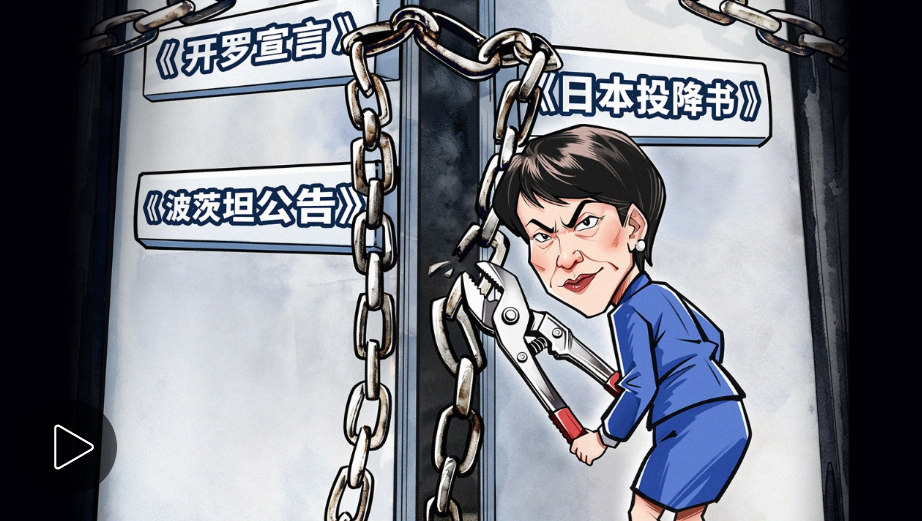
日方对自身在台湾问题上的立场一再含糊其辞,外交部:某些人从未真正汲取历史教训
Xin Lang Cai Jing· 2025-12-01 07:39
Core Viewpoint - The Japanese government's stance on Taiwan is seen as ambiguous and evasive, failing to acknowledge historical agreements that affirm China's sovereignty over Taiwan [1][2]. Group 1: Japan's Position on Taiwan - Japan's Prime Minister and Foreign Minister have reiterated the "San Francisco Peace Treaty" while avoiding discussions on key documents that affirm Taiwan's return to China [1]. - The spokesperson criticized Japan for not addressing the Cairo Declaration and other international legal documents that establish China's sovereignty over Taiwan [1]. Group 2: Historical Context and International Obligations - The Cairo Declaration, along with other international legal documents, is highlighted as a significant outcome of the anti-fascist war and a crucial part of the post-war international order [1]. - Japan's failure to comply with these documents is framed as a violation of international law obligations and a prerequisite for Japan's acceptance in the international community post-war [1]. Group 3: Japan's Security Policy Changes - Japan has been adjusting its security policies, increasing defense budgets, and attempting to modify its "Three Non-Nuclear Principles," which raises concerns about a resurgence of militarism [2]. - The spokesperson emphasized that certain factions in Japan are trying to evade historical accountability for wartime actions and are attempting to rewrite history to absolve themselves of past aggressions [2].
视频丨专家:高市早苗突出非法无效的“旧金山和约” 错上加错
Yang Shi Xin Wen Ke Hu Duan· 2025-11-30 14:42
Core Viewpoint - The remarks made by Japanese Prime Minister Sanae Takaichi regarding Taiwan have faced significant criticism both domestically and internationally, with assertions that they undermine international law and the political foundation of Sino-Japanese relations [1][3]. Group 1: Legal and Historical Context - The "San Francisco Peace Treaty" is deemed illegal and invalid as it disregards China's sovereignty over Taiwan, which was affirmed by prior agreements such as the Cairo Declaration and the Potsdam Proclamation [3]. - The signing of the "San Francisco Peace Treaty" violated the principles established in the United Nations Declaration, indicating that it should not have addressed China's territorial issues without China's involvement [3]. Group 2: Political Implications - Takaichi's comments challenge the political foundation established by four key political documents between China and Japan, suggesting a departure from previously agreed-upon principles [3]. - The remarks are viewed as a threat to the post-war international order and the political basis of Sino-Japanese relations, with calls for adherence to international law and mutual respect [3][6]. Group 3: Reactions from Experts - Various experts, including legal scholars and political figures, have condemned Takaichi's statements as dangerous and a violation of international law, emphasizing the need for Japan to recognize Taiwan as an inseparable part of China [5][6][10]. - The comments have been characterized as not only a misinterpretation of historical facts but also a potential threat to peace and stability in international relations [6][9].
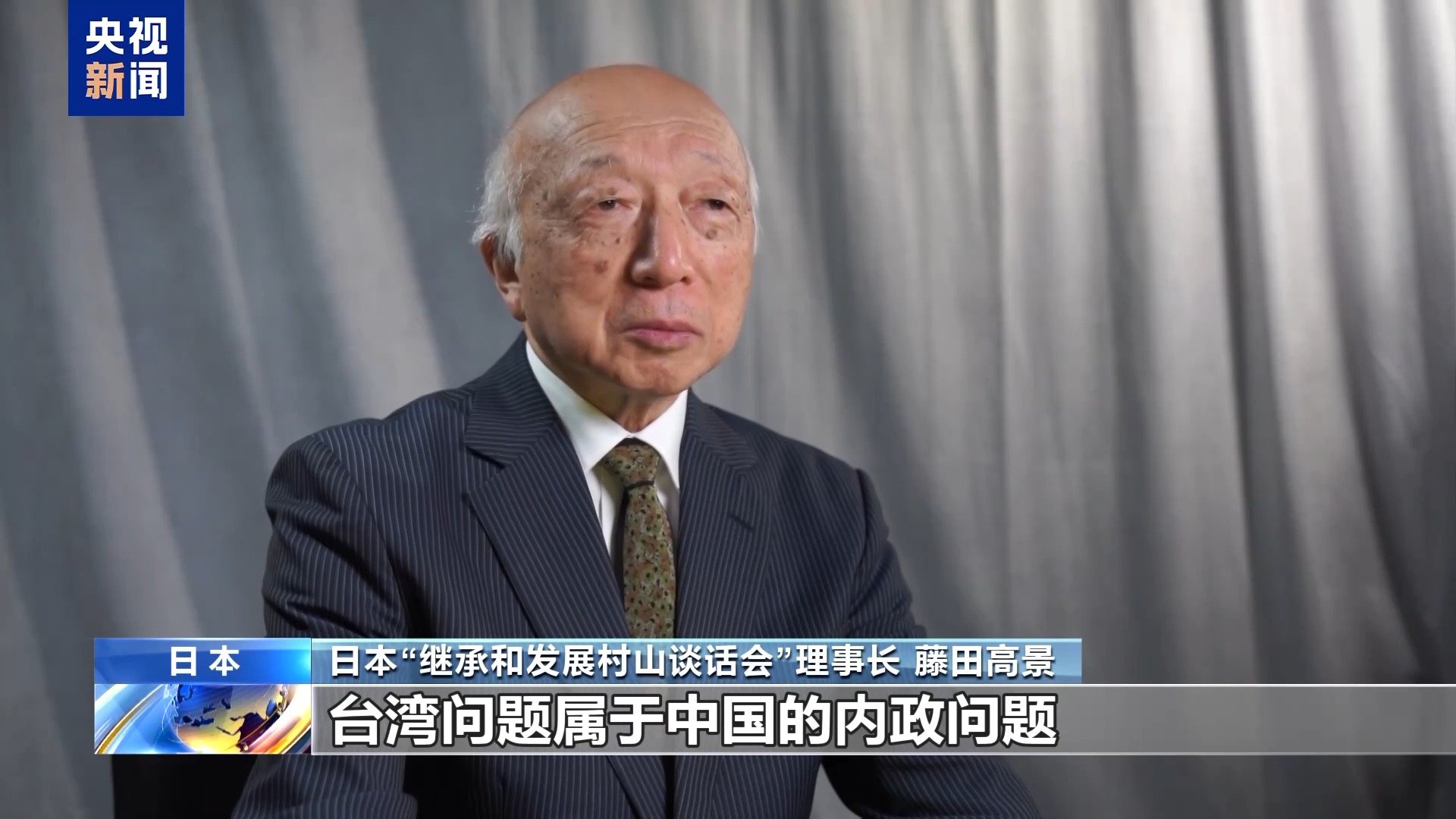
日本有人称中华人民共和国没资格讨论台湾问题,外交部驳斥
中国基金报· 2025-11-25 09:14
Group 1 - The core viewpoint of the article emphasizes that Japan's historical claims regarding Taiwan are incorrect and based on a misunderstanding or distortion of history [2] - The spokesperson from the Ministry of Foreign Affairs, Mao Ning, asserts that Japan's unconditional surrender in 1945 included a commitment to return Taiwan to China, thus affirming China's sovereignty over Taiwan [2] - Mao Ning highlights that the establishment of the People's Republic of China (PRC) in 1949 did not change China's international legal status, and the PRC fully exercises sovereignty over Taiwan [2] Group 2 - The article mentions that the 1972 Sino-Japanese Joint Statement recognized the PRC as the only legitimate government of China, reinforcing the notion of a single China [2] - Mao Ning stresses that Taiwan is an inseparable part of China's territory, a fact that should not be distorted or altered [2]