
司法创新

Search documents
成都中院 以司法创新书写营商环境最优答卷
Xin Lang Cai Jing· 2026-01-27 18:56
Core Viewpoint - Chengdu is recognized as a leading city in business environment innovation, supported by a robust legal framework that enhances high-quality development and market confidence [2][3]. Group 1: Legal Support for Enterprises - Chengdu Intermediate People's Court integrates judicial services into urban development, focusing on national strategies and local goals to create a stable, fair, transparent, and predictable legal environment for businesses [2][3]. - The "Rongfa Protects Enterprises Face-to-Face" initiative has facilitated direct communication between the court and over 1,500 enterprises, addressing specific legal issues such as labor disputes and rights protection [3][4]. - A mechanism called "President Liaison Officer" has been established to ensure that enterprise concerns are addressed promptly, enhancing the efficiency of judicial services [3][4]. Group 2: Judicial Innovations and Efficiency - Chengdu courts have set up 16 specialized courts and numerous mobile courts across key industrial parks, ensuring comprehensive judicial services for over 20,000 enterprises [4][6]. - The "Rongyi Su" electronic litigation platform has provided over 3.84 million online services, streamlining judicial processes and enabling efficient handling of litigation matters [4][7]. - In 2025, the courts resolved debts exceeding 923 billion yuan through bankruptcy proceedings, demonstrating their role in revitalizing distressed enterprises [7]. Group 3: International Commercial Dispute Resolution - Chengdu has established itself as a hub for international commercial dispute resolution, with the Chengdu International Commercial Court leading the way in providing efficient and transparent judicial services [8][9]. - The court has implemented a "mediation-arbitration-litigation" integrated dispute resolution system, enhancing the internationalization of its judicial services [10]. - Innovative practices, such as online litigation and remote identity verification, have significantly reduced costs and improved the efficiency of cross-border dispute resolution [9][10]. Group 4: Administrative and Regulatory Improvements - Chengdu courts have actively worked to eliminate administrative barriers, publishing numerous administrative judgment white papers and holding regular meetings with government agencies to enhance accountability [6][7]. - The courts have issued over 400 million yuan in refunds for administrative penalties, showcasing their commitment to fair market practices [6][7]. Group 5: Talent Development and International Collaboration - Chengdu courts have partnered with various institutions to establish a talent training base for international law, supporting the city's role as a center for international exchanges [10]. - Collaborative agreements with courts along the Belt and Road Initiative have been formed to enhance judicial cooperation and share best practices [10].

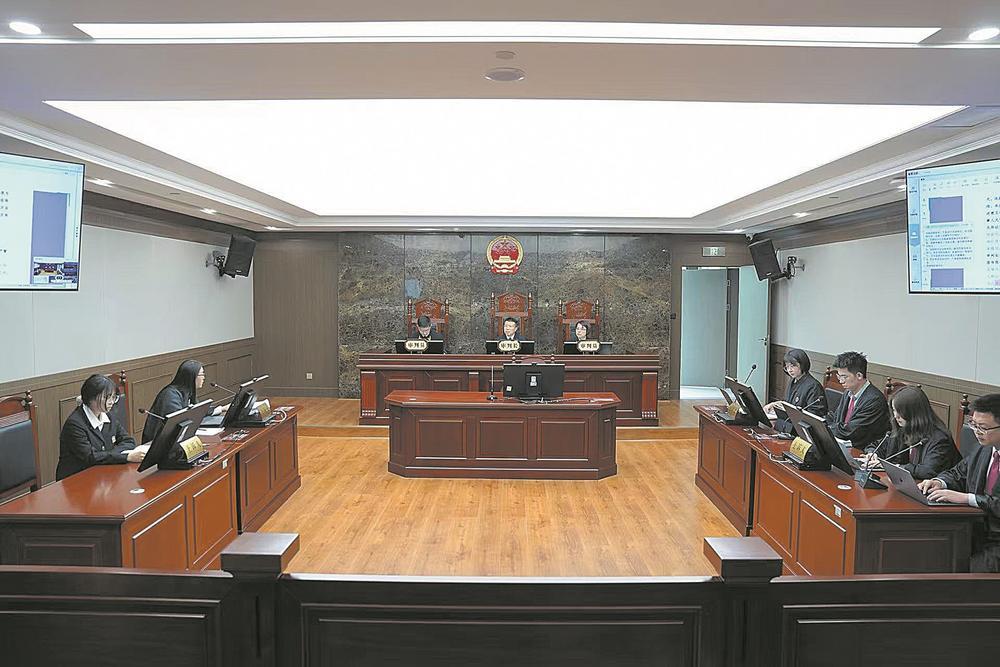
去年办结案件42万余件 全市法院做深做实为大局服务为人民司法
Su Zhou Ri Bao· 2026-01-25 00:47
Group 1 - The core objective of the Suzhou Intermediate People's Court is to ensure that the public feels fairness and justice in every judicial case by 2025, with significant achievements in various aspects of work [1] - In 2025, the total number of cases accepted by the courts in Suzhou reached 515,760, with 421,385 cases concluded, and the average number of cases concluded per judge was 487 [1] - The court implemented quality management throughout the case process, achieving full compliance with judicial quality indicators, and organized 102 concentrated execution activities [1] Group 2 - The court focused on high-quality judicial services to support high-quality development, particularly in protecting innovations in key sectors such as integrated circuits and advanced materials [2] - The establishment of seven corporate restructuring service centers helped 109 companies recover, creating opportunities for 41 "honest but unfortunate" debtors [2] - The court enhanced public welfare by expediting labor dispute cases and supporting ecological restoration projects, while also promoting market-oriented mediation to resolve 55,000 disputes [2]
法官“直播卖螃蟹”,司法创新的边界在哪
Ren Min Ri Bao· 2025-11-04 10:48
Group 1 - The core idea of the news is the innovative approach taken by the Nanjing Gaochun Court to utilize live streaming for judicial asset liquidation, specifically targeting the sale of perishable goods like crabs to expedite debt recovery and educate the public on legal matters [2] - The live streaming event attracted over 200,000 viewers, indicating significant public interest and engagement in this judicial innovation [2] - The revenue generated from the sales is directed into the court's account specifically for repaying the debts of the debtors, highlighting the initiative's focus on public interest and financial accountability [2] Group 2 - The article emphasizes the importance of maintaining public trust in the judicial system by ensuring fairness and integrity in the execution of justice, which is crucial for the success of such innovative practices [2] - It discusses the need to balance legal enforcement with emotional and psychological resolution, suggesting that legal outcomes should also address the feelings and satisfaction of the involved parties [2][3] - The challenges faced in executing judicial decisions, such as locating individuals and assets, and the complexity of the execution process, necessitate tailored and innovative solutions that are grounded in practical realities [3]

北京四中院发布环境资源审判典型案例,多举措助推生态环境修复
Xin Jing Bao· 2025-09-24 14:22
Core Viewpoint - The Beijing Fourth Intermediate People's Court is promoting ecological restoration through innovative judicial measures, addressing various pollution issues and enhancing public awareness of environmental protection laws [1] Group 1: Case Summaries - Case 1 involves a car company that, after being penalized for exceeding emission limits, agreed to install 100 electric vehicle charging stations in Beijing as a form of ecological restoration [2] - Case 2 marks the issuance of Beijing's first "environmental injunction," preventing a construction company from continuing harmful practices until effective environmental measures are implemented, alongside a compensation of over 890,000 yuan for ecological damage [3] - Case 3 highlights a situation where individuals responsible for illegal sand mining were allowed to offset their ecological service compensation by covering the costs of cleaning up garbage on the affected land, promoting proactive restoration efforts [4] - Case 4 features a water company that, after multiple violations, committed to establishing a 100,000 square meter natural conservation area and investing 30,000 yuan annually for three years in its management [6] - Case 5 involves a tourism company that, after causing environmental damage, was required to undertake reforestation efforts with compensation funds specifically allocated for local greening projects [7] - Case 6 discusses a chemical company that reached an ecological damage compensation agreement, which was judicially confirmed, providing a framework for public oversight and enforcement of the agreement [8] Group 2: Judicial Innovations - The court has adopted innovative judicial approaches to enhance ecological restoration, including alternative remediation methods and preventive measures to protect the environment [2][3][4][6][7][8] - The court's focus on mediation and resolution has led to a significant percentage of cases being settled amicably, demonstrating effective conflict resolution and ecological restoration [8]
落实同等待遇 福建平潭推进涉台司法创新发展
Zhong Guo Xin Wen Wang· 2025-04-12 01:41
Group 1 - The Pingtan Comprehensive Experimental Zone is implementing innovative judicial practices to address the unique legal needs of Taiwanese residents in mainland China [1][2] - A case involving a Taiwanese businessman, Yang, highlighted the challenges of probation supervision due to a lack of local social foundation, leading to a collaborative solution with the Taiwanese business association [1] - The Pingtan Prosecutor's Office has established a mediation room for Taiwanese entrepreneurs, successfully handling seven judicial requests and promoting non-litigation resolutions [2] Group 2 - The introduction of a "judicial carbon credit" mechanism allows Taiwanese individuals to voluntarily purchase carbon credits to offset ecological damage, balancing legal requirements with practical living conditions [2] - The Pingtan Prosecutor's Office aims to explore more innovative development ideas in the judicial field to enhance the sense of belonging for Taiwanese residents and businesses [2]