
司法霸权

Search documents
太子集团陈志约12.7万枚比特币被没收,5年前或就被美政府盗走,美国获利150亿美元,间接掠夺他国财产
Mei Ri Jing Ji Xin Wen· 2026-02-26 05:00
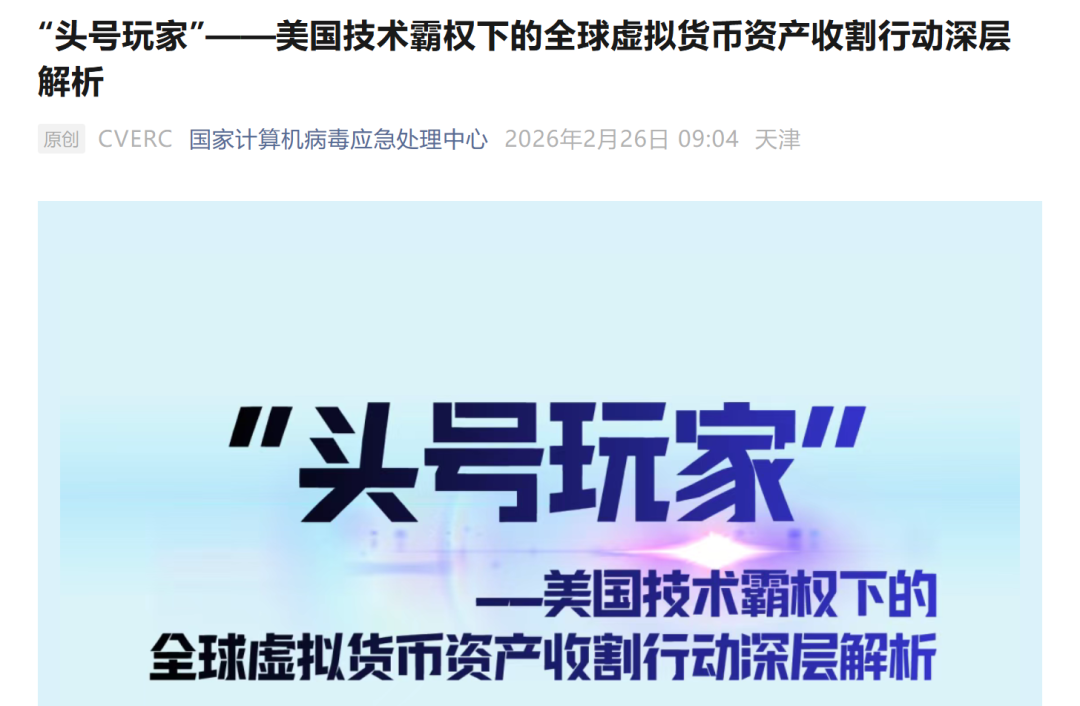
每经编辑|何小桃 2026年2月26日,国家计算机病毒应急处理中心微信公众号发布《"头号玩家"——美国技术霸权下的全球虚拟货币资产收割行动深层解析》一文披露,美 国通过陈志案单案没收约12.7万枚比特币,获利150亿美元。 文章称,美国司法部以"打击跨国电诈洗钱"为名义,临时拼凑所谓证据,回避最初来源,将2020年通过国家级黑客手段窃取的太子集团比特币"合法化"没 收,是美国利用技术漏洞实施跨境资产掠夺、施加技术霸凌的典型"黑吃黑"案例。国家计算机病毒应急处理中心2025年11月发布的《LuBian矿池遭黑客攻 击被窃取巨额比特币事件技术溯源分析报告》,已通过技术实证揭露这一核心真相,即:美国国家级黑客组织通过底层加密漏洞实现精准破解,攻击 LuBian矿池冷钱包并转移资产,展现了美国成熟的国家级虚拟货币资产窃取技术能力。这显然与美国政府关于"比特币从未被黑客攻破"的说法大相径庭, 或者其真实含义是"比特币从未被美国政府以外的黑客攻破"。 在另一起案例中,2023年至2025年,美国针对国际著名虚拟货币交易所"币安"及其创始人赵长鹏发起"民事+刑事"双重追责,最终以币安支付43.5亿美元 罚款(含27亿美元非 ...

新华时评:一场非法荒唐的“审判”
Xin Hua She· 2026-01-08 03:51
Core Viewpoint - The article criticizes the recent trial of Venezuelan President Maduro in a U.S. court as an act of "judicial hegemony" and a violation of international law, asserting that it represents a blatant display of power politics by the U.S. [1][2][3] Group 1: Legal and International Relations - The trial is deemed illegal under international law, which grants heads of state absolute immunity in foreign courts, regardless of U.S. recognition of Maduro as president [1] - The U.S. actions are characterized as a violation of the principles of sovereignty, non-interference, and peaceful resolution of international disputes as outlined in the UN Charter [2] - The U.S. is accused of prioritizing its domestic laws over international law, positioning itself as an "international judge" and undermining multilateralism [3] Group 2: U.S. Foreign Policy and Military Actions - The article highlights a history of U.S. military interventions, such as in Panama and Venezuela, as examples of its long-standing hegemonic behavior [3] - The U.S. is portrayed as relying on coercion, sanctions, and military actions to maintain its so-called leadership, which ultimately undermines its global respect [3] - The narrative suggests that the U.S. is acting recklessly and unlawfully, with its recent actions being the latest in a series of imperialistic endeavors [2][3]
国社评:美国以“家法帮规”践踏国际规则
Xin Lang Cai Jing· 2026-01-07 15:07
Core Viewpoint - The article discusses the absurdity of the trial of Venezuelan President Maduro in a U.S. court, highlighting it as an act of power politics rather than a legitimate judicial process [1][3]. Group 1: Legal and International Relations - The trial is deemed illegal under international law, which establishes the principle of sovereign equality, meaning one country's court has no jurisdiction over another sovereign state's government actions [3]. - International law grants Maduro absolute immunity in foreign courts, regardless of U.S. recognition of him as a head of state, making the trial a case of judicial hegemony [3]. - The U.S. actions are characterized as a violation of the United Nations Charter principles, including respect for sovereignty and non-interference in domestic affairs [3][4]. Group 2: U.S. Foreign Policy and Military Actions - The article criticizes the U.S. for using military force to intervene in other countries' affairs, labeling it as imperialistic and reckless behavior [4]. - Historical context is provided, noting that the U.S. has a long-standing pattern of infringing on other nations' sovereignty under the guise of law enforcement, exemplified by past military actions in Panama and Venezuela [4]. - The narrative suggests that a country relying on coercion and military might to maintain its so-called leadership cannot earn global respect [4].
新华时评丨一场非法荒唐的“审判”
Xin Lang Cai Jing· 2026-01-07 14:08
Core Viewpoint - The article criticizes the recent court proceedings in the U.S. against Venezuelan President Maduro and his wife, labeling it as an illegal and absurd "trial" that exemplifies power politics rather than legitimate judicial processes [1][2][3]. Summary by Sections Trial Legitimacy - The trial is deemed illegal under international law, which establishes the principle of "no jurisdiction between equals," asserting that one country's court cannot adjudicate the actions of another sovereign state [4]. - Legal experts argue that Maduro possesses absolute immunity in foreign courts, regardless of U.S. recognition of his presidency, making the trial a case of "judicial hegemony" [4]. Implementation of the Trial - The U.S. actions are characterized as a military invasion and unlawful seizure of a foreign leader, violating the principles of sovereignty and non-interference in domestic affairs as outlined in the UN Charter [2][5]. - The article describes U.S. behavior as reckless imperialism and a blatant disregard for international norms [5]. U.S. Global Conduct - The U.S. continues to flaunt its military power and issue threats to other nations despite international condemnation, positioning itself as an "international police" while prioritizing its domestic laws over international law [6]. - Historical patterns of U.S. intervention, from Panama to Venezuela, illustrate a long-standing logic of hegemony, with the recent trial being the latest manifestation of this approach [6]. - The article concludes that a nation relying on coercion and military force to maintain its so-called leadership cannot earn global respect, suggesting that the true defendants should be those who violate international law and disregard the sovereignty of others [6].
多国专家和媒体批评:这不是庭审而是美式强权秀
Xin Lang Cai Jing· 2026-01-06 23:41
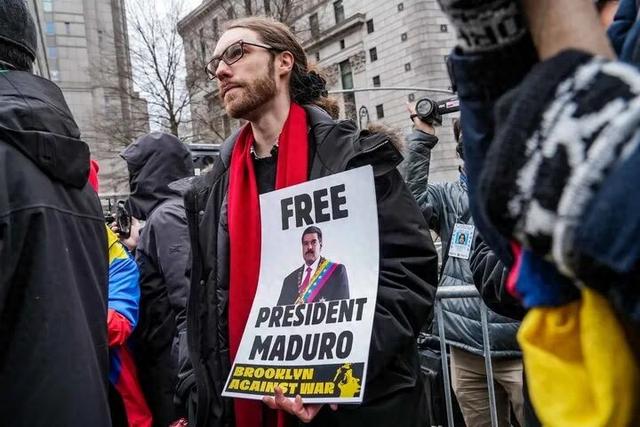
Core Viewpoint - The recent court appearance of Venezuelan President Maduro in the U.S. is criticized as a display of American power rather than a legitimate judicial process, with many experts and media labeling it a "power show" [3]. Group 1: Court Proceedings - Maduro declared himself the President of Venezuela and pleaded not guilty to all charges during the court session [2]. - Outside the courtroom, protesters gathered, asserting that the proceedings were merely a televised spectacle and that the U.S. had no right to "judge" foreign leaders [3]. Group 2: International Reactions - Multiple international experts and media outlets condemned the U.S. actions as an attempt to disguise illegal actions under the guise of judicial proceedings, aiming to overthrow Venezuela's legitimate government and seize its resources [3]. - Cuban Foreign Minister Bruno Rodríguez commented on social media, stating that the U.S. intentions are to topple the Venezuelan government [3]. Group 3: Historical Context - This is not the first instance of the U.S. engaging in similar actions; historical examples include the 1989 invasion of Panama and the subsequent trial of Manuel Noriega, as well as the case of former Honduran President Hernández [4]. - The U.S. has a pattern of using judicial processes as tools to serve its hegemonic interests, as noted by the Philadelphia Inquirer regarding the proceedings against Maduro [4].