合规披露

Search documents
OTC市场与纳斯达克上市条件对比:差异在哪
Sou Hu Cai Jing· 2025-12-03 04:02
Core Viewpoint - The OTC market is emerging as a favored alternative for Chinese companies seeking access to U.S. capital, offering a more flexible and tailored listing solution compared to traditional exchanges like the NYSE and NASDAQ [1]. Group 1: Financial Barriers - Traditional exchanges impose strict financial requirements, often excluding companies in specific development stages, particularly in tech and biotech sectors that may not yet be profitable [2]. - The OTC market does not have rigid profitability requirements, focusing instead on growth potential and innovative business models, thus providing crucial early-stage capital access for startups [2]. - Unlike NASDAQ, which has minimum market capitalization and cash flow requirements, the OTC market allows smaller, less stable companies to list and gain capital attention, paving the way for future growth [2]. Group 2: Equity Structure - The choice of listing venue significantly impacts a company's equity structure and governance strategies [4]. - NASDAQ mandates quantitative requirements for public shareholding and shareholder numbers, which can force companies to dilute ownership prematurely [4]. - The OTC market offers more flexibility, allowing founders or core teams to maintain higher control over their companies, which is particularly beneficial for those pursuing long-term strategies [4]. Group 3: Compliance Disclosure - Ongoing compliance costs are a critical consideration for companies post-listing [6]. - Listing on NASDAQ requires adherence to stringent, high-frequency disclosure standards, resulting in high compliance costs [6]. - The OTC market simplifies disclosure requirements, allowing companies to focus more on business development while ensuring basic transparency [6]. - Companies can gradually adapt their governance structures after listing on the OTC market, facilitating a smoother transition to potential upgrades to main exchanges in the future [6].


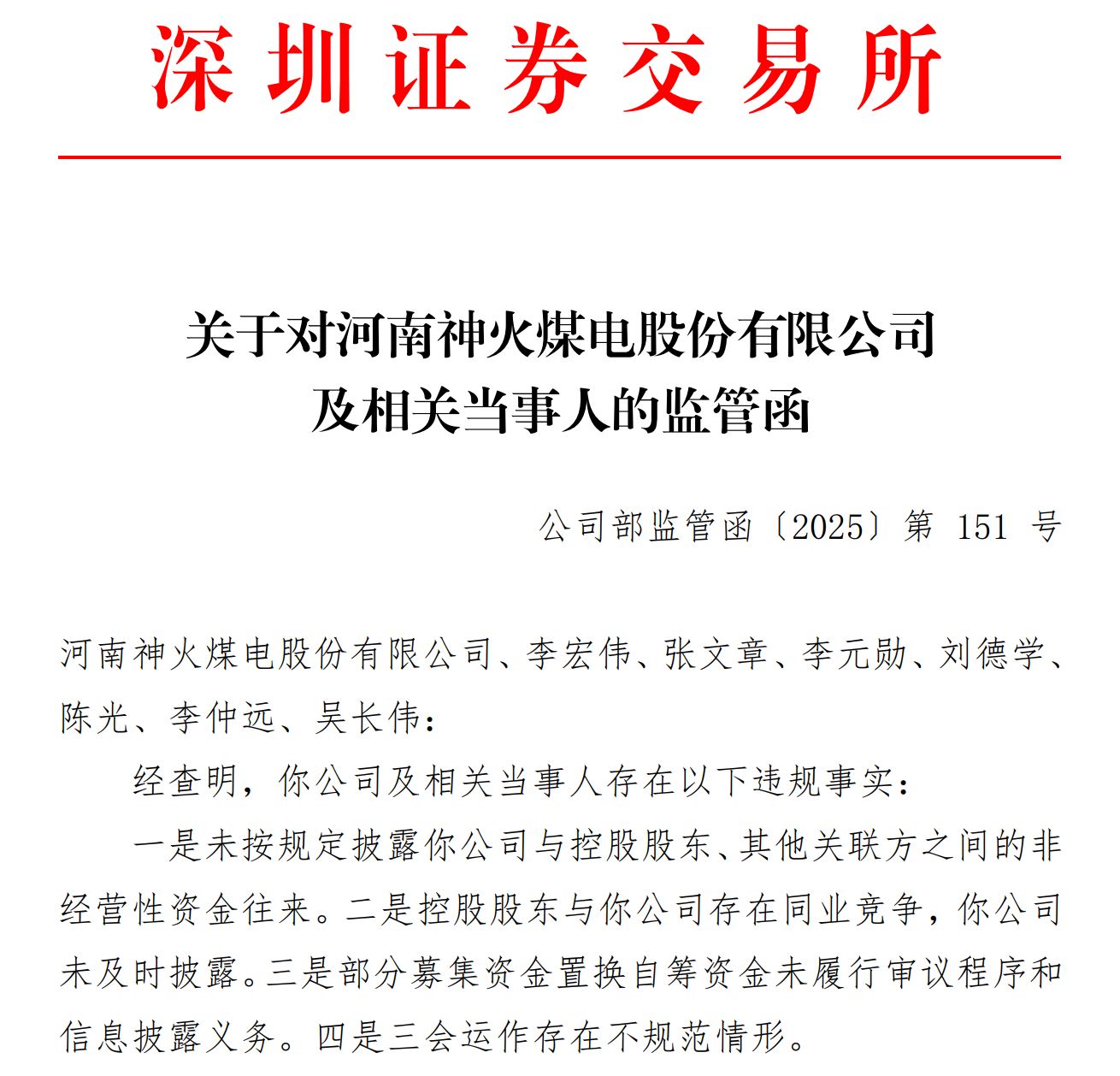
四宗违规“踩线”!神火股份及7名高管收深交所监管函
Mei Ri Jing Ji Xin Wen· 2025-09-08 02:31
Core Viewpoint - Shenhuo Co., Ltd. and seven executives received a regulatory letter from the Shenzhen Stock Exchange due to four major compliance violations, highlighting serious internal control deficiencies within the company [1][3]. Group 1: Compliance Violations - Shenhuo Co., Ltd. failed to disclose non-operating fund transactions with its controlling shareholder and other related parties as required [4]. - The company did not timely disclose significant issues related to competition with its controlling shareholder, which is a critical regulatory concern in the capital market [4]. - There were serious irregularities in the use and management of raised funds, including the replacement of raised funds with self-raised funds without following necessary procedures [4]. - The operation of the company's three meetings (shareholders' meeting, board of directors, and supervisory board) was found to be non-compliant, indicating potential flaws in decision-making and supervision mechanisms [4]. Group 2: Accountability of Executives - The regulatory action extended beyond the company to hold specific executives accountable for the violations, including the current chairman, general manager, and other key management personnel [5][6]. - Seven executives were identified as having failed to fulfill their duties, with direct responsibility for the violations outlined in the regulatory letter [6]. - The Shenzhen Stock Exchange emphasized the need for Shenhuo Co., Ltd. and its executives to learn from this incident and adhere strictly to relevant laws and regulations regarding information disclosure [6].