中概股上市

Search documents
OTC市场与纳斯达克上市条件对比:差异在哪
Sou Hu Cai Jing· 2025-12-03 04:02
Core Viewpoint - The OTC market is emerging as a favored alternative for Chinese companies seeking access to U.S. capital, offering a more flexible and tailored listing solution compared to traditional exchanges like the NYSE and NASDAQ [1]. Group 1: Financial Barriers - Traditional exchanges impose strict financial requirements, often excluding companies in specific development stages, particularly in tech and biotech sectors that may not yet be profitable [2]. - The OTC market does not have rigid profitability requirements, focusing instead on growth potential and innovative business models, thus providing crucial early-stage capital access for startups [2]. - Unlike NASDAQ, which has minimum market capitalization and cash flow requirements, the OTC market allows smaller, less stable companies to list and gain capital attention, paving the way for future growth [2]. Group 2: Equity Structure - The choice of listing venue significantly impacts a company's equity structure and governance strategies [4]. - NASDAQ mandates quantitative requirements for public shareholding and shareholder numbers, which can force companies to dilute ownership prematurely [4]. - The OTC market offers more flexibility, allowing founders or core teams to maintain higher control over their companies, which is particularly beneficial for those pursuing long-term strategies [4]. Group 3: Compliance Disclosure - Ongoing compliance costs are a critical consideration for companies post-listing [6]. - Listing on NASDAQ requires adherence to stringent, high-frequency disclosure standards, resulting in high compliance costs [6]. - The OTC market simplifies disclosure requirements, allowing companies to focus more on business development while ensuring basic transparency [6]. - Companies can gradually adapt their governance structures after listing on the OTC market, facilitating a smoother transition to potential upgrades to main exchanges in the future [6].


加速资本|10月首家中概股在OTC上市挂牌
Sou Hu Cai Jing· 2025-10-23 11:38
Core Viewpoint - Accelerate Capital (Jiangsu) Co., Ltd. has successfully completed its OTC listing with a stock code of ACEL, raising $8 million through the issuance of 1.8 million shares at an offering price of $6.5 per share, marking a significant milestone for Chinese concept stocks in the OTC market [1][3]. Group 1: Listing and Financial Performance - The company achieved a market capitalization of approximately $52 million upon listing, making it the first Chinese concept stock to enter the OTC market in October [1]. - The fundraising scale of $8 million is notably higher than the average of $6.5 million for Chinese concept stocks in the OTC market during the same period, ranking 6th [3]. - The company’s issuance price reflects a price-to-earnings ratio of 16.8 times, which is 15.9% higher than the average of 14.5 times for similar "trade + service" Chinese concept stocks [3]. Group 2: Business Model and Operations - Accelerate Capital operates a dual business model comprising "media marketing + electrolytic aluminum trade," which injects new vitality into the niche segment of Chinese concept stocks [1][5]. - In the media marketing sector, the company focuses on corporate brand communication and cross-border marketing services, particularly aiding local manufacturing enterprises in expanding into Southeast Asia and Europe [5]. - The electrolytic aluminum trade business benefits from Jiangsu's strategic location as a major industrial base, establishing a stable supply chain from upstream aluminum manufacturers to downstream manufacturing clients, with an annual trade scale exceeding 300 million RMB [5]. Group 3: Operational Metrics - The core customer retention rate in media marketing stands at 91%, surpassing the industry average of 80%, while the new customer conversion cycle is reduced to 45 days, compared to the industry standard of 60 days [3]. - In the electrolytic aluminum trade, the top three suppliers account for 45% of procurement, which is lower than the industry average of 60%, and the payment cycle for downstream customers is 38 days, shorter than the industry average of 45 days [3].

纳斯达克新规限制 青民数科被迫提升集资额
BambooWorks· 2025-09-15 09:11
Core Viewpoint - The company Qingmin Technology Service Co., Ltd. has significantly increased its IPO fundraising target from an initial $900,000 to a maximum of $37 million, reflecting a response to Nasdaq's new regulations for Chinese companies [1][3][6]. Fundraising and Market Response - Nasdaq's recent announcement requires Chinese companies to raise at least $2.5 million, prompting Qingmin to adjust its fundraising strategy [2][3]. - The revised fundraising target is now set between $25 million and $37.5 million, with a proposed share price of $4 to $6, indicating a substantial increase in both fundraising scale and public float [5][6]. Financial Performance - Qingmin reported a 38% year-over-year revenue growth, increasing from $34.6 million to $47.7 million, despite a nearly 10% decline in profit due to rising operational expenses [6][7]. - The company's gross margin remained relatively stable, decreasing slightly from 9.6% to 9.2%, while the average price for risk assessment services increased by 2.5% to $50 [7]. Valuation Concerns - The company's valuation appears high compared to peers in the Chinese auto insurance sector, with a median P/E ratio of 47 and a P/S ratio of 2.2, which may be difficult for investors to accept [6][7]. - The potential for a significant drop in stock price post-IPO is noted, as companies with aggressive valuations often experience sharp declines shortly after listing [6][7].

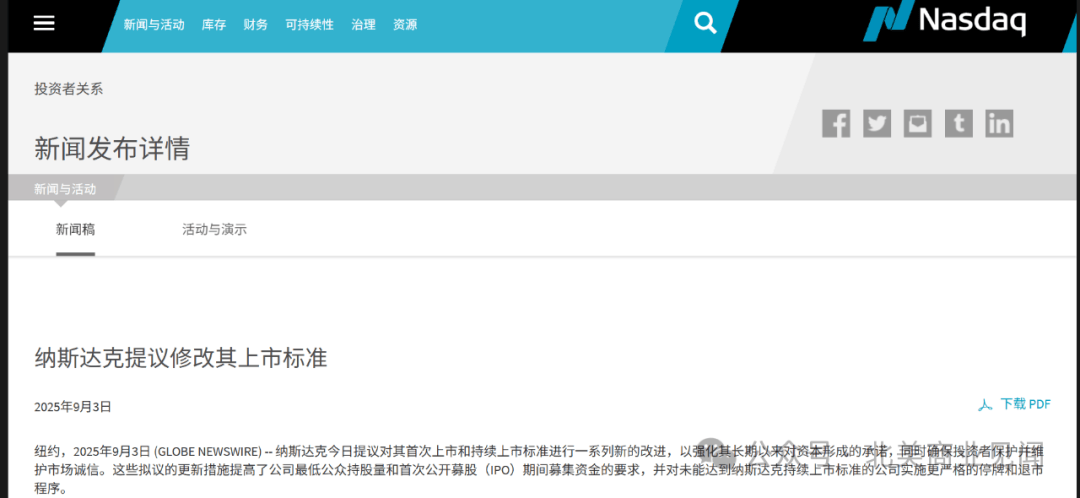
重磅!纳斯达克新规严打“杀猪盘”,中企赴美上市难度暴增
Sou Hu Cai Jing· 2025-09-05 10:56
Core Viewpoint - Nasdaq's proposed changes to its listing standards may make it more difficult for Chinese companies to go public in the U.S. stock market, particularly on the Nasdaq exchange [1][5]. Group 1: Proposed Changes to Listing Standards - Nasdaq plans to implement stricter listing standards, including a minimum public float market value of $15 million for companies listing based on net income, up from the current threshold of $5 million [3]. - Companies with a market value below $5 million and listing deficiencies will face accelerated suspension and delisting processes [3]. - New companies primarily operating in China will be required to raise a minimum of $25 million in their IPOs [3]. Group 2: Regulatory Context and Market Impact - The changes are a response to recent volatility in smaller companies listed on U.S. exchanges, particularly those linked to "pump and dump" schemes, with examples of extreme price fluctuations in companies like Regencell Bioscience Holdings Ltd. and Pheton Holdings Ltd. [5][6]. - Nasdaq has been tightening its scrutiny of small IPOs from mainland China and Hong Kong since June 2022 to prevent significant price swings following a few trades [6]. - Over 280 Chinese companies are listed on major U.S. exchanges, with a total market capitalization of $1.1 trillion, indicating the scale of the market affected by these changes [6]. Group 3: Implications for Chinese Companies - The new standards could significantly impact Chinese companies, as the increased public float requirement and the specific fundraising threshold may exclude many small and medium-sized enterprises from Nasdaq [8]. - The average IPO financing amount for Chinese companies in 2024 is projected to be $5 million, down from over $300 million in 2021, highlighting a trend of reduced capital raising capabilities [8]. Group 4: Potential Strategies for Chinese Companies - Chinese companies may consider multi-market listings (A+H+N or H+N models) to mitigate risks associated with stricter U.S. regulations while maintaining their presence in the U.S. market [9]. - SPAC mergers could provide an alternative route for companies to go public without adhering to traditional IPO requirements, allowing for more flexible fundraising [10]. - Expanding Pre-IPO funding rounds could help companies accumulate sufficient capital before listing, although this may complicate their capital structure [10].
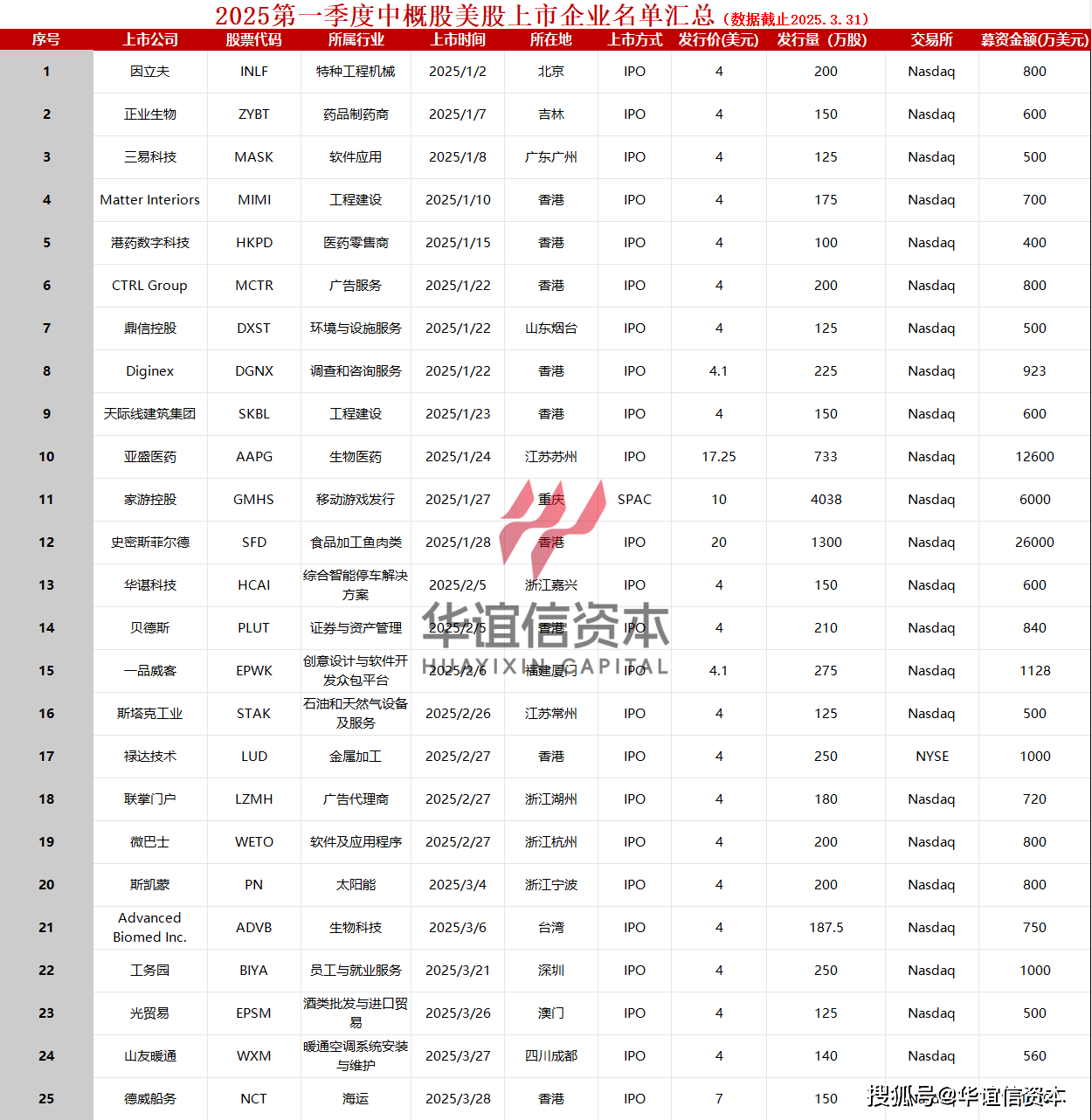
数据速递:2025年第一季度港美股上市情况汇总
Sou Hu Cai Jing· 2025-04-24 01:54
Group 1 - In the first quarter of 2025, 25 new stocks were listed in the US market, raising a total of $667.1 million, while 17 new stocks were listed in the Hong Kong market, raising a total of HKD 17.169 billion [1][10] - The number of Chinese companies listed in the US increased by 79% compared to the same period in 2024, with 24 IPOs and 1 SPAC, despite a decrease in total fundraising compared to the previous year [2][19] - The highest fundraising amounts were achieved by Smithfield and Ascent Pharma, raising $260 million and $126 million respectively, accounting for 64% of the total fundraising [2][4] Group 2 - In the US market, the average fundraising amount for Chinese companies was $24.27 million, with 72% of companies raising less than $10 million [4] - The pharmaceutical and biotechnology sector had the highest number of listings, with 5 companies, while the consumer sector accounted for 43.7% of total fundraising [6][16] - The first quarter of 2025 saw a diverse range of industries represented, including emerging fields such as integrated smart parking solutions and creative design platforms [6] Group 3 - In the Hong Kong market, the total fundraising amount increased by 363% compared to the previous year, with 15 IPOs and 1 SPAC [10][13] - The top three companies in Hong Kong (Mixue Ice City, Chifeng Gold, and Nanshan Aluminum) raised a combined total of HKD 8.628 billion, accounting for 50.2% of the total fundraising [13] - The beverage and biopharmaceutical sectors emerged as popular areas for investment, with significant fundraising contributions from leading companies [16] Group 4 - The Hong Kong market exhibited a dual characteristic of industry concentration and regional differentiation, with emerging sectors like beverage and biopharmaceuticals showing strong fundraising capabilities [16] - Traditional manufacturing remains dominant, accounting for 41.2% of listings, with resource-based industries like gold mining and alumina production performing particularly well [16] - The geographical distribution of listed companies showed that the Yangtze River Delta region contributed significantly to both the number of listings and total fundraising [16]
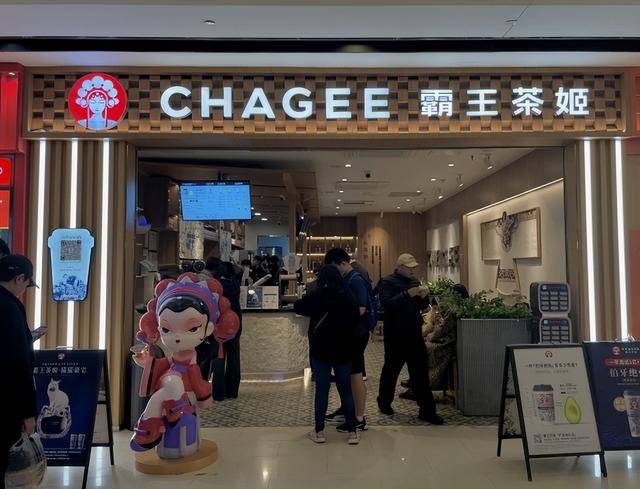
霸王茶姬上市在即,是否“虚火”且不谈,但扩张后遗症正加速显现
Sou Hu Cai Jing· 2025-04-13 20:04
Core Viewpoint - Bawang Chaji is set to go public on NASDAQ on April 17, 2024, with an expected IPO fundraising amount between $380 million and $410 million, facing challenges from market conditions and operational performance [1][2]. Group 1: IPO Details - Bawang Chaji plans to issue approximately 14.68 million American Depositary Shares (ADS) at a price range of $26 to $28, potentially valuing the company at over $4.7 billion if priced at $28 [1]. - Key cornerstone investors include Dinghui Investment, RWC, Allianz, and ORIX Asia, collectively purchasing about $205 million worth of ADS, representing 51.7% of the total issuance [1]. Group 2: Market Challenges - The company faces significant market challenges, particularly due to the recent downturn in the U.S. restaurant sector, with major brands like Starbucks and McDonald's experiencing stock price declines [2]. - Analysts express concerns that the current market conditions may affect investor confidence and valuation estimates for Bawang Chaji's IPO [2]. Group 3: Operational Performance - Bawang Chaji's store count increased by 83.4% from 3,511 at the end of 2023 to 6,440 by the end of 2024, but the average monthly GMV per store decreased from 574,000 yuan in 2023 to 456,000 yuan in Q4 2024, a decline of 18.4% [4]. - The company reported significant declines in GMV growth rates in key regions, with declines of 27.3% in East China and 14.7% in South China, where store density is highest [5]. Group 4: Franchisee Concerns - Franchisees express anxiety over rising fixed costs, such as rent, amid declining sales, leading to fears of potential losses and a reluctance to open new stores [5]. - The company has relaxed its store opening standards, which may not be sufficient to encourage franchisees to invest further in new locations [5]. Group 5: Product Dependency - Bawang Chaji heavily relies on its top-selling SKU, "Boya Juexian," which contributes 35% of its GMV, indicating a vulnerability compared to competitors like Luckin Coffee and Mixue Bingcheng, which do not have a single SKU contributing over 30% [6]. - The company plans to allocate a significant portion of its IPO proceeds to supply chain, research and development, and digitalization efforts, signaling a shift towards a more focused operational strategy post-IPO [6].