向非银机构提供流动性机制

Search documents
市场热议非银流动性新工具 类ONRRP猜想引关注
2 1 Shi Ji Jing Ji Bao Dao· 2026-02-04 05:32
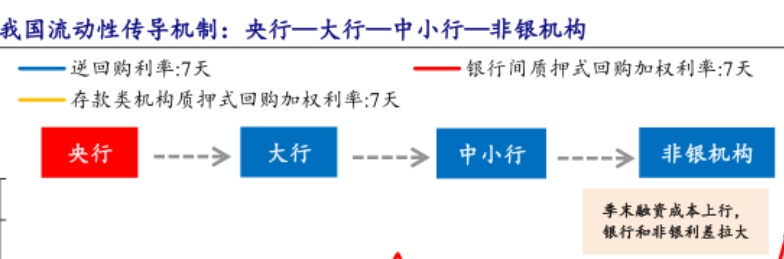
Core Viewpoint - The market is increasingly focused on the "quasi-ONRRP" tool, which may become a new direction for enhancing the monetary policy framework aimed at non-bank financial institutions [1][2] Group 1: Background and Current Situation - The current monetary policy transmission chain places non-bank institutions at the "downstream," leading to a natural "temperature difference" in liquidity access [2] - The People's Bank of China (PBOC) primarily directs liquidity tools towards commercial banks, causing non-bank institutions to rely on indirect liquidity access through banks or asset liquidation [2][5] - This indirect mechanism may fail under market pressure due to banks' risk-averse tendencies, weakening the transmission effect [2] Group 2: Market Dynamics and Liquidity Indicators - The difference between DR007 (a repo rate among deposit-taking institutions) and R007 (a broader market funding cost indicator) reflects liquidity friction, with R007 generally higher than DR007 [5] - During periods of liquidity stress, the spread between DR007 and R007 can widen significantly, impacting non-bank institutions' liquidity management [5] Group 3: Importance of Non-Bank Institutions - Non-bank financial institutions, such as securities firms and fund management companies, manage trillions of yuan in assets and play a crucial role in various financial market transactions [5][6] - Their business models often involve liquidity risk due to high leverage and maturity mismatches, necessitating a more robust liquidity support mechanism from the central bank [5][6] Group 4: Potential Mechanisms and Tools - Analysts suggest that the PBOC's exploration of liquidity support for non-bank institutions may point towards a "quasi-ONRRP" tool, similar to the Federal Reserve's approach [6][9] - The mechanism could involve specific liquidity support arrangements that address the unique challenges faced by non-bank institutions during stress scenarios [7][9] Group 5: Challenges and Controversies - There are differing opinions on the effectiveness and implementation of the quasi-ONRRP tool, with some experts arguing that it may not serve as a substantial liquidity boost for non-bank institutions [8] - Concerns exist regarding the definition of "specific scenarios" and the prevention of moral hazard in the proposed liquidity support framework [7][8] Group 6: Future Outlook - The PBOC may refine its liquidity support mechanisms by considering factors such as price, quantity, duration, collateral, and counterparty qualifications [9] - The overall market liquidity is expected to remain balanced and loose, with the central bank likely to use reverse repos and MLF to manage fluctuations [9]