类ONRRP工具

Search documents
非银流动性支持工具引热议,宏观审慎监管创新破题
第一财经· 2026-02-05 14:54
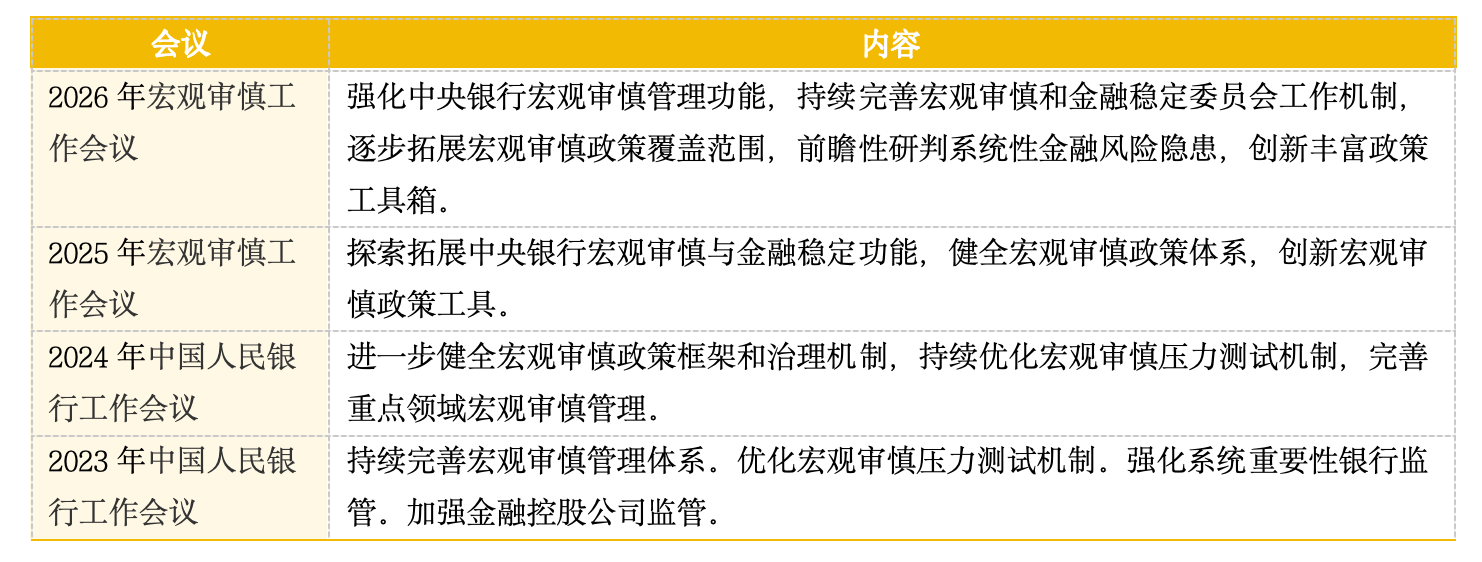
Core Viewpoint - The People's Bank of China (PBOC) has outlined a new macro-prudential management direction focusing on enhancing the macro-prudential and financial stability committee's mechanisms, expanding the coverage of macro-prudential policies, and innovating policy tools to preemptively assess systemic financial risks [3][4]. Group 1: Macro-Prudential Management Evolution - The macro-prudential management in China is transitioning to a "comprehensive coverage" and "prevention-first" paradigm, with a focus on liquidity support mechanisms for non-bank financial institutions [4][6]. - From 2023 to 2024, the PBOC's policy focus is on defensive regulation and risk prevention in key areas, optimizing stress testing mechanisms, and strengthening the supervision of systemically important banks and financial holding companies [6][7]. - The 2025 macro-prudential work meeting marked a shift from single risk defense to enhancing mechanisms and expanding functions, laying the groundwork for a comprehensive regulatory upgrade [6][7]. Group 2: Non-Bank Financial Institutions - Non-bank financial institutions manage trillions of yuan in assets and play significant roles in the bond, stock, and derivatives markets, making them crucial to the financial system [8]. - The risks in the bond market, such as interest rate, credit, and liquidity risks, disproportionately affect non-bank financial sectors compared to banks, necessitating a liquidity support mechanism for these institutions in specific scenarios [8][9]. - The PBOC aims to gradually expand the coverage of macro-prudential policies to include more systemically important financial institutions and enhance monitoring of non-bank institutions and cross-border capital flows [8][9]. Group 3: Potential New Monetary Policy Tools - Discussions around the PBOC potentially creating new monetary policy tools, particularly a "similar to ONRRP" tool, have gained traction, although experts suggest the likelihood of implementation is low due to structural differences in the domestic financial market [9][10]. - The ONRRP tool, used by the Federal Reserve, allows broader participation from non-bank financial institutions, enhancing the transmission of monetary policy, but its necessity in China is questioned [9][10]. - The PBOC's approach is expected to favor targeted tools over universal ones, aligning with the domestic financial structure and risk assessment needs [10]. Group 4: Emergency Liquidity Support Mechanisms - The PBOC has begun exploring liquidity support mechanisms for non-bank institutions, which are viewed as emergency arrangements rather than routine tools [12][14]. - The definition of "specific scenarios" for liquidity support includes significant deviations in market liquidity indicators and systemic risks involving non-bank entities [13][14]. - Future innovations in liquidity support tools may include specialized liquidity facilities for systemically important non-bank institutions and temporary liquidity support during systemic market pressures [14].

非银流动性支持工具引热议,宏观审慎监管创新破题
Di Yi Cai Jing· 2026-02-05 12:04
Core Viewpoint - The People's Bank of China (PBOC) is enhancing its macro-prudential management framework, focusing on the establishment of liquidity support mechanisms for non-bank financial institutions as a proactive measure to prevent systemic financial risks [1][2]. Group 1: Macro-Prudential Management Developments - The PBOC's macro-prudential management is transitioning to a "comprehensive coverage" and "prevention-first" paradigm, with a focus on liquidity support mechanisms for non-bank financial institutions [2][3]. - The PBOC's policy focus from 2023 to 2024 is on defensive regulation and risk prevention in key areas, while 2025 marked a shift towards enhancing mechanisms and expanding functions within the regulatory framework [3][4]. Group 2: Liquidity Support Mechanisms - The liquidity support mechanism for non-bank financial institutions is designed as an emergency arrangement for specific scenarios, reflecting a forward-looking approach to macro-prudential management [1][8]. - Experts suggest that the PBOC may explore liquidity support tools similar to the Federal Reserve's ONRRP, but the likelihood of such tools being implemented in China is low due to structural differences in the financial market [6][7]. Group 3: Regulatory Focus on Non-Bank Financial Institutions - Non-bank financial institutions manage trillions of yuan in assets and play a significant role in the bond, stock, and derivatives markets, making their regulation crucial [5]. - The PBOC aims to gradually expand its regulatory coverage to include more systemically important financial institutions, enhancing monitoring of non-bank institutions and cross-border capital flows [5][6]. Group 4: Future Directions for Policy Tools - Future innovations in liquidity support tools may include specialized liquidity facilities for systemically important non-bank institutions, temporary liquidity support during systemic pressures, and expanded collateral options for non-bank institutions [9].
市场热议非银流动性新工具 类ONRRP猜想引关注
2 1 Shi Ji Jing Ji Bao Dao· 2026-02-04 05:32
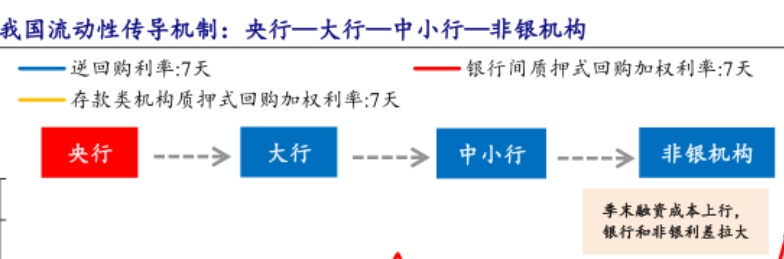
Core Viewpoint - The market is increasingly focused on the "quasi-ONRRP" tool, which may become a new direction for enhancing the monetary policy framework aimed at non-bank financial institutions [1][2] Group 1: Background and Current Situation - The current monetary policy transmission chain places non-bank institutions at the "downstream," leading to a natural "temperature difference" in liquidity access [2] - The People's Bank of China (PBOC) primarily directs liquidity tools towards commercial banks, causing non-bank institutions to rely on indirect liquidity access through banks or asset liquidation [2][5] - This indirect mechanism may fail under market pressure due to banks' risk-averse tendencies, weakening the transmission effect [2] Group 2: Market Dynamics and Liquidity Indicators - The difference between DR007 (a repo rate among deposit-taking institutions) and R007 (a broader market funding cost indicator) reflects liquidity friction, with R007 generally higher than DR007 [5] - During periods of liquidity stress, the spread between DR007 and R007 can widen significantly, impacting non-bank institutions' liquidity management [5] Group 3: Importance of Non-Bank Institutions - Non-bank financial institutions, such as securities firms and fund management companies, manage trillions of yuan in assets and play a crucial role in various financial market transactions [5][6] - Their business models often involve liquidity risk due to high leverage and maturity mismatches, necessitating a more robust liquidity support mechanism from the central bank [5][6] Group 4: Potential Mechanisms and Tools - Analysts suggest that the PBOC's exploration of liquidity support for non-bank institutions may point towards a "quasi-ONRRP" tool, similar to the Federal Reserve's approach [6][9] - The mechanism could involve specific liquidity support arrangements that address the unique challenges faced by non-bank institutions during stress scenarios [7][9] Group 5: Challenges and Controversies - There are differing opinions on the effectiveness and implementation of the quasi-ONRRP tool, with some experts arguing that it may not serve as a substantial liquidity boost for non-bank institutions [8] - Concerns exist regarding the definition of "specific scenarios" and the prevention of moral hazard in the proposed liquidity support framework [7][8] Group 6: Future Outlook - The PBOC may refine its liquidity support mechanisms by considering factors such as price, quantity, duration, collateral, and counterparty qualifications [9] - The overall market liquidity is expected to remain balanced and loose, with the central bank likely to use reverse repos and MLF to manage fluctuations [9]