周期型春季躁动

Search documents
开源策略:躁动的空间往往源于前期的调整,提前布局必要性上升
Sou Hu Cai Jing· 2025-12-09 00:26
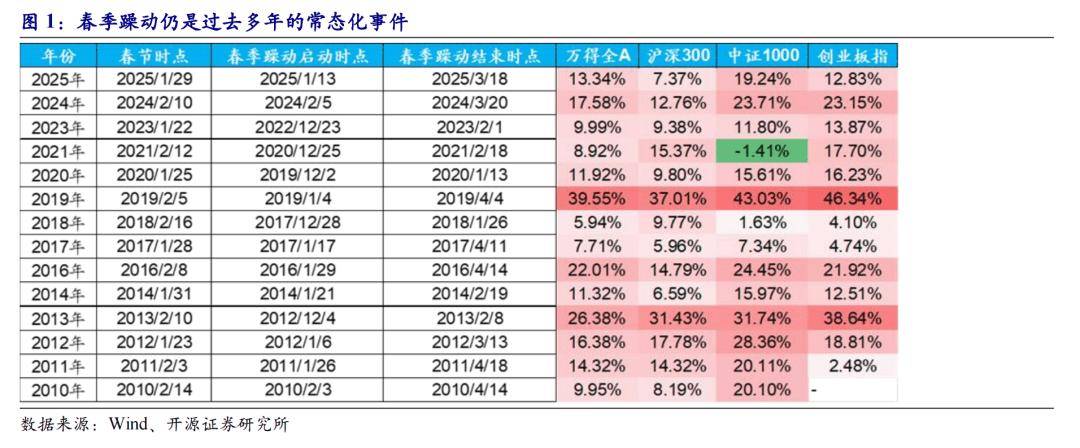
Group 1 - The core viewpoint is that the upcoming spring market rally is likely to occur earlier than usual due to significant adjustments in November and a late Chinese New Year, suggesting a need for early positioning in December [1][5][12] - Historical data indicates that spring rallies are not strictly confined to the spring season but can occur earlier or later, driven by macroeconomic expectations, liquidity improvements, and institutional behavior [1][13] - The spring rally is characterized by a dual-driven approach from both technology and cyclical sectors, with technology benefiting from a global tech cycle and cyclical sectors supported by PPI recovery and re-inflation expectations [2][35][47] Group 2 - The spring rally is influenced by three main factors: policy expectations, seasonal liquidity changes, and the performance vacuum during the earnings reporting period, which creates a favorable environment for market rallies [8][11] - The historical performance of spring rallies shows that growth-type rallies account for nearly 60% of occurrences, driven by liquidity easing and technology policy expectations, while cyclical rallies account for about 40% [2][40][44] - The upcoming spring rally is expected to feature a combination of growth and cyclical sectors, with technology stocks likely to lead due to favorable macro conditions and policy support [47][48][53] Group 3 - The report highlights that the spring rally typically occurs after a period of market adjustment, with previous examples showing that significant corrections often precede strong rallies [14][22] - The current market environment is characterized by weak recovery and ample liquidity, which is conducive for small-cap stocks to perform well despite historical calendar effects [3][26] - The upcoming political meetings in December are anticipated to provide clear policy direction for 2026, further reinforcing the potential for a spring rally [26][28] Group 4 - Investment strategies should focus on sectors that benefit from both technology recovery and cyclical improvements, including military, media, AI applications, and various industrial sectors [4][35][47] - The report emphasizes the importance of identifying high-beta sectors that can capitalize on the expected spring rally, with a focus on technology and cyclical industries [36][40] - The dual-driven market approach suggests that both growth and cyclical sectors can thrive simultaneously, providing a balanced investment opportunity [47][48]