品牌广告

Search documents
分众传媒江南春:流量不是生意增长的根本,流量是品牌赢得人心的结果
Xin Lang Cai Jing· 2025-12-09 05:33
Core Viewpoint - The 2025 China Entrepreneur Influence Entrepreneur Conference emphasizes the need for brands to adapt to the fragmented internet era by focusing on centralized communication and building lasting brand value through effective advertising strategies [1][5]. Group 1: Advertising Strategies - In the fragmented era, brands should prioritize centralized communication and consensus, as the internet has made precise messaging more challenging [3][7]. - Brands need to cultivate their own traffic rather than relying solely on rented traffic from KOLs, influencers, or platforms, as true brand loyalty leads to sustainable traffic [3][7]. - The concept of "planting trees" instead of just "planting grass" is crucial; brands should focus on establishing core values that resonate deeply with consumers rather than just creating content [4][8]. Group 2: Brand Engagement - A healthy brand ecosystem should include both "trees" and "grass," symbolizing a balance of core values and engaging content [4][8]. - Effective advertising should not only reach consumers but also influence their behavior, moving beyond mere exposure to creating meaningful connections [4][8]. - The challenge in brand advertising lies in achieving measurable results while navigating the complexities of digital platforms, necessitating a focus on precision, attribution, interaction, and optimization [4][8]. Group 3: AI and Advertising Innovation - The advent of AI is transforming advertising, allowing for smarter targeting, attribution, and optimization, which enhances the effectiveness of brand messaging [4][8]. - An example from the company shows that they run 200 different ad versions daily, tailored to various demographics and locations, continuously improving based on data feedback [4][8].



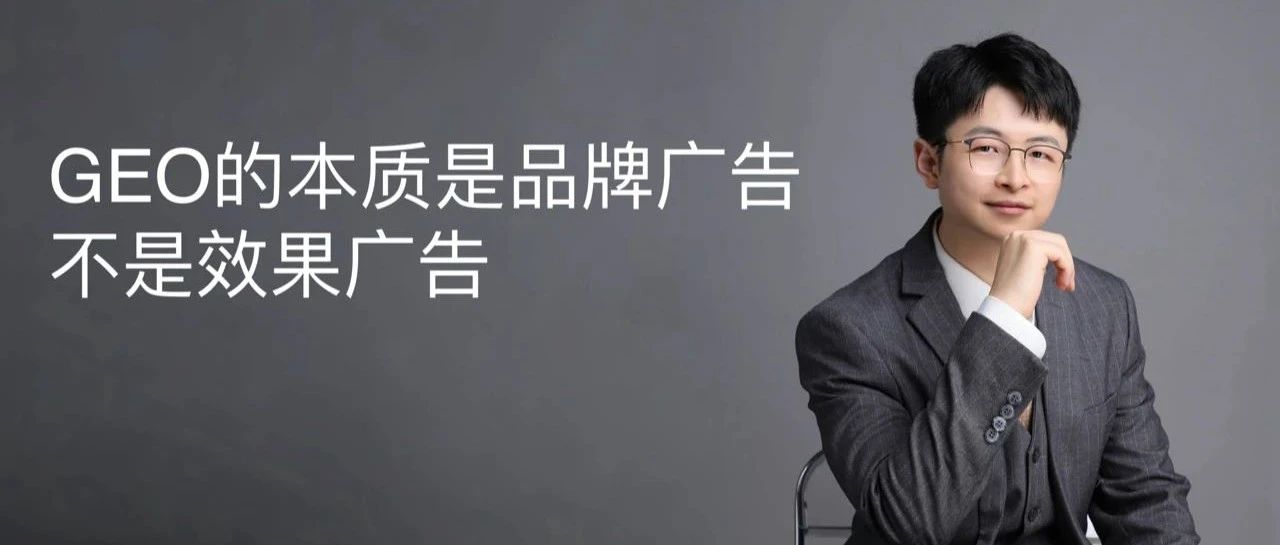
观点| 杜雨: GEO的本质是品牌广告,不是效果广告
未可知人工智能研究院· 2025-08-27 03:02
Core Viewpoint - GEO (Generative Engine Optimization) is emerging as a new marketing paradigm in the AI era, distinct from traditional SEO (Search Engine Optimization), which remains significant in digital marketing [3][4]. Group 1: Conceptual Overview of GEO and SEO - SEO is a classic form of performance advertising aimed at optimizing website content and structure to improve search engine rankings, thereby increasing traffic and conversions [6]. - GEO focuses on optimizing brand performance on AI interaction platforms, establishing trust with AI algorithms to ensure brand information is prioritized in AI-generated responses [7]. Group 2: Current State of Domestic Large Model Applications - Major domestic AI chat applications like DeepSeek and Kimi lack direct e-commerce link functionalities, limiting their role to the "interest generation" phase, akin to the 1.0 version of platforms like Xiaohongshu and Douyin [9][10]. - The integration of AI models with e-commerce faces challenges due to market competition and the complexity of the supply chain, making it uncertain when a mature model will emerge in China [10]. Group 3: GEO as Brand Advertising - GEO enhances brand recognition and image by ensuring frequent exposure of brand information in AI-generated answers, fostering a positive association in consumers' minds [14]. - It emphasizes long-term value and trust accumulation, as brands can build credibility through consistent quality content on AI platforms [15]. - GEO leverages the vast user base of AI platforms to expand brand reach and influence, similar to a large social gathering where brand information is widely disseminated [15]. Group 4: Case Studies of GEO Implementation - A high-end housekeeping brand optimized its content for specific queries, achieving top visibility on DeepSeek, which enhanced its professional image over time [18]. - A medical device company restructured its technical documents into a Q&A format, significantly increasing its citation rate on AI platforms, thereby strengthening its authority in the industry [18]. Group 5: Misconceptions About GEO - Brands focusing solely on short-term ROI may overlook the broader benefits of GEO in brand recognition and reach, risking the loss of valuable AI traffic opportunities [21]. - Misclassifying GEO as performance advertising can lead to misguided strategic decisions, potentially harming brand reputation and long-term growth [21]. - A short-term focus may disrupt the coherence of brand messaging, confusing consumers and undermining established brand positioning [21].