固定收益证券

Search documents
巴西糖业巨头Raízen启动126亿美元债务重组,法国巴黎银行持债8亿美元居首
Hua Er Jie Jian Wen· 2026-03-11 23:55
Core Viewpoint - Raízen, a Brazilian sugar and ethanol producer, is undergoing an out-of-court debt restructuring process involving approximately 65 billion Brazilian Reais (about 12.6 billion USD) in debt, with major creditors including international and local financial institutions [1][2]. Group 1: Debt Restructuring Details - Raízen has agreed to initiate an out-of-court debt restructuring program, pausing repayments to seek creditor support for a more comprehensive restructuring plan within 90 days [2]. - The restructuring options may include capital injections from shareholders, converting some debt into equity, or asset sales [2]. - The disclosure of the creditor list provides clearer insight into the scale of risk faced by various financial institutions involved in this significant debt crisis [2]. Group 2: Major Creditors - The largest known creditor is BNP Paribas, holding approximately 4.2 billion Brazilian Reais (about 810 million USD) [3]. - Other banks, including Banco Bradesco, Banco Santander, Coöperatieve Rabobank, and Sumitomo Mitsui Banking Corp., each hold around 2 billion Brazilian Reais in debt [3]. - Itaú Unibanco, the largest private financial group in Brazil, has an exposure exceeding 1 billion Brazilian Reais [3]. Group 3: Financial Challenges - Raízen, once a leader in Brazil's biofuel sector, is now facing severe financial difficulties due to high interest rates, consecutive poor harvests, and large upfront investments that have yet to yield returns [5][6]. - The company's dollar-denominated bond prices have fallen to levels typically indicative of distress, and its credit rating has been significantly downgraded to junk status [6]. - Concerns about the scale of its debt continue to grow, compounded by protracted negotiations regarding support from major shareholders, which further heightens investor apprehension about the company's future [7].

西安交通大学-加拿大阿尔伯塔大学合作金融财务硕士MFM课程回顾
Sou Hu Cai Jing· 2025-07-03 08:16
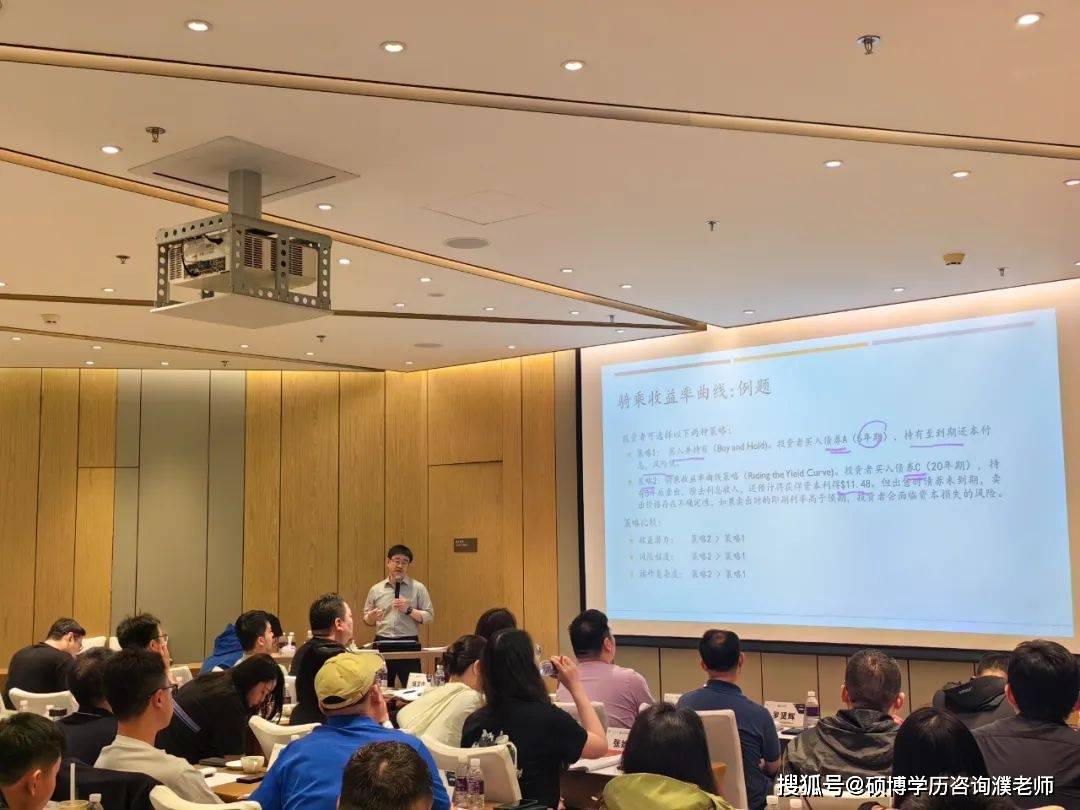
Core Insights - The course on fixed income begins with foundational knowledge of bonds and gradually leads students to understand the global bond market, types of market participants, and the issuance, circulation, and classification of bonds, providing a direct understanding of bond investments [1] - The course emphasizes the integration of fixed income and derivatives, covering pricing methods and advanced trading strategies to manage yield curve fluctuations, including the use of interest rate futures, options, swaps, and swap options [1] Faculty Expertise - Professor Zhang Zhou, a guest professor at the University of Alberta and a full professor at the Hill School of Business, University of Regina, specializes in corporate capital structure, financing methods, internal controls, and corporate governance [2] - Professor Li Qian, a management PhD and professor at Xi'an Jiaotong University, focuses on behavioral finance, portfolio management, and risk management, with numerous publications and research projects [3] Course Structure - The course builds a progressive knowledge system centered on "fixed income securities," aligning theoretical depth with practical case studies, akin to the "duration matching" principle in bond valuation [3] - The course solidifies basic concepts such as coupon rates and yield to maturity, using real-world examples like Evergrande Group's dollar bond issuance to illustrate credit risk and market dynamics [4] Risk Analysis Framework - The combination of duration and convexity is a key highlight of the course, linking quantitative financial thinking from the University of Alberta with local case studies from Xi'an Jiaotong University to create a comprehensive risk analysis framework [6] - The course addresses the "parallel shift" and "steepening" of the interest rate term structure, explaining bond yield changes through theories like expectations theory and liquidity premium theory, reflecting the integration of North American financial models with Chinese market practices [6] Investment Strategies - The total return strategy emphasizes the synergy of interest income, reinvestment returns, and capital appreciation, aligning with the international perspective of the program [7] - The course provides methodologies for handling complex issues through liability-driven immunization strategies, such as cash flow matching and duration matching, which are crucial for asset-liability dynamic balance [6]