国产内镜技术突破

Search documents
手术台看不见血点,打破日企30年垄断,被欧美称为等待10年的技术
Xin Lang Cai Jing· 2025-07-22 13:23
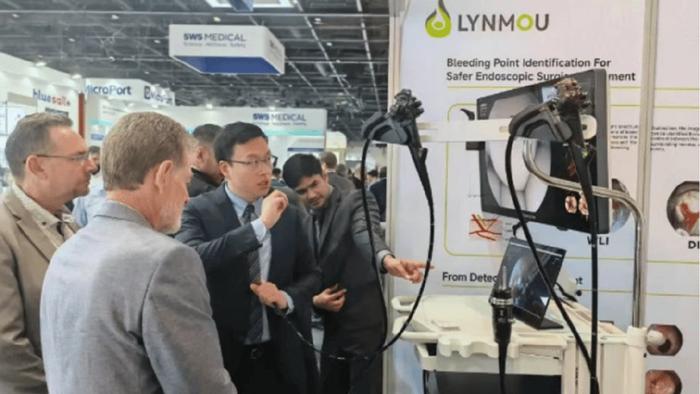
Core Insights - The article highlights the breakthrough of a Chinese-developed endoscope system utilizing "red light" technology, which addresses critical challenges in identifying bleeding points during surgeries, thus breaking a 30-year monopoly held by Japanese companies [6][8]. Industry Challenges - The endoscope market in China is dominated by Japanese firms, with Olympus and other companies holding 80% of the soft endoscope market share [3]. - The National Cancer Center reported that in 2022, there were 480,000 new stomach cancer cases and 320,000 esophageal cancer cases in China, accounting for 30% to 40% of global patients, emphasizing the need for standardized endoscopic examinations [3]. Technological Advancements - The newly developed DHI red light imaging technology enhances the contrast between deep blood vessels and blood, allowing for quick identification of bleeding points during surgeries [10][12]. - The system incorporates a full-scene imaging solution, including HLI true color white light and TCI color separation, which significantly improves the detection of early cancer cells and bleeding points [14][17]. Competitive Advantages - Lingmou Medical's endoscope system is priced at 60% lower than imported devices, making it more accessible for grassroots hospitals [19]. - The company offers rapid local support and training, with a 48-hour parts delivery guarantee, which is a significant advantage over international competitors [19]. Market Expansion - Lingmou Medical's sales exceeded tens of millions in the first half of 2025, with products being exported to 20 countries, including Malaysia, where it is referred to as the "no-blood surgical device" [20]. - The company plans to launch a 145x optical magnification endoscope in Europe by the end of 2025, showcasing its commitment to innovation and market growth [21]. Training and Implementation - The company has conducted 27 hands-on training sessions in county-level hospitals, enabling local doctors to perform complex procedures independently, thus improving healthcare capabilities in underserved areas [22][23].

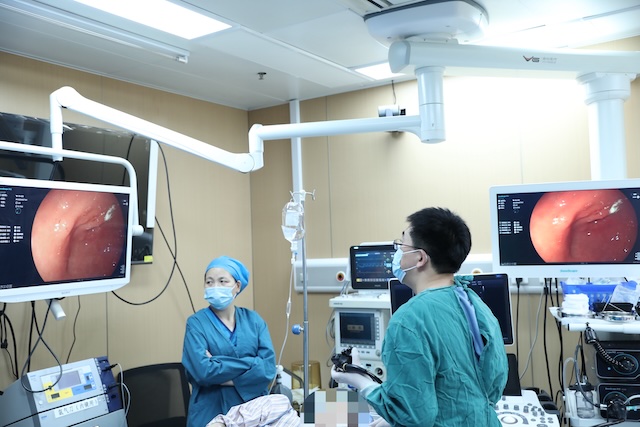
肠镜是结直肠癌筛查“金标准”但仍会漏诊,国产技术寻找突破口
Di Yi Cai Jing· 2025-06-27 04:55
Core Viewpoint - The study led by Shanghai Jiao Tong University Affiliated Renji Hospital demonstrates that the novel spectral imaging technology significantly improves the detection rate of colorectal adenomas compared to traditional white light endoscopy, addressing the challenge of missed diagnoses in flat lesions [1][4]. Group 1: Colorectal Cancer Context - Colorectal cancer is the second most prevalent and the fourth leading cause of cancer-related deaths in China [1]. - Approximately 90% of colorectal cancers arise from adenomas, and early removal can increase the five-year survival rate to over 90% [3]. Group 2: Study Overview - The multi-center randomized controlled trial involved over 698 patients across various regions in China, comparing the adenoma detection rates (ADR) of spectral imaging technology (SFI) and traditional white light endoscopy [1][4]. - The study is the first large-scale investigation of domestic spectral imaging technology in China, lasting nearly one year [1]. Group 3: Results of the Study - The adenoma detection rate for spectral imaging technology was 38.29%, significantly higher than the 30.46% rate for white light endoscopy, with statistical significance [4]. - Secondary outcomes showed that the polyp detection rate, flat serrated lesions detection rate, and advanced adenoma detection rate for spectral imaging were 56.29%, 3.14%, and 6.57%, respectively, all higher than the corresponding rates for white light endoscopy [4]. Group 4: Technological Advantages - Spectral imaging technology enhances the contrast between lesions and normal mucosa, making it easier to identify flat lesions and flat serrated lesions that are often missed with white light endoscopy [4]. - The technology is designed to be user-friendly, allowing for easy switching between imaging modes without the need for dye application, thus reducing the reliance on clinical experience [5].