
国债收益率飙升

Search documents
风暴眼中的40年期国债标售:日本债市会否迎来二次崩盘?
智通财经网· 2026-01-28 01:47
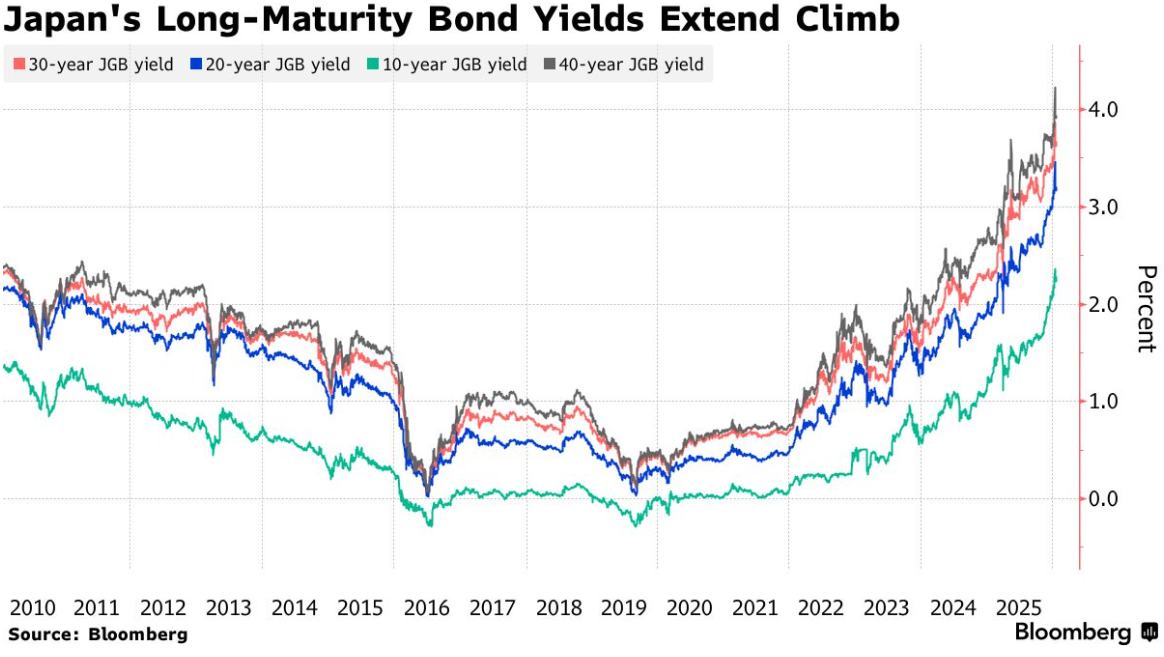
智通财经APP注意到,投资者正密切关注周三日本政府发行 40 年期国债可能引发的债市崩盘风险,该期限品种已被证明极易受到剧烈波动的影响。 招标表现疲软可能会引发长债的新一轮抛售,进而对日元造成压力。这可能会增加市场对比管当局干预外汇市场以支撑日元的推测。 与此同时,在日本官员的言论推升了政府可能干预市场以阻止汇率再次下滑的预期后,日元目前处于 10 月以来的最强水平附近。高市早苗周日再次发出警 告称,在日元疲软和国债收益率飙升的情况下,政府已准备好采取行动。 尽管自上周的溃败以来债市有所反弹,但在日本 2 月 8 日提前大选之前,投资者正准备应对更多的波动。日本最大的反对党"中间改革联盟"已承诺永久削减 食品税,这引发了市场担忧:无论大选结果如何,财政纪律都将趋于弱化。 冈三证券首席债券策略师 Naoya Hasegawa 表示:"目前的招标环境并不理想。由于选举结果和食品税减免的方向仍不明朗,这种不确定性可能会促使投资者 采取更加谨慎的立场。" 此次招标的一周前,受高市早苗首相提议免除两年食品销售税的计划影响,日本国债收益率曾飙升至历史高点。上周二,40 年期国债利率激增超过 25 个基 点,创下该品种问世 ...

日本超长期国债发行 超预期缩减3.2万亿日元
Hua Er Jie Jian Wen· 2025-06-20 10:51
Core Viewpoint - The Japanese Ministry of Finance plans to significantly reduce the issuance of super-long-term government bonds due to unprecedented fluctuations in yields, exceeding earlier media reports [1][2] Group 1: Issuance Reduction Details - The total issuance of 20-year, 30-year, and 40-year bonds will be reduced by 3.2 trillion yen (approximately 22 billion USD) for the fiscal year ending March 2026, surpassing the previously expected reduction of 2.3 trillion yen [1][2] - Specifically, the issuance of 20-year bonds will decrease by 1.8 trillion yen to 10.2 trillion yen, which is double the amount reported earlier [2] - The issuance of 30-year bonds will be reduced by 900 billion yen to 8.7 trillion yen, and the issuance of 40-year bonds will decrease by 500 billion yen to 2.5 trillion yen [2] Group 2: Short-term Debt Adjustments - To compensate for the reduction in long-term debt issuance, the Ministry of Finance is considering increasing the issuance of short-term debt, particularly six-month bonds [1] - The overall issuance of Japanese government bonds for the fiscal year will see a slight decrease of 500 billion yen, totaling 171.8 trillion yen [1] - The issuance of 2-year bonds will increase by 600 billion yen to 31.8 trillion yen, and the issuance of 1-year bonds will rise by 300 billion yen to 38.7 trillion yen [2] - The issuance of six-month bonds will see a significant increase of 1.8 trillion yen to 4.2 trillion yen [2] Group 3: Market Context - The adjustments come amid severe volatility in the Japanese bond market, with rising yields causing global market reactions [1] - Recent concerns regarding Japan's fiscal situation have intensified selling pressure, particularly after weak auction demand led to a spike in yields for 30-year and 40-year bonds [1]