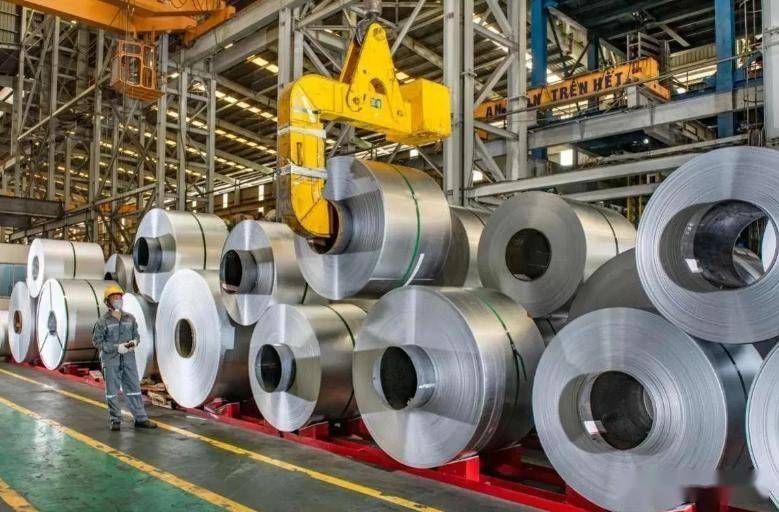
国家战略资源

Search documents
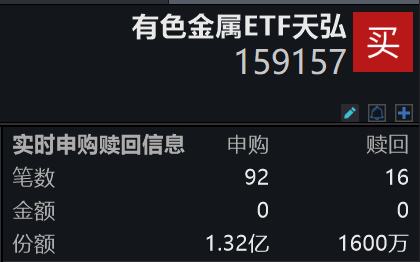
抢占工业有色周期上行先机,有色金属ETF天弘(159157)实时净申购1.16亿份深市同标的第一
Sou Hu Cai Jing· 2026-02-06 03:08
Core Viewpoint - The industrial non-ferrous metals sector is experiencing a favorable investment environment, driven by supply constraints and increasing demand from the AI industry, which is expected to enhance the long-term performance of upstream resources [2][3]. Group 1: Market Performance - As of February 6, 2026, the Tianhong Non-Ferrous Metals ETF (159157) recorded a turnover of 9.91% with a transaction volume of 99.59 million yuan, and the underlying index, the CSI Industrial Non-Ferrous Metals Theme Index (H11059), increased by 0.37% [1]. - The Tianhong Non-Ferrous Metals ETF has seen a net subscription of 116 million shares, ranking first among similar products in the Shenzhen market [1]. Group 2: Industry Insights - The industrial non-ferrous metals sector is concentrated, with the top three industries being copper (31.1%), aluminum (21.9%), and rare earths (16.1%), collectively accounting for approximately 70% of the index [2]. - The rapid development of the AI industry is expected to drive up electricity demand, which will ultimately benefit the industrial non-ferrous metals sector, especially given the anticipated limited supply growth in the coming years [2]. Group 3: Price Trends - The commodity price index in China reached a three-and-a-half-year high in January 2026, with the non-ferrous metals price index rising by 9.9% month-on-month and 26.6% year-on-year [4]. - Among 50 monitored commodities, 33 saw price increases in January, with lithium carbonate, refined tin, and refined nickel leading the gains at 48.4%, 20.2%, and 19.5% respectively [4]. Group 4: Institutional Perspectives - CITIC Securities indicates that after a significant price increase in 2025, the momentum for non-ferrous metal prices and stocks remains strong, supported by supply disruptions and high demand in certain sectors [4]. - The firm expresses optimism regarding the investment value in precious metals, industrial metals, battery metals, and strategic metals due to favorable market conditions [4].

明明不挣钱,为什么中国,还要死守钢铁产业?其实原因很简单
Sou Hu Cai Jing· 2025-05-05 23:03
Core Viewpoint - The steel industry is essential for a country's industrial ambitions and cannot be easily abandoned despite financial losses, as it underpins critical sectors like transportation, energy, and manufacturing [1][3][10]. Group 1: Importance of Steel Industry - The steel industry is not just a regular business; it is a strategic resource for the nation, crucial for maintaining industrial capabilities [10][12]. - Abandoning steel production would lead to a collapse of interconnected industries such as mining, transportation, construction, and equipment manufacturing [5][6]. - Countries that have neglected their manufacturing sectors, like the U.S. and Europe, have faced significant challenges in re-establishing them [3][8]. Group 2: Economic Considerations - The steel industry is currently facing pressure to reduce carbon emissions and production capacity, but this does not equate to abandoning the industry altogether [10]. - China, as the largest steel producer, continues to invest in maintaining its steel industry while balancing environmental concerns [10][12]. - The industry is viewed as a long-term investment for national security rather than a short-term profit-driven venture [8][12]. Group 3: Future Implications - The decision to maintain steel production is seen as a way to ensure future industrial resilience and independence, especially in critical areas like technology and manufacturing [8][10]. - The potential loss of the steel industry could lead to a situation where even basic components must be imported, compromising national autonomy [12]. - The current strategy is to preserve the steel industry to safeguard against future dependencies and vulnerabilities [6][12].