AI产业发展

Search documents
人民币狂飙5600点!美元没跌,人民币却独自升值,谁在疯狂买入?
Sou Hu Cai Jing· 2026-02-27 02:32
Core Viewpoint - The offshore RMB exchange rate has strengthened significantly, reaching around 6.8 against the US dollar, with a cumulative increase of over 5600 basis points in the past 10 months, indicating a deliberate and sustained trend rather than a random fluctuation [1][3]. Group 1: RMB Strength and Market Dynamics - The RMB has steadily appreciated over the past 10 months without significant volatility, accumulating a total increase of 5600 basis points, driven by underlying market forces [3][5]. - The strengthening of the RMB is independent of the US dollar's performance, which has remained stable without signs of decline or significant upward movement [3][5]. - The recent surge in the bank's foreign exchange settlement surplus reached nearly $100 billion in December 2025, marking a historical peak, with January 2026 maintaining a high surplus of around $90 billion [7][8]. Group 2: Foreign Capital Inflow - The substantial foreign exchange surplus indicates that foreign capital is actively converting large amounts of US dollars into RMB, contributing to the currency's appreciation [8][10]. - In January 2026, a record surplus of $26 billion in securities investment further highlights foreign investors' ambitions in the RMB market, showcasing a shift in capital flow towards A-shares [10][12]. - The influx of foreign capital into the A-share market reflects a significant change in investor behavior, moving from passive observation to active participation with substantial investments [12][14]. Group 3: Market Conditions in Shanghai vs. Hong Kong - In Shanghai, the slowdown in new stock issuance has created a scarcity of quality assets, leading to increased valuations in the technology sector due to heightened liquidity [14][16]. - Conversely, Hong Kong has experienced a dramatic increase in IPO fundraising, reaching ten times the amount from the previous year, indicating a revitalization of its financial engine but also leading to liquidity challenges [16][17]. - The current IPO landscape in Hong Kong reveals a significant transformation in its industrial structure, with a notable focus on technology and high-end manufacturing, moving away from traditional financial and real estate sectors [19][21]. Group 4: Investment Sentiment and Market Outlook - The rapid development of the AI industry provides long-term growth prospects, while some assets have returned to reasonable valuation levels after experiencing a bubble [21][23]. - The evolving market dynamics suggest that the fundamentals will play a crucial role in determining whether foreign capital remains committed or withdraws, emphasizing the importance of identifying quality assets amidst market fluctuations [23][25]. - The RMB's stability at the 6.8 level reinforces expectations that RMB assets will become more valuable, further attracting foreign investment and signaling a new market cycle [25][27].


重阳投资董事长王庆:“四辩”股市,守正出奇
Zhong Guo Ji Jin Bao· 2026-02-16 10:19
Core Viewpoint - The company expresses a positive outlook for the Chinese stock market in 2026, emphasizing the market's transition from being viewed as "uninvestable" to having "strategic allocation value" [1] Group 1: Future Debate - The company believes that China will not follow Japan's path of economic stagnation due to its superior innovation capabilities and irreplaceability in the global market [1] - The rise of the Chinese economy has diminished Japan's industrial advantages, indicating that the next significant opportunity will still be in China [1] Group 2: Allocation Debate - The source of new capital for the stock market is attributed to asset reallocation by residents and financial institutions in a low-interest-rate environment [2] - The ongoing decline in real estate prices has historically shifted the role of the real estate market from a source of capital diversion to a driver of capital inflow into the stock market [2] - High-net-worth individuals and insurance funds are leading the current asset reallocation, which is characterized as rational and gradual rather than impulsive [2] Group 3: Current Debate - AI is viewed as a significant technological revolution, but the high profit margins and capital expenditures in the industry come with strong macroeconomic assumptions [2] - The AI industry is still in its early stages, and substantial computational investment is required to bridge the gap between potential and effective demand [2] Group 4: Strategy Debate - The company advocates for a defensive strategy to protect gains from the 2025 bull market while seeking further opportunities for profit [3] - There is a focus on identifying alpha opportunities in technology and advanced manufacturing, as well as exploring contrarian investments in underappreciated sectors like consumption, military, and real estate [3] - The company remains cautious of structural crowding in innovative sectors and changes in global liquidity, emphasizing the importance of rigorous risk management [3]
抢占工业有色周期上行先机,有色金属ETF天弘(159157)实时净申购1.16亿份深市同标的第一
Sou Hu Cai Jing· 2026-02-06 03:08
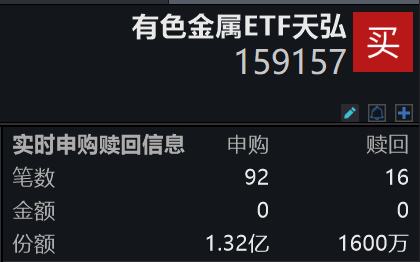
Core Viewpoint - The industrial non-ferrous metals sector is experiencing a favorable investment environment, driven by supply constraints and increasing demand from the AI industry, which is expected to enhance the long-term performance of upstream resources [2][3]. Group 1: Market Performance - As of February 6, 2026, the Tianhong Non-Ferrous Metals ETF (159157) recorded a turnover of 9.91% with a transaction volume of 99.59 million yuan, and the underlying index, the CSI Industrial Non-Ferrous Metals Theme Index (H11059), increased by 0.37% [1]. - The Tianhong Non-Ferrous Metals ETF has seen a net subscription of 116 million shares, ranking first among similar products in the Shenzhen market [1]. Group 2: Industry Insights - The industrial non-ferrous metals sector is concentrated, with the top three industries being copper (31.1%), aluminum (21.9%), and rare earths (16.1%), collectively accounting for approximately 70% of the index [2]. - The rapid development of the AI industry is expected to drive up electricity demand, which will ultimately benefit the industrial non-ferrous metals sector, especially given the anticipated limited supply growth in the coming years [2]. Group 3: Price Trends - The commodity price index in China reached a three-and-a-half-year high in January 2026, with the non-ferrous metals price index rising by 9.9% month-on-month and 26.6% year-on-year [4]. - Among 50 monitored commodities, 33 saw price increases in January, with lithium carbonate, refined tin, and refined nickel leading the gains at 48.4%, 20.2%, and 19.5% respectively [4]. Group 4: Institutional Perspectives - CITIC Securities indicates that after a significant price increase in 2025, the momentum for non-ferrous metal prices and stocks remains strong, supported by supply disruptions and high demand in certain sectors [4]. - The firm expresses optimism regarding the investment value in precious metals, industrial metals, battery metals, and strategic metals due to favorable market conditions [4].
凯文·沃什被提名,全球贵金属市场迎来剧烈震荡
Sou Hu Cai Jing· 2026-01-31 12:51
Group 1 - The nomination of Kevin Walsh to the Federal Reserve has triggered significant volatility in the global precious metals market, leading to historic declines in spot gold and silver prices, with silver experiencing a maximum intraday drop of 36% and closing down 26.42% at $85.259 per ounce, while gold fell over 12% to below $4700 per ounce, marking its worst single-day drop in 40 years, closing down 9.25% at $4880 per ounce [2][3] - The market perceives Walsh's nomination as a direct catalyst for the precious metals crash, aligning with the notion that currency trends dominate short-term fluctuations in gold and silver prices, as emphasized in the analysis of monetary policy and its impact on these assets [3][4] - Walsh's complex monetary policy stance, which includes both hawkish and dovish elements, may continue to influence short-term volatility in the gold and silver markets, suggesting a potential balance in Federal Reserve policies that could mitigate extreme market reactions [4][6] Group 2 - Despite the recent sharp declines, the long-term value foundation of gold and silver remains intact, driven by their scarcity and industrial demand, particularly in sectors like AI and photovoltaics, which are expected to support silver's long-term value [5][6] - Historical patterns indicate that significant price surges in gold and silver are often followed by substantial corrections, yet current global central bank gold purchases provide structural support for gold prices, reflecting a long-term trend in capital flows and the evolution of the monetary system [6] - The volatility in silver prices is attributed to its smaller market size and lower liquidity, making it more susceptible to short-term policy shifts and capital flows, while its industrial applications are expected to drive demand growth in the coming years [5][6]

ETF盘中资讯|“有色盛宴”并非偶然!有色ETF华宝(159876)飙涨5%续创新高,获净申购超1亿份!湖南黄金等7股涨停
Sou Hu Cai Jing· 2026-01-26 02:53
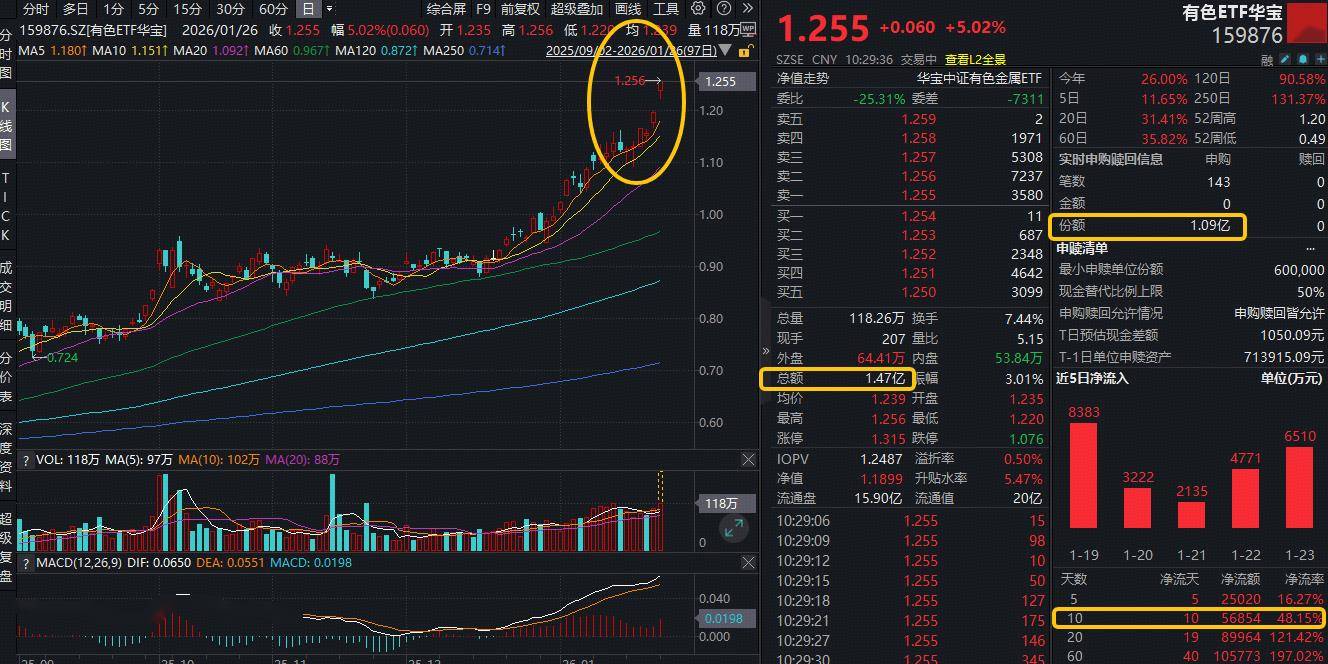
Core Viewpoint - The non-ferrous metal sector is experiencing a significant rally, driven by multiple factors that are reshaping the pricing logic of non-ferrous metals [1][3]. Group 1: Market Performance - The non-ferrous metal ETF, Huabao (159876), surged by 5.02%, reaching a new high since its listing, with a trading volume of 1.42 billion yuan within the first hour of trading [1]. - The ETF has seen a net subscription of 1.09 million units, accumulating a total of 569 million yuan over the past 10 days [1]. - Key stocks in the sector, such as Steel Titanium Co., Tongling Nonferrous Metals, and Silver Nonferrous Metals, have all reached their daily limit up, with significant increases in trading volumes [4]. Group 2: Driving Factors - The rising U.S. debt and deficit are causing global concerns about sustainability and the credibility of the dollar, leading central banks to diversify their reserves by reducing U.S. Treasury holdings and increasing gold reserves, which supports higher precious metal prices [3]. - The development of the AI industry and the acceleration of global energy transition are driving increased demand for industrial metals like copper and aluminum [3]. - The global supply chain is shifting focus from efficiency to security, prompting countries to increase reserves of critical minerals and energy, thereby boosting demand for bulk commodities [3]. - A long-term contraction in capital expenditure for major non-ferrous metals since 2011 has created a significant output gap, which continues to constrain supply and support prices [3]. Group 3: Industry Outlook - The current high profitability in the non-ferrous metal sector is expected to persist for an extended period, with new demand driving growth and leading to a potential revaluation of the sector [3]. - Domestic non-ferrous metal companies are valued lower compared to their overseas counterparts, despite having similar growth potential and core competitiveness [3]. - Continuous exploration and breakthroughs in core technologies such as exploration, mining, and metallurgy by domestic companies contribute significantly to global mining development [3].



申万宏源研究晨会报告-20260122
Shenwan Hongyuan Securities· 2026-01-22 00:57
Group 1: Textile and Apparel Industry Insights - The textile and apparel industry is expected to see a gradual recovery in domestic demand in 2026, with a focus on high-growth consumption areas such as high-performance outdoor brands, discount retail, personal care, and sleep economy [9][13] - The retail sales of clothing, shoes, and textiles in China reached 1.52 trillion yuan in 2025, showing a year-on-year increase of 3.2%, with December experiencing a slowdown in growth due to warmer winter temperatures [9] - The export value of China's textile and apparel in 2025 was $293.8 billion, a decrease of 2.6% year-on-year, indicating a shift in supply chain orders towards countries like Vietnam, which saw a 7% increase in textile exports [9] Group 2: Performance of Key Brands - Major outdoor brands such as Anta, Li Ning, and 361 Degrees are expected to perform well, while discount retailers like Hailan Home are also projected to grow [10][13] - The performance of women's apparel brands is showing signs of recovery, with companies like Xinha and Ge Li Si expected to see significant growth in revenue and net profit [10] - The children's clothing segment is anticipated to stabilize, with brands like Semir and Jiama showing slight growth in revenue [10] Group 3: Non-woven Fabric Industry - The non-woven fabric industry is benefiting from quality upgrades and expanding demand, with companies like Sturdy, Yanjiang, and Nobon expected to see revenue growth of 10% to 20% in 2025 [11][12] - The global market for wet and dry wipes is projected to be worth hundreds of billions, with China experiencing faster growth than the global average [11] Group 4: Global Interest Rate Trends and Impacts - Recent increases in long-term interest rates in developed countries have led to global market volatility, with the 30-year Japanese government bond yield rising by 41 basis points and the 30-year U.S. Treasury yield increasing by 7 basis points [14][15] - The geopolitical tensions, particularly involving the U.S. and Europe, have prompted a reallocation of global funds, with potential risks for U.S. Treasury securities [15] Group 5: Banking Sector Performance - Ningbo Bank reported a revenue of 71.97 billion yuan in 2025, with a year-on-year growth of 8%, driven by an increase in net interest income and non-interest income [18][19] - The bank's non-performing loan ratio remained stable at 0.76%, indicating effective risk management [19] - Industrial Bank also showed a slight revenue increase of 0.2% in 2025, with expectations for steady recovery in 2026 [21][23]
29个人,估值120亿
投中网· 2026-01-19 06:54
Core Insights - LMArena, an AI startup, recently completed a Series A funding round of $150 million, achieving a post-money valuation of $1.7 billion (approximately 12 billion RMB) [3] - The company's valuation increased threefold in just seven months, from $600 million in its seed round to $1.7 billion [4] - LMArena operates with a small team of only 29 employees, resulting in a valuation of approximately $4 billion per employee [5] Group 1 - LMArena originated from an open-source academic organization, LMSYS Org, aimed at democratizing the use and evaluation of large models [8] - The platform, initially named Chatbot Arena, gained popularity for its unique evaluation method, which contrasts traditional testing methods that face saturation, contamination, and disconnection from real-world applications [10][11][12][13] - LMArena's ranking system is now widely accepted in the AI industry, with over 400 models evaluated and millions of users participating monthly [14] Group 2 - In early 2025, LMArena transitioned from an academic project to a commercial entity, raising concerns about potential loss of credibility similar to past benchmarking tools [16] - The platform faced significant scrutiny during the "cheating" incident involving Meta, where accusations arose regarding manipulated rankings [18][20] - LMArena launched its first commercial product, AI Evaluations, which achieved an annual recurring revenue (ARR) of $30 million within four months of its launch [22] Group 3 - A16Z, a leading venture capital firm, views LMArena's scoring system as a critical infrastructure for the AI industry and predicts its future role in regulatory compliance for sensitive sectors [22][23] - The company is developing a continuous integration/deployment pipeline for AI through its Inclusion Arena product, which has collected over 500,000 real-world evaluation records [24]

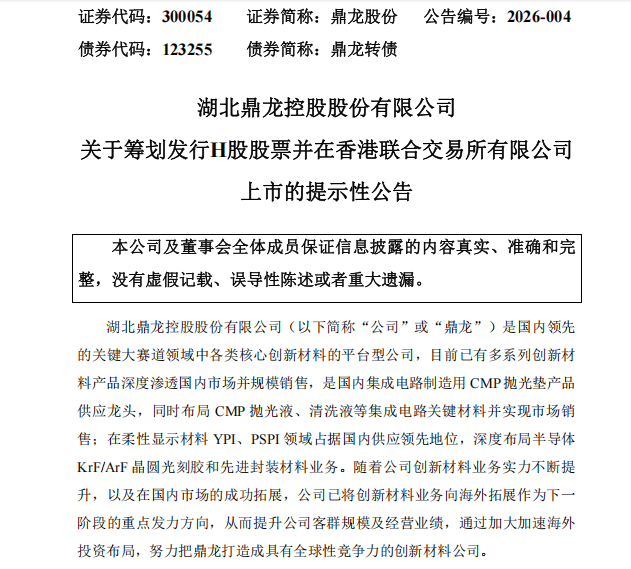
加速海外投资布局 湖北这家A股公司筹备赴港上市
Sou Hu Cai Jing· 2026-01-15 08:01
Core Viewpoint - Dinglong Co., Ltd. is planning to list in Hong Kong to enhance its global competitiveness in the innovative materials sector and accelerate overseas business expansion [2][5] Group 1: Company Overview - Dinglong Co., Ltd. was established in 2000 and is headquartered in Wuhan, China, having been listed on the Growth Enterprise Market in 2010 [2] - The company operates in two main business segments: semiconductor and general printing consumables, being a leading supplier of CMP polishing pads for integrated circuit manufacturing and holding a dominant position in flexible display materials [2] Group 2: Financial Performance - For the first three quarters of 2025, Dinglong reported a main revenue of 2.698 billion yuan, an increase of 11.23% year-on-year [2] - Revenue from the semiconductor segment grew by 41.27%, accounting for 57% of total revenue [2] Group 3: Strategic Initiatives - The company aims to expand its innovative materials business internationally, focusing on overseas investments to enhance its global market presence [5] - The upcoming listing is part of a strategy to deepen the company's global layout in innovative materials and improve its international brand influence and competitiveness [5] Group 4: Industry Opportunities - Key opportunities in the semiconductor materials industry by 2026 include growth driven by AI in downstream semiconductor and OLED display panel sectors, increasing demand for stable supply chains, and emerging markets in large silicon wafers and compound semiconductors [5] - The company plans to leverage its core advantages to develop targeted strategies for market expansion, including international outreach [5]
新浪财经2026财经日历:年度投资决策指南,一本在手全掌握
Xin Lang Cai Jing· 2026-01-12 02:03
Core Insights - The 2026 Exclusive Financial Calendar by Sina Finance has officially launched, combining professional financial references with popular event planning, serving as both an investment decision guide and a practical assistant for sports viewing [1][10]. Group 1: Key Features - The calendar features three main highlights that ensure it is practical and not idle [2][11]. - It includes precise coverage of financial information, clearly marking key dates throughout the year, encompassing global economic data releases, central bank policy meetings, and core industry events, helping users accurately grasp market rhythms [14]. - The calendar also provides in-depth analysis of trending financial topics, focusing on areas such as AI industry development, Federal Reserve interest rate cuts, and central bank gold purchases, allowing users to stay updated on industry frontiers [14]. Group 2: Sports Integration - A special addition to the calendar is the complete schedule for the 2026 FIFA World Cup, detailing all matches from the opening game on June 11 to the final on July 19, featuring 48 teams and 104 matches, ensuring no viewing plans are missed [14].

ATFX策略师:美国9月大非农来袭,美元指数突破100关口,多头有望延续
Sou Hu Cai Jing· 2025-11-20 08:58
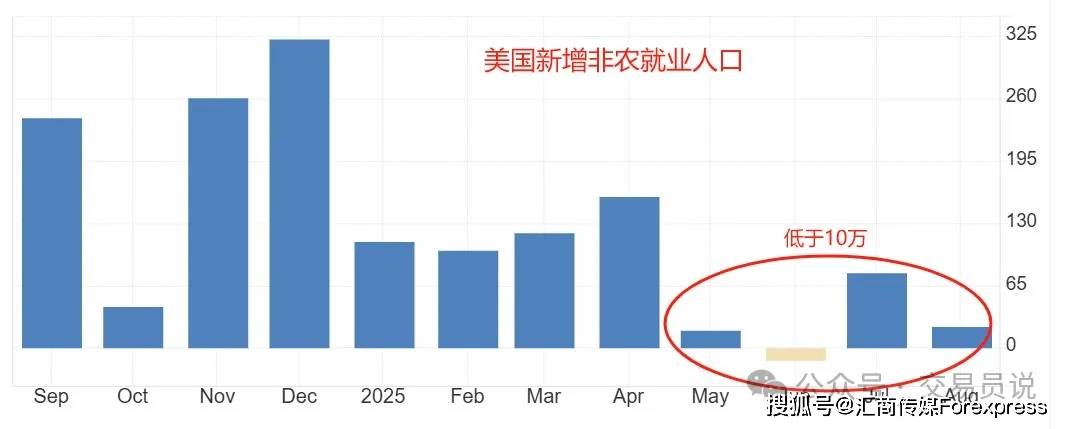
Core Viewpoint - The U.S. Labor Department will release the delayed September non-farm payroll report today at 21:30, which was originally scheduled for October 3 but postponed due to the government shutdown. There is speculation that the October report may never be published due to a lack of data collection [1]. Group 1: Employment Data - The key focus of the September non-farm payroll report is the change in non-farm employment, with a previous value of 22,000 and an expected value of 50,000, indicating a significant anticipated increase, although the absolute figure remains low [3]. - Since May, the U.S. job market has been deteriorating, with non-farm payroll additions falling below 100,000 for four consecutive months, and a negative value recorded in June. This decline is attributed to strict immigration policies and reduced hiring in the AI sector [3]. - The ADP report for September showed a decline of 32,000 jobs, falling short of both the previous value of 54,000 and the expected value of 50,000, suggesting that the non-farm payroll data may also underperform [4]. Group 2: Economic Implications - The poor employment situation has led the Federal Reserve to announce interest rate cuts in September and October, with expectations for further cuts in December if conditions do not improve [3]. - The latest weekly data indicates a loss of 2,500 jobs per week in the U.S. job market, reinforcing the bleak outlook for October and highlighting ongoing recession risks in the macroeconomic environment [4]. Group 3: Market Reactions - The dollar index has seen a significant rise, reaching above the 100 mark, driven by expectations surrounding the non-farm payroll data. If the data aligns with expectations, bullish momentum for the dollar index may continue [6].