国际交流与合作

Search documents
技能型高校“国家队”,这样打造
Xin Lang Cai Jing· 2025-12-22 20:23
Core Viewpoint - The second phase of the "Double High Construction Plan" has been launched, aiming to enhance vocational education in China by establishing a broader coverage of schools and integrating education with industry needs, thereby improving the quality of skilled talent training. Group 1: Overview of the "Double High Construction Plan" - The second phase includes 220 schools, an 11.68% increase from the first phase, achieving nationwide coverage across all 32 provinces, including previously unrepresented regions like Qinghai, Tibet, and Xinjiang Production and Construction Corps [8][9] - The new plan emphasizes high-level educational capabilities and high-quality integration of industry and education, transitioning vocational schools from merely having good foundations to effectively serving national and regional strategic needs [8][9] Group 2: Service Development and Industry Integration - The second phase targets 278 national-level parks and aligns with major regional industries, with service proportions for trillion, hundred billion, and billion-level industries at 26.8%, 43.9%, and 22.9% respectively [10] - The plan promotes a demand-driven approach, enhancing the alignment of vocational education with national strategies and regional leading industries, thereby facilitating a new model of industry-education integration [10] Group 3: Reform and Innovation in Vocational Education - The plan aims to innovate the integration mechanisms between education and industry, establishing joint entities and collaborative platforms to enhance the adaptability of vocational education to regional economic needs [14] - Key educational elements such as curriculum, teaching materials, and faculty training will undergo comprehensive reforms, with a focus on dynamic optimization and alignment with industry standards [15] Group 4: Digital Transformation and International Cooperation - The initiative emphasizes building a digital teaching ecosystem, enhancing digital infrastructure, and integrating AI into teaching methods to support the transformation of vocational education [16] - The plan also aims to expand international cooperation, enhancing the global influence of Chinese vocational education through initiatives like the "Luban Workshop" and establishing standards for international vocational education [17][18]

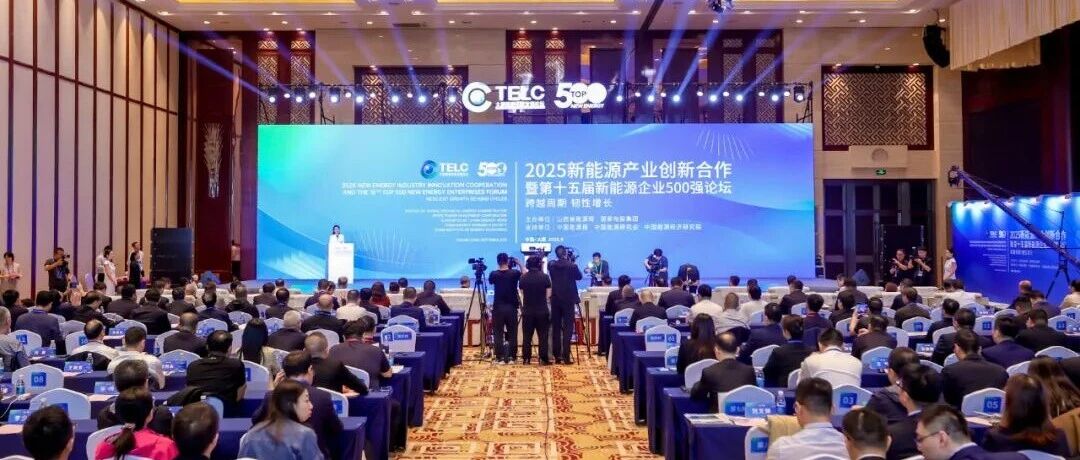
2025新能源产业创新合作暨第十五届新能源企业500强论坛成功举办
中国能源报· 2025-09-28 08:57
Core Viewpoint - The forum held in Shanxi focused on the sustainable and high-quality development of the renewable energy industry, addressing challenges such as cyclical fluctuations and intensified competition [2][4]. Group 1: Industry Development and Achievements - China has made significant technological breakthroughs in sectors like electric vehicles, wind, solar, and smart grids, achieving world-leading levels in battery technology and solar conversion efficiency [4]. - As of July 2023, China's renewable energy installed capacity reached 2.171 billion kilowatts, accounting for nearly 60% of the total installed capacity, with wind and solar power surpassing thermal power for the first time [4]. - According to the "500 Strong Report," seven out of the top ten global renewable energy companies are Chinese, indicating strong domestic and international market performance [5]. Group 2: Challenges and Market Dynamics - The rapid growth of clean energy installations has led to challenges in energy consumption, with policies shifting from scale-driven to application-driven approaches [7]. - The industry is transitioning from simple scale expansion to a focus on quality and efficiency, leading to increased competition among renewable energy companies [8]. - Price wars and international trade barriers are creating significant challenges for companies, impacting profitability and innovation [8]. Group 3: Future Directions and Strategies - Technological innovation is seen as a key driver for overcoming cyclical challenges and avoiding homogenized competition [9]. - Collaboration across the industry is essential, with a focus on creating a cooperative ecosystem that fosters both competition and mutual benefits [9]. - The Chinese government aims for non-fossil energy consumption to reach over 30% of total energy consumption by 2035, with wind and solar capacity projected to increase significantly [9].