
双高建设计划

Search documents
新增高等教育资源将向人口大省和中西部倾斜
21世纪经济报道· 2026-01-09 11:41
Group 1: Core Views - The 2026 National Education Work Conference outlines eight key tasks across basic education, higher education, and vocational education, emphasizing the importance of adapting to demographic changes and improving educational quality [1][4][5]. Group 2: Basic Education - All provinces will implement reforms in basic education resource allocation to better respond to changes in school-age populations, including initiatives like the revitalization of county-level high schools and deepening middle school entrance examination reforms [1][5]. - The conference emphasizes the need to maintain educational equity and provide quality education, with specific goals for preschool enrollment rates and completion rates in secondary education by 2027 and 2035 [3][5]. Group 3: Higher Education - The conference calls for a new round of "Double First Class" construction, focusing on optimizing the structure of higher education to meet national and regional strategic needs, particularly in populous provinces and the central and western regions [8][9]. - Plans include expanding the number of "Double First Class" universities from 147 to around 200, with a focus on emerging disciplines such as artificial intelligence and engineering [9][10]. Group 4: Vocational Education - The vocational education system is set to accelerate its development, with a focus on high-skill talent cultivation and integrating education with industry needs, particularly in advanced manufacturing sectors [13][14]. - The "Cluster Training" model will be explored to enhance the quality and scale of vocational education, addressing the growing demand for skilled labor in various industries [14].


详解全国教育工作会议:新增高等教育资源向人口大省和中西部倾斜
2 1 Shi Ji Jing Ji Bao Dao· 2026-01-09 10:17
Core Insights - The 2026 National Education Work Conference outlined eight key tasks across basic education, higher education, and vocational education, emphasizing the need for reforms to adapt to population changes and improve educational quality [2][3][4]. Basic Education - All provinces will implement reforms in basic education resource allocation to adapt to population changes, including actions to revitalize ordinary high schools and deepen middle school entrance examination reforms [2][4]. - Key indicators related to basic education include achieving a gross enrollment rate of 93% in preschool education by 2027 and 86% in high school education by the same year [5][6]. - The conference emphasized the importance of maintaining educational equity and providing quality education, alongside initiatives like promoting healthy school construction and integrating artificial intelligence into education [5][6]. Higher Education - A new round of "Double First-Class" construction will be initiated, focusing on optimizing the structure of higher education to meet national and regional strategic needs [3][7]. - The government plans to direct new higher education resources towards populous provinces and central and western regions, enhancing support mechanisms for these areas [8][9]. - The aim is to expand the "Double First-Class" initiative from 147 to approximately 200 institutions, focusing on emerging disciplines and reinforcing the development of foundational and specialized fields [7][10]. Vocational Education - The vocational education system is set to accelerate its development, with a focus on high-quality talent cultivation in key industries such as new energy vehicles [11][12]. - The "Cluster Training" model will be explored to enhance the core competencies of high-skilled talent, addressing the needs of modern industries [12][13]. - There is a growing recognition of vocational education, with an increasing number of students, including those with university degrees, returning to vocational schools to acquire skills [13].
2030年,我国高职院校办学能力评估实现全覆盖
Zhong Guo Qing Nian Bao· 2025-12-29 03:11
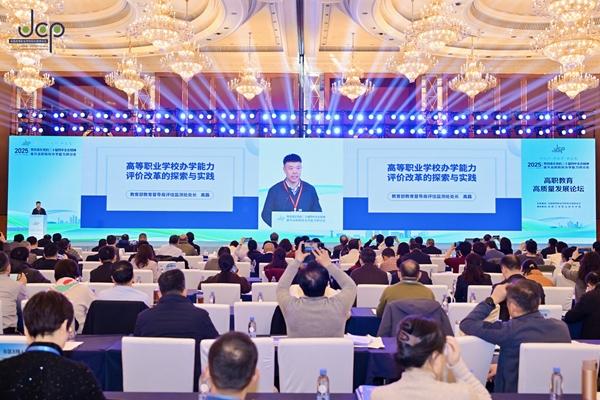
Core Viewpoint - The evaluation of the operational capabilities of higher vocational schools in China will be implemented annually, aiming for full coverage by 2030, with assessments officially starting in 2025 [1][2]. Group 1: Evaluation Implementation - The Ministry of Education has established an expert working group to develop evaluation indicators and frameworks, with pilot tests conducted in 30 schools across 15 provinces [1][2]. - The evaluation reform is a significant change in the vocational education assessment system, marking a new phase of high-quality development [2]. Group 2: Goals and Objectives - The primary goal of the evaluation is to enhance the internal quality of vocational schools, focusing on five key elements: majors, courses, teaching materials, teachers, and practical training [4]. - The evaluation aims to address current challenges in vocational education, such as the imbalance between scale and quality, and to promote deeper integration of education and industry [2][4]. Group 3: Strategic Importance - The evaluation is seen as a necessary step to align vocational education with national strategies, emphasizing the cultivation of high-quality skilled talents in response to emerging technologies and industrial restructuring [2][5]. - The evaluation process is designed to serve as a catalyst for development, encouraging schools to integrate assessment requirements into their operational processes [4]. Group 4: Synergy with Other Initiatives - The evaluation is closely linked to the "Double High Construction Plan," which aims to establish a national team in vocational education, with both initiatives supporting and enhancing each other [5]. - The "Double High" construction schools will be prioritized in the evaluation process to strengthen their role as benchmarks and engines for overall improvement in vocational education [5].
技能型高校“国家队”,这样打造
Xin Lang Cai Jing· 2025-12-22 20:23
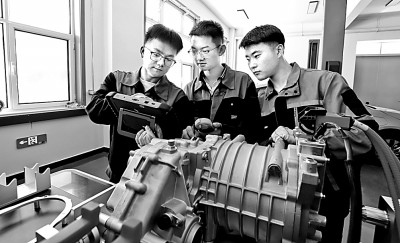
Core Viewpoint - The second phase of the "Double High Construction Plan" has been launched, aiming to enhance vocational education in China by establishing a broader coverage of schools and integrating education with industry needs, thereby improving the quality of skilled talent training. Group 1: Overview of the "Double High Construction Plan" - The second phase includes 220 schools, an 11.68% increase from the first phase, achieving nationwide coverage across all 32 provinces, including previously unrepresented regions like Qinghai, Tibet, and Xinjiang Production and Construction Corps [8][9] - The new plan emphasizes high-level educational capabilities and high-quality integration of industry and education, transitioning vocational schools from merely having good foundations to effectively serving national and regional strategic needs [8][9] Group 2: Service Development and Industry Integration - The second phase targets 278 national-level parks and aligns with major regional industries, with service proportions for trillion, hundred billion, and billion-level industries at 26.8%, 43.9%, and 22.9% respectively [10] - The plan promotes a demand-driven approach, enhancing the alignment of vocational education with national strategies and regional leading industries, thereby facilitating a new model of industry-education integration [10] Group 3: Reform and Innovation in Vocational Education - The plan aims to innovate the integration mechanisms between education and industry, establishing joint entities and collaborative platforms to enhance the adaptability of vocational education to regional economic needs [14] - Key educational elements such as curriculum, teaching materials, and faculty training will undergo comprehensive reforms, with a focus on dynamic optimization and alignment with industry standards [15] Group 4: Digital Transformation and International Cooperation - The initiative emphasizes building a digital teaching ecosystem, enhancing digital infrastructure, and integrating AI into teaching methods to support the transformation of vocational education [16] - The plan also aims to expand international cooperation, enhancing the global influence of Chinese vocational education through initiatives like the "Luban Workshop" and establishing standards for international vocational education [17][18]
“双高建设计划”:职教高质量发展的战略引擎
Xin Lang Cai Jing· 2025-12-22 20:23
Core Viewpoint - The "Dual High Construction Plan" for vocational education in China aims to enhance the quality of talent cultivation and social service capabilities, marking a shift from internal development to service empowerment in vocational education [1][2]. Group 1: Strategic Deployment - The second phase of the "Dual High Construction Plan" emphasizes a problem-oriented approach to address existing shortcomings in vocational education, such as insufficient integration of industry and education, lack of sustained policy support, and a disconnect between talent training quality and job requirements [2][3]. - The new policy framework consists of four dimensions: demand-oriented, integration of industry and education, quality-based, and standard-led, transitioning from government-led regulation to multi-party collaboration [2][3]. Group 2: Contribution-Oriented Initiatives - The second phase of the plan focuses on aligning vocational education with national development strategies, transforming its value framework to serve broader economic and social development [3][4]. - It establishes a three-dimensional layout that combines national frameworks with local characteristics and deep industry participation, allowing for tailored approaches in different regions [3][4]. Group 3: Digital and International Empowerment - Digital transformation is a core reform task, promoting the integration of technology and education to create a new digital teaching ecosystem [4][5]. - The plan also aims to enhance international cooperation through initiatives like overseas skills training and the establishment of international engineering technology colleges, thereby increasing the global influence of Chinese vocational education [4][5]. Group 4: Collaborative Innovation - The plan fosters a collaborative innovation network involving government, industry, and educational institutions, shifting the government's role from direct management to ecosystem builder [5][6]. - It emphasizes the importance of aligning educational programs with industry standards and technical requirements, enabling institutions to proactively respond to industry needs [5][6]. Group 5: Continuous Improvement Mechanisms - The plan advocates for a dynamic adaptation of demand, supply, and feedback to enhance service capabilities, including establishing a mechanism for monitoring industry demand and optimizing professional structures [6][7]. - It also calls for the development of international standards and cooperation models to align vocational education with global practices, facilitating the "going out" of vocational education alongside enterprises [7].
北职大入选第二期国家“双高建设计划”学校建设单位
Bei Jing Shang Bao· 2025-12-20 13:03
Group 1 - Beijing University of Technology (北职大) has been selected as a top institution in the second phase of the national "Double High Construction Plan," with its pharmaceutical biotechnology and intelligent connected vehicle technology programs recognized as national high-level professional groups [1] - The second phase of the "Double High Construction Plan" officially commenced with the issuance of a notice by the Ministry of Education and the Ministry of Finance, identifying 220 vocational schools, including 60 as "Double High" construction schools and 160 as "Double High" professional groups [1] - A "Double High" construction alliance was established in Shenzhen, with representatives from the 220 schools announcing the "New Double High" construction declaration, marking the formal establishment of a national team for skill-oriented higher education [1] Group 2 - Beijing University of Technology aims to align with the high-level educational and high-quality industry-education integration goals of the "Double High Construction Plan," focusing on the capital's high-precision industries, particularly in pharmaceutical health and intelligent connected vehicles [2] - The university is positioned as the only higher education institution in the Beijing Economic and Technological Development Area, enhancing its contribution to national strategies and the socio-economic development of the capital [2] - In 2025, the university will be renamed Beijing University of Technology, becoming the first municipal vocational undergraduate institution in the capital, marking a significant transition from a higher vocational college to a vocational undergraduate institution [2]
中国部署技能型高校“国家队” 已在78国开展合作项目
Zhong Guo Xin Wen Wang· 2025-12-16 15:10
Core Viewpoint - The Chinese Ministry of Education and the Ministry of Finance have launched the second phase of the "Double High Construction Plan," aimed at building a "national team" of skilled higher education institutions, expanding the number of participating schools and programs significantly [1][2] Group 1: Overview of the "Double High Construction Plan" - The second phase of the "Double High Construction Plan" focuses on developing high-level vocational schools and professional groups, with 60 schools and 160 professional groups established [1] - The number of participating schools has increased to 220, an 11.68% rise from the first phase, covering all 31 provinces and regions, including previously unrepresented areas [1] Group 2: Service Development and Industry Alignment - The second phase connects with 278 national-level parks, with professional groups serving industries valued at trillions, hundreds of billions, and billions, accounting for 26.8%, 43.9%, and 22.9% respectively [1] - The professional groups align with primary, secondary, and tertiary industries, with service proportions of 6.1%, 72.5%, and 21.4% respectively, creating a professional layout that resonates with industry development [1] Group 3: International Cooperation and Standards - The plan emphasizes international collaboration, particularly in countries involved in the Belt and Road Initiative, through projects like "Luban Workshop" to provide training and technical services for overseas Chinese enterprises [2] - It aims to establish standards for vocational education abroad, supporting school-enterprise cooperation and promoting Chinese vocational education standards globally [2]
教育部:全面推进“新双高”职业教育综合改革试点建设工作
Xin Hua She· 2025-12-16 12:40
Core Viewpoint - The second phase of the "Double High Construction Plan" aims to comprehensively advance the reform of vocational education, focusing on integrating vocational and general education, as well as industry and education collaboration, to cultivate high-skilled talents and craftsmen [1][2] Group 1: Plan Overview - The second phase of the "Double High Construction Plan" was officially launched with the release of a notification by the Ministry of Education and the Ministry of Finance in February 2025, as part of the "Education Strong Nation Construction Plan Outline (2024-2035)" [1] - The plan establishes 60 "Double High" construction schools and 160 "Double High" construction professional groups, increasing the total number to 220, which is an 11.68% growth compared to the first phase [1] Group 2: Implementation and Impact - The second phase will continue to play a key role in national vocational education reform projects, leading 55 characteristic brand projects such as "Luban Workshop" and "Zheng He College" [2] - The plan will promote 529 overseas cooperation projects across 191 parks in 78 countries and regions, enhancing the global influence of Chinese vocational education [2] - It aims to innovate mechanisms for industry-education integration, reform key teaching elements, and build a new digital teaching ecosystem, thereby establishing a "national team" of skilled colleges [2]
打造技能型高校“国家队”!教育部:第二期“新双高”建设学校220所
Yang Shi Xin Wen· 2025-12-16 10:30
Core Viewpoint - The Ministry of Education is advancing the implementation of the second phase of the "Double High Construction Plan," aimed at establishing a strong foundation for high-skilled talent cultivation to support national development and rejuvenation. Group 1: Overview of the "Double High Construction Plan" - The "Double High" refers to high-level vocational schools and high-level professional groups, with the second phase focusing on cultivating a batch of high-level vocational schools and key professional groups with Chinese characteristics [1] - The second phase includes 220 schools, an increase of 11.68% from the first phase, covering all 31 provinces and regions, filling gaps in Qinghai, Tibet, and Xinjiang Production and Construction Corps [1] - The plan emphasizes differentiated distribution of schools across provinces to better support regional coordinated development and industrial transformation [1] Group 2: Service and Impact - The second phase aligns with national regional development strategies, connecting with 278 national-level parks, promoting efficient flow and aggregation of educational and industrial resources [2] - Professional groups serve industries with significant economic scales, with respective contributions of 26.8%, 43.9%, and 22.9% to "trillion-level," "hundred-billion-level," and "billion-level" regional industries [2] - The plan has established 34 national-level city-industry education joint bodies and 2 national-level industry-education integration communities, enhancing the influence of Chinese vocational education globally [2] Group 3: Innovations in the Second Phase - The second phase introduces a new value concept emphasizing high-level educational capabilities and high-quality industry-education integration, aiming for mutual empowerment between vocational education and regional industries [3] - The goal orientation shifts from improving educational conditions to better serving industrial and social development, focusing on survival through service and development through contribution [3] - A new evaluation standard system based on six core dimensions has been established to measure vocational schools' educational quality and service capabilities [3] Group 4: Implementation Mechanism - A new mechanism of "local responsibility and central-local collaboration" has been established to enhance local initiative and creativity, with clear responsibilities between central and local authorities [4] - The Ministry of Education and the Ministry of Finance will set standards and layout directions, while provincial education departments will handle selection, task implementation, and performance management [4]