
国际信用

Search documents
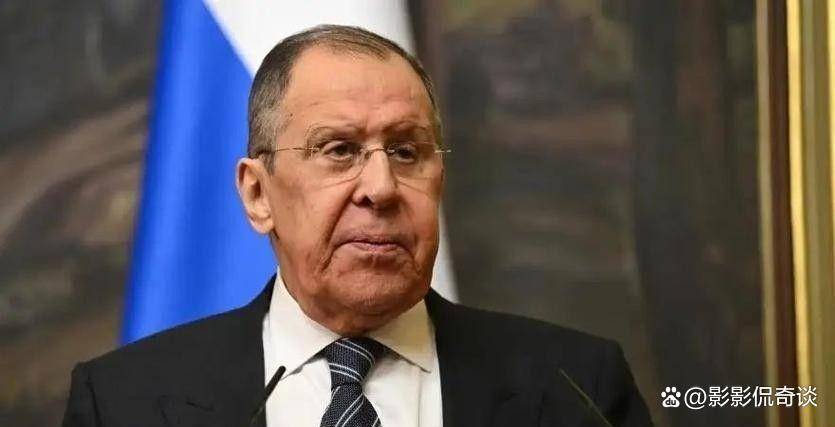
特朗普轻飘飘一句话,断了8国后路,俄罗斯外长:中国已经打赢了
Sou Hu Cai Jing· 2026-01-22 19:09
Group 1 - The core issue revolves around the U.S. imposing tariffs on eight European countries in response to their support for Denmark's sovereignty over Greenland, showcasing a departure from traditional diplomatic norms [1][3][5] - Trump's announcement of tariffs starting February 1 was characterized by a hardline stance, indicating a lack of willingness to negotiate or compromise [3][5] - The irony lies in the fact that the U.S. failed to acquire Greenland and subsequently retaliated against those upholding international law, revealing a contradiction in its foreign policy [5][7] Group 2 - The immediate consequence of Trump's actions was the European Parliament's urgent discussions to halt a previously negotiated trade agreement, undermining U.S. expectations of financial gain from Europe [7][8] - Russia's Foreign Minister Lavrov pointed out that Western countries, unable to compete in manufacturing and infrastructure, resort to sanctions and tariffs as their primary tools [8][11] - China's adherence to established international rules has allowed it to thrive, contrasting with the West's reliance on coercive measures when faced with competition [9][11] Group 3 - The article highlights Europe's vulnerability due to its reliance on external energy sources and the outsourcing of its supply chains, making it less resilient to U.S. economic pressures [14][18] - The ongoing situation reflects a strategic miscalculation by Europe, which has tied its security and development too closely to U.S. interests, leading to a precarious position [15][17] - The friction between the U.S. and Europe is described as a lose-lose scenario, with both parties suffering significant consequences while China benefits from a stable development strategy [20][21]

十年后人民币兑美元多少钱?
Sou Hu Cai Jing· 2026-01-15 06:11
Group 1 - The core judgment presented by Huang Qifan at the Shenzhen Financial Annual Conference is that the RMB will gradually appreciate from 7.0 to around 6.0 over the next decade, emphasizing a steady appreciation rather than a rapid increase [2] - Huang's argument is based on the growth of China's economic strength, but it diverges from the economic fundamentals that underpin exchange rates, as evidenced by the low percentage of RMB in global settlements, which is only 2.88% compared to a projected 30% based on economic strength [2] - The article highlights that while there is a possibility for the RMB to appreciate to 6.0 in the next ten years, Huang's reasoning is seen as lacking in economic common sense, with public sentiment favoring trust in Huang over economic principles [2] Group 2 - The article outlines three essential support points for international credit: the absolute stability of the issuing country's sovereign credit, which includes the absence of debt default risk and political stability [4] - The first support point is cross-border settlement and reserve ratio, with the average international payment share of RMB over the past decade being 3.2%, which does not support predictions of RMB appreciation [4] - The second support point discusses the asset hedging property, questioning which currency, RMB or USD, would be a stronger safe haven in the event of regional conflicts [6] - The third support point addresses the long-term stability of the currency value, emphasizing the need for stability against external fluctuations and internal purchasing power, as instability undermines trust in future value [6]
