国际关系丛林法则

Search documents
这就是绑架
Xin Lang Cai Jing· 2026-01-04 16:56
Core Viewpoint - The article discusses the implications of the recent U.S. military intervention in Venezuela, drawing parallels to past interventions in Latin America and highlighting the potential for a new wave of U.S. neo-colonialism aimed at controlling Venezuela's oil and gas resources [1][5]. Group 1: U.S. Intervention and Its Motivations - The U.S. military action against Venezuela is seen as an attempt to reclaim control over the region, reminiscent of past interventions under the Monroe Doctrine, with the goal of exploiting Venezuela's rich oil and gas reserves [1][4]. - The intervention is framed as a response to the need for the U.S. to assert its authority and gain political capital amid global instability, particularly under the Trump administration [2][4]. - The U.S. aims to achieve multiple objectives through this intervention, including resource acquisition, deterrence of other Latin American nations, and reshaping regional alliances to favor pro-U.S. leadership [9]. Group 2: Impact on International Order - The actions of the U.S. are viewed as a significant challenge to the post-World War II international order, which is based on principles of non-interference and the prohibition of the use of force [5][6]. - The lack of substantial evidence for the accusations against Venezuelan President Maduro raises questions about the legal justification for U.S. actions, highlighting a potential violation of international law [5][6]. - The article suggests that the U.S. and its allies are hypocritical in their claims to uphold international order while engaging in actions that undermine it, setting a dangerous precedent for other nations to follow [6][8].

特朗普对华态度大变,鲁比奥摊牌了:不敢制裁中国,只敢惩罚印度
Sou Hu Cai Jing· 2025-08-20 04:38
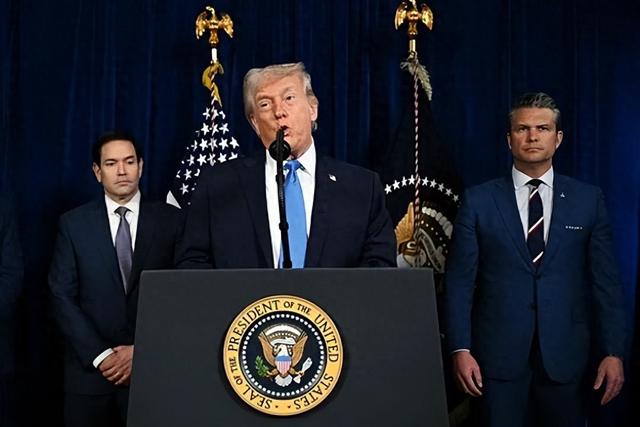
Core Viewpoint - The recent policy shifts of the Trump administration regarding China and India reveal a stark contrast in international relations, highlighting the principle that power dictates treatment in global politics [5][12][20]. Group 1: Policy Changes - The Trump administration initially threatened to impose a 100% tariff on China for purchasing Russian oil, but quickly reversed this stance, with Secretary of State Rubio defending China and Trump stating that tariffs would not be considered for now [5][8]. - In contrast, India faced a 50% tariff for similar actions, indicating a selective enforcement of U.S. policies based on the perceived power dynamics between the countries [5][12]. Group 2: Economic Implications - China's position as the world's largest crude oil importer and a key buyer of Russian oil gives it significant leverage, making the U.S. wary of the economic repercussions of imposing tariffs [8][10]. - The potential rise in global oil prices due to U.S. sanctions could adversely affect American allies in Europe, who are already struggling with inflation [8][10]. Group 3: Power Dynamics - The differential treatment of China and India underscores a broader reality in international relations: powerful nations can negotiate from a position of strength, while weaker nations may be subject to harsher penalties [6][12][15]. - The U.S. views China as a serious competitor, while India is seen more as a tool to counterbalance China's influence, leading to disparate treatment in policy enforcement [14][15]. Group 4: Global Order Shift - The rapid policy reversal reflects a significant shift in the global order, moving from a unipolar to a multipolar world where the U.S. can no longer act unilaterally without considering the consequences [20][23]. - The emergence of a multipolar world necessitates that the U.S. adapt its strategies, as the previous approach of imposing sanctions without regard for repercussions is becoming increasingly untenable [20][23].