土壤微生物

Search documents
【新华社】青藏高原咋种树?雌雄互补,菌肥增效
Xin Hua She· 2025-12-15 05:42
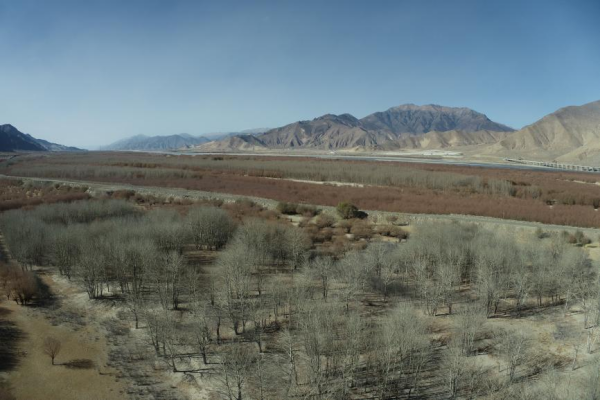
Core Viewpoint - Research on the Yarlung Tsangpo River Valley in the Tibetan Plateau reveals that selecting suitable tree species, considering the "gender ratio" of trees, and nurturing soil microorganisms are essential for successful afforestation in high-altitude areas [1][3][6] Group 1: Tree Gender Ratio - In the fragile alpine semi-arid region of the Yarlung Tsangpo River Valley, the gender ratio of trees significantly impacts the resilience of artificial forests [3] - Female willows and male poplars exhibit stronger adaptability under harsh conditions, challenging the common practice of planting only male trees for urban greening [3] - A scientifically balanced "gender ratio" can enhance the overall resilience of artificial forests by promoting complementary traits [3] Group 2: Soil Microorganisms - The health of forests is closely linked to soil microorganisms, which act as "invisible engineers" providing a stable underground network for plant roots [4] - Mixed planting of different tree species enhances the diversity and activity of soil microorganisms, improving soil fertility and carbon fixation [4] - The interaction between deep-rooted poplars and shallow-rooted willows creates a beneficial environment for microorganisms, which can suppress soil-borne diseases [4] Group 3: New Biological Agents - The threat of "poplar cancer," a disease causing bark rot and tree death, poses a significant risk to poplar plantations in the Tibetan Plateau [5] - A new biological agent derived from nitrogen-fixing bacteria isolated from local poplars has shown over 80% effectiveness in controlling this disease when combined with other management practices [5] Group 4: Sustainable Green Barriers - The ongoing research provides a new scientific perspective for the construction of artificial forests in the Tibetan Plateau and northern China [6] - The focus is shifting from merely increasing planting area to creating self-sustaining and self-renewing ecosystems through precise species and gender combinations [6] - The goal is to establish a stable and enduring green barrier that promotes ecological restoration and resilience [6]

西北农林科技大学最新论文登上Cell头条
生物世界· 2025-10-31 09:15
Core Viewpoint - The recent study from Northwest A&F University highlights that long-term climate warming significantly reduces global soil microbial richness, emphasizing the urgent need for strategies to protect soil microbial communities to mitigate climate change risks [4][8]. Summary by Sections Research Findings - The study analyzed 2,786 observational data points globally, revealing that soil microbial diversity and abundance consistently decline with increasing climate warming and average annual temperature [7]. - Under the SSP1-2.6 scenario, long-term warming (≥5 years) is expected to reduce global soil microbial abundance by 7%-9%, indicating that even moderate long-term warming can adversely affect soil microbial diversity and functionality [7][12]. Importance of Healthy Soil - Healthy soil is crucial for food production and climate stability, with soil microbes driving key processes such as nutrient cycling and carbon storage [5][6]. - The research underscores that understanding and protecting soil microbes is vital not only for scientific inquiry but also for food security, sustainable land use, and overall planetary health [6][8]. Implications of Climate Change - The findings suggest that climate change may erode the biological foundation of soil, threatening essential ecosystem services that humanity relies on [8]. - The negative impact of climate warming on soil microbial abundance is more pronounced in warmer regions, with specific changes in microbial community composition, such as a reduction in ammonia-oxidizing bacteria and an increase in nitrite-reducing bacteria [12].