在线旅游消费维权

Search documents
在线旅游订票踩坑多?出发前这样查,避开糟心旅程
Xin Lang Cai Jing· 2026-01-06 10:17
Core Viewpoint - The article emphasizes the importance of preemptively identifying risks when booking travel services through online travel agencies (OTAs) to avoid common pitfalls that can lead to consumer disputes and dissatisfaction [1][8]. Group 1: High-Risk Areas in Online Travel Complaints - Common complaint areas include flight booking traps such as price fluctuations, high cancellation fees for discounted tickets, and inadequate notifications regarding flight changes [5][11]. - Hotel accommodation issues are prevalent, particularly regarding discrepancies between advertised and actual conditions, such as room size and cleanliness, as well as hidden fees [5][11]. - Travel packages often face complaints related to reduced itinerary quality, forced shopping by guides, and misleading pricing strategies [5][15]. Group 2: Pre-Payment Verification - Consumers are advised to conduct multi-platform information checks before making payments to ensure safety in their travel decisions [3][12]. - Utilizing third-party complaint aggregation platforms is recommended to gather concentrated and public consumer evaluations of airlines, hotels, and OTAs [15]. - Official qualification checks for travel agencies and hotels can be performed through regulatory platforms to confirm their legitimacy and absence of penalties [15]. Group 3: Effective Complaint Channels - If issues arise, consumers should first contact the official customer service of the OTA, airline, or hotel to express their concerns and seek resolution [13][17]. - If initial attempts fail, complaints can be escalated to industry regulatory bodies or consumer protection platforms like the "12315" service for further assistance [10][13]. - Third-party platforms like the Black Cat Complaint platform can facilitate communication between consumers and businesses, providing transparency and support in resolving disputes [10][17]. Group 4: Consumer Habits and Recommendations - It is crucial for consumers to read terms and conditions carefully, especially regarding cancellation policies and fees, before agreeing to them [14][17]. - Keeping all evidence, such as order screenshots and communication records, is essential for effective dispute resolution [17]. - A tiered booking strategy is suggested for significant trips, prioritizing reputable platforms despite potentially higher costs for better security [17].
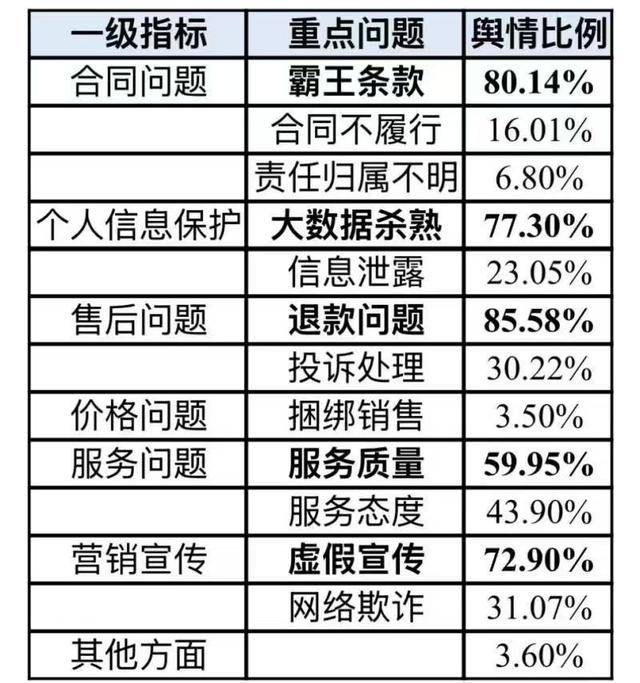
报告显示在线旅游消费维权舆情主要集中在三方面
Sou Hu Cai Jing· 2025-09-27 11:14
Core Insights - The report highlights the overall high consumer satisfaction in the online travel sector, but identifies significant issues affecting consumer experience that need attention [1][2][3] Group 1: Contract Issues - Satisfaction score for contract services is the lowest at 81.71, with 80.14% of related complaints involving unfair terms [1][2] - Online travel platforms often use standard contracts that inadequately disclose key service details such as cancellation policies and penalties [2] Group 2: Data Protection and False Advertising - Satisfaction score for personal information protection is 81.87, with 77.30% of complaints related to "data killing" practices [2] - Despite a relatively high satisfaction score of 83.71 for marketing, 72.90% of complaints pertain to false advertising [2] Group 3: After-Sales Service - After-sales service satisfaction score is 82.58, ranking lower among experience dimensions, with 85.58% of complaints focused on refund issues [2] - Complaints regarding refund processes significantly outnumber those related to complaint handling [2] Group 4: Regulatory Recommendations - The report suggests that regulatory bodies should enhance oversight and penalties for violations such as false advertising and unfair terms [3] - It recommends innovative regulatory methods, including data sharing and real-time monitoring of promotional practices to improve compliance [3] - A "white list" system is proposed to encourage businesses that comply with regulations and effectively handle consumer disputes [3]