
地区和平

Search documents
伊朗总统开出结束战争条件
中国能源报· 2026-03-12 02:35
Group 1 - The Iranian President, Pezeshkian, outlined three necessary conditions to end the ongoing war, which he claims is instigated by the US and Israel [1] - The conditions include the recognition of Iran's legitimate rights, payment of war reparations, and a firm guarantee from the international community to prevent future acts of aggression [1] - Iran has rejected any ceasefire agreements reached through mediation, stating that such agreements do not meet its stipulated conditions and emphasizes the need for genuine guarantees [1]

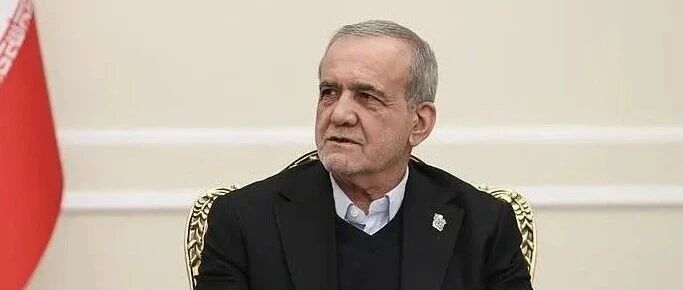
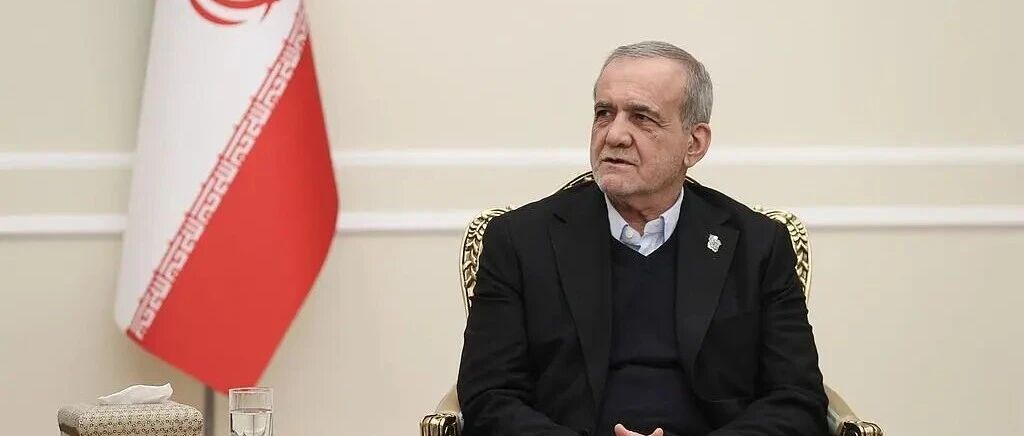
伊朗总统提出结束战争三大必要条件!美国将从战略石油储备中释放1.72亿桶石油
券商中国· 2026-03-11 23:40
Core Viewpoint - The article discusses the ongoing conflict involving Iran, the U.S., and Israel, highlighting Iran's demands for peace and compensation, as well as U.S. military actions and oil reserve releases to mitigate rising oil prices due to the conflict [1][3][5]. Group 1: Iran's Position and Demands - Iranian President Pezeshkian emphasized the need for the recognition of Iran's legitimate rights, payment of war reparations, and international guarantees to prevent future aggression as the only way to end the war instigated by the U.S. and Israel [1][3]. - The Iranian armed forces asserted their control over the Strait of Hormuz and praised the effectiveness of their military actions against Islamic resistance forces [3]. Group 2: U.S. Military Actions and Oil Strategy - President Trump announced that the U.S. would release 172 million barrels of oil from the Strategic Petroleum Reserve to alleviate soaring oil prices due to the conflict, with deliveries expected to take about 120 days [2][4][5]. - The U.S. military has reportedly struck over 5,500 targets in Iran, including 60 naval vessels and various missile and drone facilities [5]. Group 3: International Response - The UN Security Council failed to pass a resolution proposed by Russia aimed at urging an end to the conflict in the Middle East, with a vote of 4 in favor, 2 against, and 9 abstentions [6].

伊朗总统提出结束战争三大必要条件
财联社· 2026-03-11 23:19
Core Viewpoint - The Iranian President emphasized the commitment to maintaining regional peace and stated that the only way to end the current war instigated by the U.S. and Israel is through the recognition of Iran's legitimate rights, payment of war reparations, and the provision of strong guarantees from the international community to prevent future acts of aggression [1] Summary by Relevant Sections - The Iranian President's statement was made during a conversation with leaders from Russia and Pakistan, highlighting diplomatic engagement in the context of regional stability [1] - The call for recognition of Iran's rights and reparations indicates a push for international acknowledgment of Iran's position in the ongoing conflict [1] - The emphasis on international guarantees suggests a desire for a more structured approach to prevent future conflicts in the region, reflecting Iran's strategic interests [1]
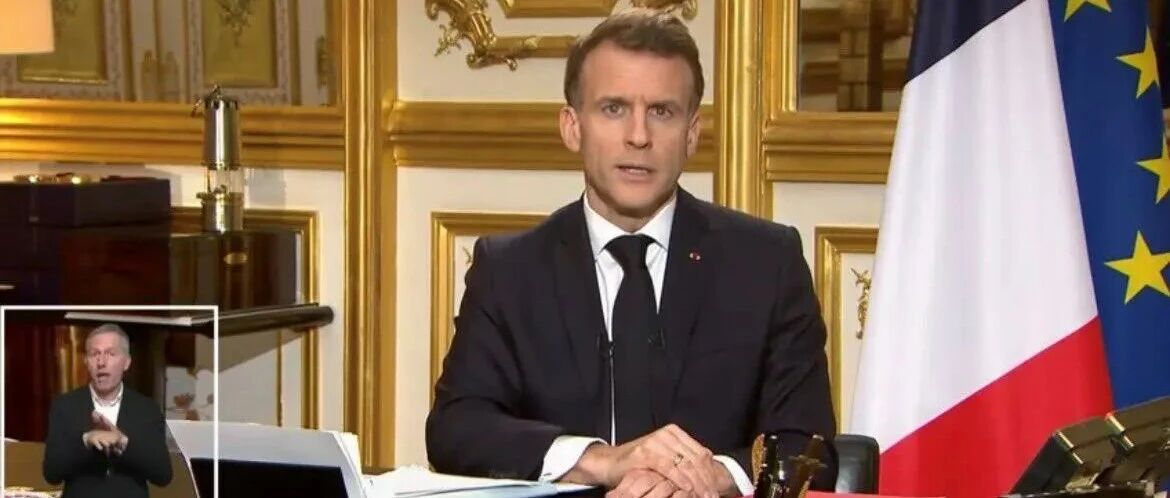
马克龙:“戴高乐”号航母将部署在地中海
第一财经· 2026-03-04 00:43
Core Viewpoint - The article discusses French President Macron's address regarding the current situation in Iran and the Middle East, emphasizing the need for diplomatic negotiations to achieve lasting peace and the importance of respecting territorial sovereignty [1][3]. Group 1: Diplomatic Efforts - Macron asserts that lasting peace in the region must be achieved through the restoration of diplomatic negotiations and calls for an immediate cessation of military actions, which he claims are outside the framework of international law [3]. - He emphasizes France's support for diplomatic measures to ease tensions and prevent further escalation of conflicts [3]. Group 2: Military Stance - Macron warns that if Israel decides to conduct ground military operations in Lebanon, it would be considered a "dangerous escalation" and a "strategic error," potentially impacting the security environment of the entire Middle East and Europe [3]. - The French aircraft carrier "Charles de Gaulle" will be deployed in the Mediterranean to address the tensions in the region and ensure the safety of France and its allies [3]. Group 3: Domestic Security Measures - The French government has strengthened its domestic military protective operation "Sentinelle," enhancing security deployments around critical facilities and key areas to address potential security threats and ensure the safety of the nation and its citizens [3].
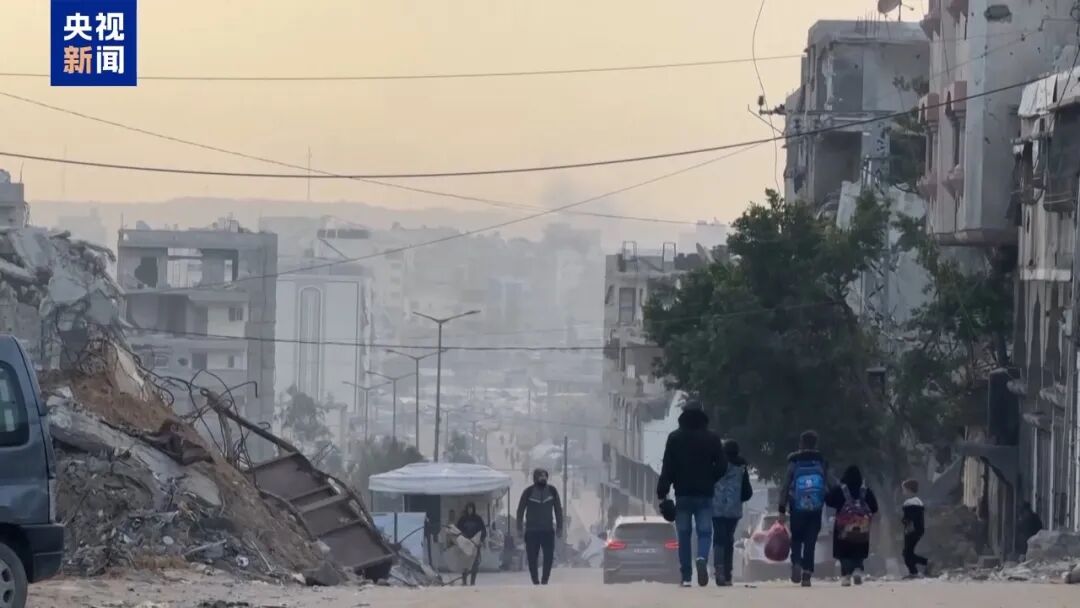
中东突发!以色列,突然行动!八国发表联合声明
券商中国· 2026-02-10 01:20
Core Viewpoint - The article highlights the escalating tensions in the Middle East, particularly focusing on the recent actions of Israel regarding the West Bank, which have drawn strong condemnation from several countries and international bodies [1][3][4]. Group 1: International Reactions - Eight foreign ministers from Egypt, Jordan, UAE, Indonesia, Pakistan, Turkey, Saudi Arabia, and Qatar issued a joint statement condemning Israel's illegal expansion policies in the West Bank, reaffirming that Israel has no sovereignty over the occupied Palestinian territories [3][4]. - The European Union also criticized Israel's recent measures to strengthen its control over the West Bank and expand settlements, describing these actions as a step in the wrong direction [4]. - The Palestinian leadership has called for immediate intervention from Arab and Islamic nations, urging them to unify against Israel's actions and demand the reversal of its decisions [6][7]. Group 2: Specific Actions by Israel - On February 8, Israel's security cabinet approved a series of measures aimed at expanding Jewish settlements and increasing control over the West Bank, including the removal of restrictions on Jewish land purchases in the area [8]. - These measures are seen as a significant escalation in Israel's annexation efforts and a violation of international law and previous agreements between Israel and Palestine [8]. Group 3: Ongoing Violence and Military Actions - Reports indicate that Israeli military operations in the West Bank have continued, resulting in injuries and the detention of over 20 Palestinians, including women and children [8].

八国外长谴责以色列一再违反加沙停火协议
Xin Hua She· 2026-02-01 16:20
Core Viewpoint - The foreign ministers of eight countries, including Saudi Arabia, Jordan, UAE, Qatar, Indonesia, Pakistan, Egypt, and Turkey, issued a joint statement condemning Israel's repeated violations of the Gaza ceasefire agreement, resulting in over 1,000 Palestinian casualties [1] Group 1 - The joint statement emphasizes that Israel's actions could escalate tensions and undermine efforts to consolidate the ceasefire and restore stability [1] - The foreign ministers assert that Israel's continuous violations of the ceasefire agreement pose a direct threat to the political process [1] - The statement calls for all parties to fulfill their responsibilities, exercise maximum restraint, and avoid actions that could jeopardize the current process [1] Group 2 - The foreign ministers urge for the advancement of the second phase of the Gaza ceasefire agreement [1] - They advocate for the restoration and reconstruction efforts, as well as the realization of the Palestinian people's right to self-determination and statehood based on a just and lasting peace [1]
八国外长联合强烈谴责以色列
2 1 Shi Ji Jing Ji Bao Dao· 2026-02-01 16:12
Core Viewpoint - The joint statement from the foreign ministers of Qatar, Egypt, Jordan, UAE, Indonesia, Pakistan, Turkey, and Saudi Arabia strongly condemns Israel for repeatedly violating the ceasefire agreement in Gaza, resulting in over a thousand Palestinian casualties [2] Group 1 - The foreign ministers express that Israel's actions may escalate regional tensions and undermine efforts aimed at consolidating peace and restoring stability [2] - They assert that Israel's continuous violations of the ceasefire pose a direct threat to the ongoing political process and hinder efforts to create conditions for a more stable transition in Gaza [2] - The ministers emphasize the necessity for all parties to fully fulfill their responsibilities and exercise maximum restraint to maintain and strengthen the ceasefire, avoiding actions that could jeopardize the current process [2] Group 2 - The statement calls for the advancement of a just and lasting peace based on the Palestinian right to self-determination and statehood, in accordance with international law, relevant UN Security Council resolutions, and the Arab Peace Initiative [2]
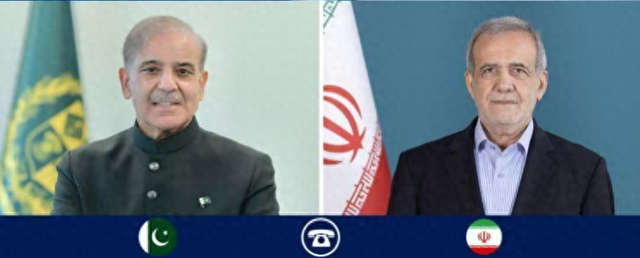
巴基斯坦总理与伊朗总统通话,就地区局势发展交换意见
Xin Lang Cai Jing· 2026-01-29 15:43
Group 1 - The core message emphasizes the importance of dialogue and diplomatic engagement for promoting regional peace, security, and development [2] - Pakistan's Prime Minister Shahbaz and Iran's President Raisi exchanged views on regional developments and bilateral relations [2] - Both leaders agreed to maintain regular high-level interactions and consultations through bilateral mechanisms to further expand and deepen cooperation in various fields [2]
伊朗总统佩泽希齐扬:伊朗人民将坚定支持自己的国家
Xin Lang Cai Jing· 2026-01-10 22:39
Group 1 - Iranian President Ebrahim Raisi emphasized that the actions of the United States and Israel aim to prolong regional wars and insecurity, hindering unity among Islamic nations and creating divisions [1] - Omani Foreign Minister Badr expressed that Iran is a strategic partner for Oman and a key player in achieving regional peace, stability, and security [1] - Oman values its commitment and friendship with Iran, offering to assist in promoting dialogue and addressing various issues faced by the Iranian people [1]
佩泽希齐扬:伊朗人民将坚定支持国家
Yang Shi Xin Wen· 2026-01-10 18:37
Core Viewpoint - Iranian President Pezeshkian asserts that the actions of the United States and Israel aim to prolong regional conflict and insecurity, hindering unity among Islamic nations and fostering division, while emphasizing that the Iranian people will support their country more resolutely than ever [1] Group 1 - Iranian President Pezeshkian met with Omani Foreign Minister Badr, highlighting Iran's role as a strategic partner for Oman and a key player in achieving regional peace, stability, and security [1] - Omani Foreign Minister Badr expressed Oman’s commitment to its relationship with Iran and its willingness to assist in promoting dialogue and addressing the challenges faced by the Iranian people [1]