战争赔偿

Search documents
伊朗总统提出结束战争三大必要条件!美国将从战略石油储备中释放1.72亿桶石油
券商中国· 2026-03-11 23:40
Core Viewpoint - The article discusses the ongoing conflict involving Iran, the U.S., and Israel, highlighting Iran's demands for peace and compensation, as well as U.S. military actions and oil reserve releases to mitigate rising oil prices due to the conflict [1][3][5]. Group 1: Iran's Position and Demands - Iranian President Pezeshkian emphasized the need for the recognition of Iran's legitimate rights, payment of war reparations, and international guarantees to prevent future aggression as the only way to end the war instigated by the U.S. and Israel [1][3]. - The Iranian armed forces asserted their control over the Strait of Hormuz and praised the effectiveness of their military actions against Islamic resistance forces [3]. Group 2: U.S. Military Actions and Oil Strategy - President Trump announced that the U.S. would release 172 million barrels of oil from the Strategic Petroleum Reserve to alleviate soaring oil prices due to the conflict, with deliveries expected to take about 120 days [2][4][5]. - The U.S. military has reportedly struck over 5,500 targets in Iran, including 60 naval vessels and various missile and drone facilities [5]. Group 3: International Response - The UN Security Council failed to pass a resolution proposed by Russia aimed at urging an end to the conflict in the Middle East, with a vote of 4 in favor, 2 against, and 9 abstentions [6].

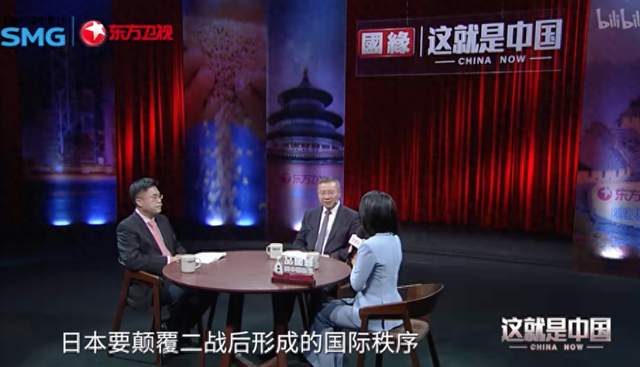
张维为《这就是中国》第316期:日本“搞事”?当迎头痛击!
Xin Lang Cai Jing· 2026-01-18 00:58
Core Viewpoint - The recent remarks by Japan's Prime Minister, Sanna Takashi, regarding Taiwan have provoked strong outrage among the Chinese populace, raising concerns about the resurgence of Japanese militarism [3][4][12]. Group 1: Political Context - Takashi's statement that "Taiwan's issues constitute a survival crisis for Japan" implies potential military intervention by Japan in the Taiwan Strait, which has been met with significant backlash from China [3][4]. - The comments are seen as undermining the political foundation established by the 1972 Sino-Japanese Joint Communiqué, prompting discussions about revisiting war reparations from Japan for its actions during the Second Sino-Japanese War [4][6][12]. Group 2: Public Sentiment and Media Response - A short video of the response to Takashi's remarks garnered over a million views on major social media platforms, reflecting a strong public sentiment against Japanese militarism [3][4]. - The program "This is China" serves as a platform for gathering public opinion and promoting consensus on significant issues, indicating a shift towards a more assertive stance in addressing Japan's actions [4][6]. Group 3: Strategic Recommendations - There is a call to accelerate the process of national reunification with Taiwan, suggesting that resolving this issue could diminish the influence of Japanese militarism [6][12]. - Recommendations include implementing various measures—political, military, economic, and legal—to expedite reunification and counteract Japanese militaristic tendencies [6][8]. Group 4: International Relations and Legal Framework - The U.S. National Security Strategy report indicates a shift in global power dynamics, suggesting that the U.S. may no longer maintain its previous level of dominance, which could impact Japan's military ambitions [6][12]. - The discussion includes the potential application of the "enemy clauses" in the UN Charter, which could allow for military action against Japan if it pursues aggressive policies [12][20]. Group 5: Historical Context and Future Implications - The historical context of Japan's militarism and its implications for regional stability are emphasized, with references to past conflicts and the need for accountability regarding Japan's wartime actions [4][12][20]. - The potential for Japan to seek a permanent seat on the UN Security Council is challenged, as its actions are viewed as a violation of post-war international order [20][22].
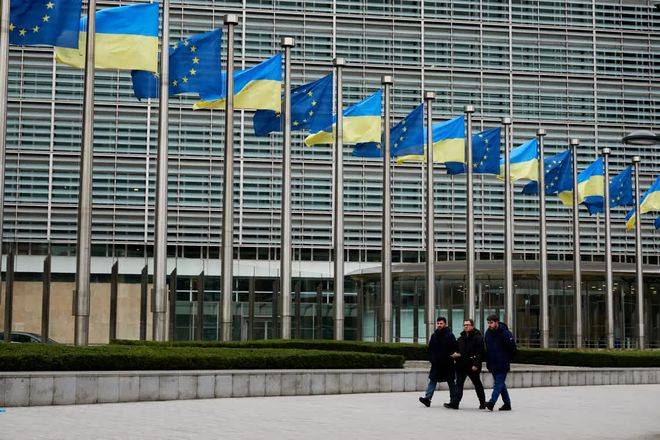
俄罗斯打烂乌克兰,欧洲:赔偿!虽做好了准备,但有2大困难
Sou Hu Cai Jing· 2025-12-18 07:49
Core Viewpoint - Russia is facing potential compensation claims for the damages caused in Ukraine since the war began in 2022, with a new European commission established to address these claims [1][3]. Group 1: Establishment of the Compensation Committee - The European Union has established the International Compensation Commission for Ukraine to address the damages caused by Russia [1]. - The commission will be headquartered in The Hague and is part of the Council of Europe, which promotes European values and international conventions [3]. Group 2: Funding and Compensation Standards - The European approach to funding compensation involves utilizing €210 billion held in a Euroclear bank account in Belgium, which has been frozen and is intended for Ukrainian compensation [5]. - The compensation will initially be provided as loans to Ukraine, with the expectation that Russia will repay these funds if it is defeated or a ceasefire is reached [5]. Group 3: Damage Assessment and Reconstruction Costs - A damage registry has been established by the European Council, documenting 86,000 instances of destruction caused by Russia, with varying compensation amounts for each case [7]. - The World Bank estimates that Ukraine's post-war reconstruction will require at least $524 billion, with various stakeholders having different strategies for funding this reconstruction [8]. Group 4: Challenges and Legal Considerations - Russia has expressed strong opposition to the appropriation of its funds for Ukrainian compensation, claiming such actions violate international law [8]. - The execution of compensation claims remains complex, as it relies on military outcomes and the stability of Russia's political and economic systems [8].