地缘政治交易

Search documents
美印联手背刺俄罗斯?5000亿天价订单曝光,细节却一个字没写
Sou Hu Cai Jing· 2026-02-05 11:29
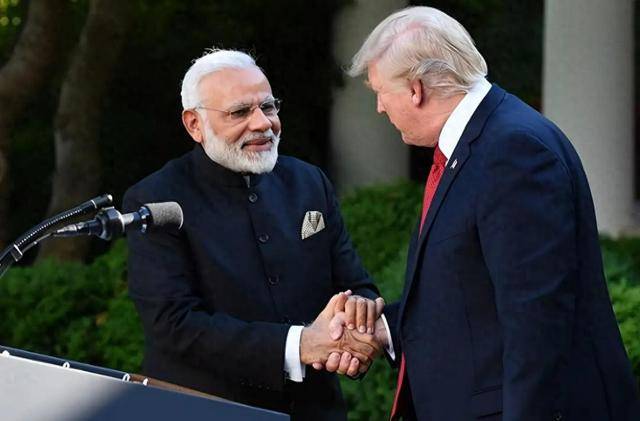
Core Viewpoint - The recent announcement of a "landmark trade agreement" between the US and India, which includes a significant reduction in tariffs and a shift in energy sourcing, is more complex than it appears, revealing underlying geopolitical strategies and challenges [1][3]. Group 1: Trade Agreement Details - The US plans to reduce tariffs on Indian goods from 50% to 18%, while India is expected to stop purchasing oil from Russia and instead import energy from the US [1]. - The agreement lacks specific implementation dates, detailed procurement lists, and a timeline for India's cessation of Russian oil purchases, indicating a lack of concrete commitments [3]. - There are discrepancies in the reported tariff reductions, with Trump claiming a drop from 50% to 18%, while India stated it would decrease from 25% to 18%, highlighting the differing narratives for domestic audiences [5]. Group 2: Geopolitical Implications - The agreement serves multiple purposes for the US: it strengthens its strategic position in Asia, disrupts India's energy ties with Russia, and opens up significant market opportunities for US companies in energy, agriculture, and high-tech sectors [3]. - For India, the choice to comply with the US demands is driven by the economic pressure of high tariffs, but abandoning cheaper Russian oil could lead to increased costs and financial strain [3][5]. - The agreement is viewed as a geopolitical maneuver rather than a straightforward economic partnership, with both nations seeking to leverage the situation for their own strategic advantages [5]. Group 3: Future Considerations - Key questions remain regarding India's ability to meet its energy needs without Russian oil, the US's commitment to lowering tariffs, and the potential repercussions for Russia as a significant energy supplier [7]. - The relationship between major powers is characterized by shifting interests rather than lasting alliances, suggesting that the apparent cooperation may be built on fragile foundations [7].

俄罗斯乐坏了,普京几十年都没做到的事,特朗普上台一年就干成了
Sou Hu Cai Jing· 2026-01-24 03:11
Core Viewpoint - The article discusses the geopolitical implications of Trump's attempt to buy Greenland, highlighting the use of tariffs as leverage against allies and the resulting tensions within transatlantic relations [1][2][18]. Group 1: Trump's Strategy - Trump's approach combines territorial issues with trade penalties, pressuring Europe to choose between principles and economic benefits [3][11]. - The announcement of additional tariffs on Denmark and other countries, starting at 10% and potentially rising to 25%, is a direct economic tactic to force negotiations over Greenland [2][18]. Group 2: European Response - Denmark and Greenland's leadership firmly state that the future of Greenland is a matter for its people and Denmark, rejecting any external negotiations on sovereignty [5][6]. - The EU supports Denmark's stance against coercive negotiations, emphasizing the importance of maintaining sovereignty and unity among member states [6][11]. Group 3: Internal Divisions in Europe - Despite a unified front in public statements, European countries face internal divisions regarding their reliance on the U.S. for security and trade, complicating their response to U.S. tariffs [8][9]. - The potential for economic repercussions from tariffs creates a dilemma for European nations, balancing principled stances with practical economic interests [11][18]. Group 4: NATO and Global Implications - The erosion of trust within NATO due to U.S. actions could weaken the alliance's cohesion, making it more challenging to present a united front against external threats [13][14]. - Russia benefits from the discord among Western allies, as internal divisions may hinder a unified response to its actions [14][16]. Group 5: Broader Trends - The situation illustrates a trend where countries may prioritize hard tactics over established rules and agreements when faced with national interests, raising concerns about the rise of "power logic" in international relations [16][18].
难怪欧洲被人瞧不起,要求上桌被特朗普拒绝,欧盟反冲着中国撒气
Sou Hu Cai Jing· 2025-08-13 08:17
Group 1 - The core viewpoint of the article highlights the marginalization of Europe in the geopolitical landscape, particularly in the context of the U.S.-Russia negotiations regarding Ukraine, with President Trump prioritizing direct dealings with Russia over European involvement [1][3][5] - European leaders, including President Macron, express strong dissatisfaction with being excluded from key discussions, emphasizing the need for Europe to participate in the dialogue surrounding the Ukraine conflict [1][3] - The article suggests that Europe has become a pawn in the U.S.-Russia negotiations, with Trump's decisions reflecting a disregard for European interests in favor of geopolitical transactions with Russia [5][8] Group 2 - The article discusses Europe's reliance on the U.S. for security and economic matters, which limits its ability to confront Trump's policies effectively, leading to a situation where Europe can only respond verbally without taking substantial action [7][8] - An EU diplomat's statement indicates that the EU is considering sanctions against China due to its support for Russia, which reflects the pressure from the U.S. rather than a genuine expectation of a response from China [9] - The article concludes that Europe is increasingly isolated and has been relegated to a subordinate role in the geopolitical chess game between the U.S. and Russia, with little hope of achieving its desired outcomes [9]