高科技

Search documents
律师绘制“出海”风险地图,有哪些应当守住的条款底线?
第一财经· 2026-03-10 15:55
Core Viewpoint - The article discusses the complexities and risks associated with Chinese companies' overseas investments, emphasizing the need for a comprehensive risk management framework that adapts to different legal environments and industry sensitivities [2][3]. Group 1: Risk Identification and Management - Companies should implement a unified and dynamic global risk management framework to identify and adjust to risks in various legal jurisdictions [3]. - The risk map should be constructed based on three dimensions: industry sensitivity, legal jurisdiction, and risk type [4]. - High-risk industries include heavy asset sectors like renewable energy and infrastructure, which are heavily reliant on host country governments [4][5]. Group 2: Legal Jurisdictions - Developed economies are often seen as "compliance mazes," while underdeveloped regions are viewed as "legal deserts," but the reality is more nuanced [5]. - In underdeveloped regions, companies face rapid changes in legal rules and significant discretionary enforcement, which can create substantial pressure on foreign enterprises [5]. - Developed markets are increasingly introducing uncertainties through security reviews and export controls, which pose new risks for Chinese investors [5][6]. Group 3: Common Risk Types - National security reviews have expanded beyond traditional sectors to include data flow, cloud services, and critical software, affecting various operational stages [7]. - Tax risks are often underestimated, with issues arising from tax incentives, transfer pricing disputes, and audits that can compound administrative challenges [7][8]. Group 4: Negotiation Strategies - Companies often focus heavily on commercial terms while neglecting defensive clauses related to dispute resolution and compliance, which can lead to vulnerabilities in times of crisis [10]. - It is crucial for companies to maintain a "never compromise" list regarding legal remedies, including choice of law and dispute resolution mechanisms [13]. - Companies should be proactive during crises, leveraging negotiation leverage and preparing multiple action plans to respond effectively [12].

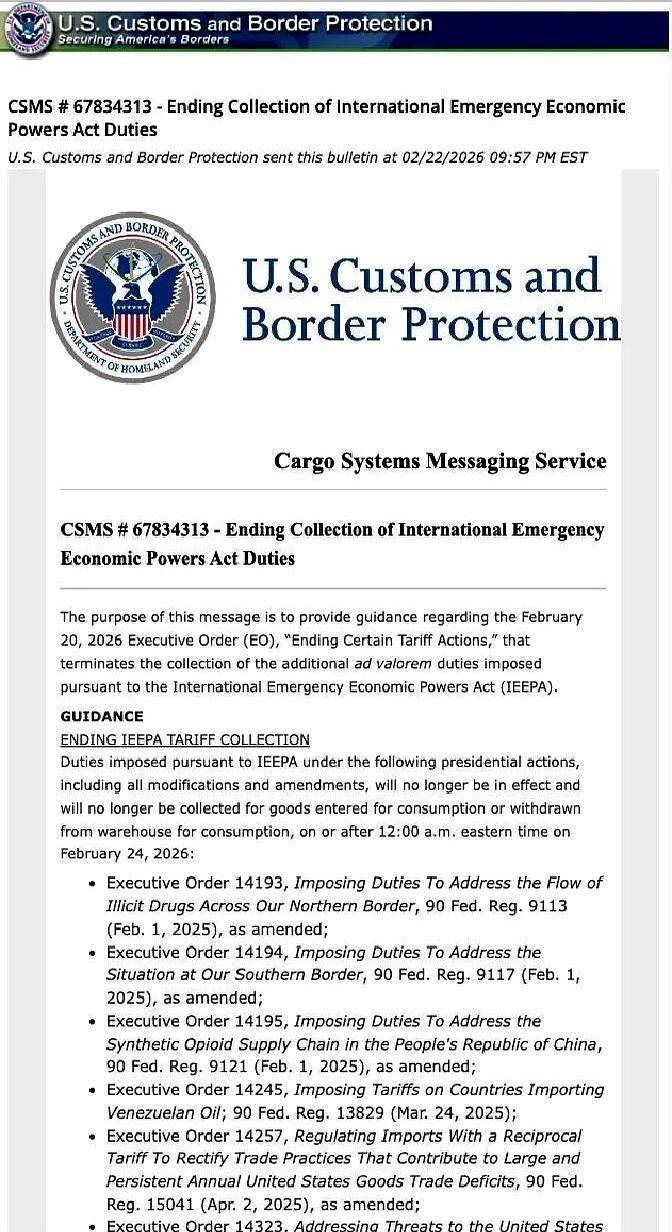
美国海关宣布:取消对等关税与芬太尼税务!2月24日起实施
Sou Hu Cai Jing· 2026-02-27 21:22
Group 1 - The U.S. Customs announced the cancellation of certain tariffs on Chinese goods, which appears to be a response to internal conflicts among U.S. interest groups rather than a genuine goodwill gesture towards China [1][4] - The removal of tariffs on fentanyl and reciprocal tariffs is expected to boost orders for Chinese manufacturers, leading to increased activity at ports like Long Beach [1][6] - The announcement has created a "golden loophole" with a 10-day customs declaration buffer, allowing importers to avoid tariffs if they declare by February 24, leading to chaos in the logistics and customs sectors [6][7] Group 2 - The tariff policy is criticized as self-defeating, as it was intended to punish China but ultimately harmed U.S. consumers by driving up prices [7][9] - The U.S. government faces challenges in refunding previously collected tariffs, as companies may need to engage in lengthy legal battles to reclaim funds [9][10] - China's manufacturing sector has shown resilience and adaptability to U.S. trade policy fluctuations, maintaining steady export growth despite uncertainties [10][12] Group 3 - The U.S. trade policies are perceived as inconsistent, with high tariffs still imposed on certain sectors like high-tech products and steel, indicating a lack of genuine commitment to fair competition [10][12] - The ongoing trade tensions highlight the importance of China's role in the global supply chain, as U.S. inflation pressures have made reliance on Chinese goods more critical [12][13] - The unpredictability of U.S. policies poses a greater threat to businesses than high tariffs, as companies struggle to adapt to frequent changes in regulations [12][13]
洪泽农商银行成功发放区内首笔“苏科贷”
Jiang Nan Shi Bao· 2026-02-26 16:22
Core Insights - Hongze Rural Commercial Bank successfully issued a 15 million yuan "Su Ke Loan" to Jiangsu Jiuxing Technology Co., marking the first implementation of this policy financial product in the Hongze region, aimed at nurturing the growth of technology innovation enterprises [1][2] - The "Su Ke Loan" is designed specifically for small and medium-sized technology enterprises in Jiangsu, featuring low thresholds, low costs, and shared risks, which is expected to provide strong financial support to over 500 technology enterprises across various industries in the Hongze area [2] Group 1 - Hongze Rural Commercial Bank is actively promoting a "consultative" financial service model, focusing on "precise matching, professional guidance, and full-process accompaniment" to address the financing difficulties faced by technology enterprises [1] - The bank has established a professional advisory team that utilizes "data analysis + precise lists + grid visits" to provide tailored financing solutions through one-on-one diagnostics for enterprises [1] - The successful funding of Jiangsu Jiuxing Technology Co., a high-tech company specializing in battery new materials, highlights the effective coordination between local financial, regulatory, and technology departments to ensure policy benefits reach enterprises [1] Group 2 - The bank plans to continue deepening its "consultative" financial service in collaboration with the district data bureau, focusing on the entire lifecycle development needs of technology innovation enterprises [2] - Efforts will be made to expand and enhance the "Su Ke Loan" and other specialized products, aiming to support enterprises in overcoming challenges and achieving growth, thereby empowering the high-quality development of the regional real economy [2]
提升“五个度”,打造营商“新高地”
Nan Jing Ri Bao· 2026-02-24 03:02
Core Viewpoint - Nanjing is actively enhancing its business environment through various initiatives aimed at stabilizing production and improving service efficiency, particularly during the Spring Festival period, to achieve a strong start in the first quarter of 2026 [1] Group 1: Economic Initiatives - Key enterprises in Nanjing are ramping up production efforts during the Spring Festival to ensure a strong economic performance in Q1 2026 [1] - The "2026 Spring Festival Warm-hearted Measures" have been introduced to support enterprises in stabilizing production and enhancing services [1] - Nanjing's "2025 Work Points for Optimizing Business Environment" focuses on improving five key dimensions: enterprise experience, overall convenience, resource abundance, market innovation, and ecological sharing [1] Group 2: Regulatory Improvements - The AEO (Authorized Economic Operator) system has significantly reduced inspection frequencies for 683 enterprises, allowing them to focus on core operations and improve production efficiency [2] - Administrative inspection frequencies for pilot enterprises have decreased by an average of 50%, and compliance costs have been reduced by 30% [2] - The "Ningjiecha" digital regulatory platform has been implemented to transition from comprehensive inspections to precise, non-intrusive regulatory practices [2] Group 3: Cross-Border E-Commerce and IP Protection - Nanjing has established the first national cross-border e-commerce intellectual property protection alliance, creating a comprehensive protection system for rights confirmation, enforcement, and dispute resolution [3] - The alliance has successfully resolved its first cross-border IP dispute in approximately two weeks, significantly reducing time and cost for the parties involved [3] Group 4: Collaborative Governance - Nanjing and Zhenjiang have signed a cooperation agreement for "cross-city handling" of real estate registration, facilitating nearly 20 types of services to break down regional barriers and reduce transaction costs [4] - A high-frequency credit repair initiative has reduced the number of high-frequency dishonest entities from over 160 to fewer than 10 [4] Group 5: Digital Economy and Data Governance - Nanjing is integrating digital technology into its business environment optimization, transitioning from "Internet + Government Affairs" to "Smart Government Affairs" [5] - The "One Network Unified Flight" model has been recognized as a national example for its innovative use of drones in urban management, covering five major areas and significantly improving inter-departmental collaboration efficiency by over 40% [5] Group 6: Service Brand Development - Nanjing's public resource trading center has launched the "Easy Guide" service brand to address specific needs of different business entities, conducting nearly 80 events and reaching around 4,000 participants in the past year [7] - The "Jiangning Government-Enterprise Communication" platform has integrated services from 48 departments, attracting over 25,000 registered enterprises and achieving a 100% satisfaction rate [7] Group 7: Future Plans - Nanjing will release the "Nanjing City Business Environment Optimization Action Plan (2026)" at the upcoming conference, marking the eighth policy document aimed at enhancing the business environment [8]
有人预测:过完年,社会上将会发生4大变化,大家提前做好准备
Sou Hu Cai Jing· 2026-02-21 05:21
Group 1 - The core viewpoint is that after the Spring Festival, several trends will emerge that directly impact finances, work, and family life [1][3] Group 2 - Change 1: Wages are increasing but not enough to cover living costs. The average wage in 2025 is projected to be 24,555 yuan, a 5.3% increase from the previous year [5]. However, the actual growth rate for salaries is expected to decline slightly, with 4.3% in 2024 and 4.4% in 2025 [7]. The rising costs of living, including housing loans and education, are outpacing wage increases [9]. There is significant industry disparity, with high-tech and AI sectors seeing better wage growth compared to traditional manufacturing and service industries [11] Group 3 - Change 2: There is an increase in the number of people participating in matchmaking activities after the New Year. Data shows a rise in activity on dating platforms, particularly among younger generations and seniors [13][15]. The pressure from parents regarding marriage is also intensifying during this period [19] Group 4 - Change 3: Many elderly individuals return to being home alone after the festive season. The proportion of empty-nest elderly people is nearing 60%, with over 1.8 billion individuals affected [24]. There is a noticeable increase in cases of depression and anxiety among the elderly post-holiday [26] Group 5 - Change 4: Job hunting remains challenging after the New Year. The number of college graduates in 2025 is expected to reach 12.22 million, an increase of 430,000 from the previous year [28]. While job openings are increasing, the competition for basic positions is becoming more intense, with many employers seeking candidates with experience [30]. There is a growing demand for skilled positions in areas like electrical work and elder care, which are often unfilled [32]

美印联手背刺俄罗斯?5000亿天价订单曝光,细节却一个字没写
Sou Hu Cai Jing· 2026-02-05 11:29
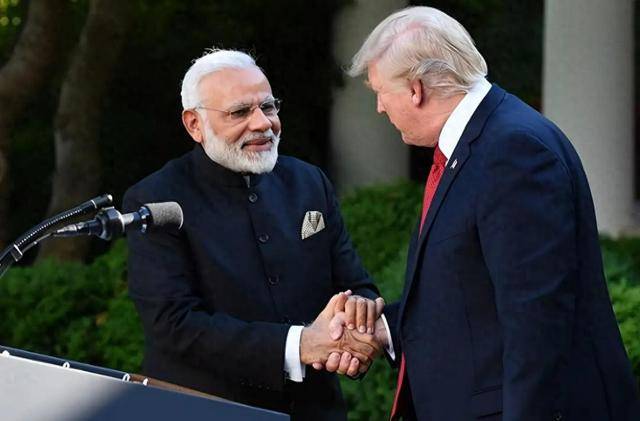
Core Viewpoint - The recent announcement of a "landmark trade agreement" between the US and India, which includes a significant reduction in tariffs and a shift in energy sourcing, is more complex than it appears, revealing underlying geopolitical strategies and challenges [1][3]. Group 1: Trade Agreement Details - The US plans to reduce tariffs on Indian goods from 50% to 18%, while India is expected to stop purchasing oil from Russia and instead import energy from the US [1]. - The agreement lacks specific implementation dates, detailed procurement lists, and a timeline for India's cessation of Russian oil purchases, indicating a lack of concrete commitments [3]. - There are discrepancies in the reported tariff reductions, with Trump claiming a drop from 50% to 18%, while India stated it would decrease from 25% to 18%, highlighting the differing narratives for domestic audiences [5]. Group 2: Geopolitical Implications - The agreement serves multiple purposes for the US: it strengthens its strategic position in Asia, disrupts India's energy ties with Russia, and opens up significant market opportunities for US companies in energy, agriculture, and high-tech sectors [3]. - For India, the choice to comply with the US demands is driven by the economic pressure of high tariffs, but abandoning cheaper Russian oil could lead to increased costs and financial strain [3][5]. - The agreement is viewed as a geopolitical maneuver rather than a straightforward economic partnership, with both nations seeking to leverage the situation for their own strategic advantages [5]. Group 3: Future Considerations - Key questions remain regarding India's ability to meet its energy needs without Russian oil, the US's commitment to lowering tariffs, and the potential repercussions for Russia as a significant energy supplier [7]. - The relationship between major powers is characterized by shifting interests rather than lasting alliances, suggesting that the apparent cooperation may be built on fragile foundations [7].
亿阳信通股份有限公司关于与专业投资机构共同投资的公告
Shang Hai Zheng Quan Bao· 2026-02-03 17:54
Core Viewpoint - The company, Yiyang Xintong Co., Ltd., is making a strategic investment of RMB 50.08 million in the Beijing Jiazhi Xincheng Equity Investment Fund, representing a 9.98% stake, to explore opportunities in high-tech and high-end manufacturing sectors, while ensuring that its main business operations remain unaffected [2][27]. Group 1: Investment Details - The total subscribed capital of the partnership is RMB 500.78 million, with Yiyang Xintong contributing RMB 50 million [2][5]. - The investment does not constitute a related party transaction or a major asset restructuring as per relevant regulations [2][5]. - The investment will not require approval from the company's board of directors or shareholders [2][5]. Group 2: Partnership Overview - The company will partner with Guoke Jiahe (Beijing) Investment Management Co., Ltd. as the general partner and other limited partners to establish the fund [5]. - The fund aims to invest in high-quality enterprises that align with national industrial policies, focusing on technological innovation and high-efficiency sectors [27]. Group 3: Fund Management and Investment Strategy - The fund will be managed by the general partner, Guoke Jiahe, who will have full authority over investment decisions and management [9][19]. - The investment strategy will include equity investments in non-listed companies, with a focus on value investment and industry development [10][18]. Group 4: Financial Impact - The investment is expected to enhance the company's investment and business cooperation channels, optimize its capital and asset structure, and improve shareholder returns [27]. - The funding source for this investment is the company's own funds, ensuring that normal business operations are not impacted [27].

特朗普急了,发文称“从未见过这样的情况”,他想从中国大赚一笔
Sou Hu Cai Jing· 2026-02-03 09:11
Group 1 - The article discusses Trump's claims about the economic situation with China, suggesting he is trying to portray a narrative of victory while facing significant domestic fiscal issues [1][3][5] - Trump's assertion that China's share of U.S. imports is at its lowest since 2001 is countered by the prediction of a $1.2 trillion trade surplus for China in 2025, while the U.S. is expected to face a similar trade deficit [3][5] - The article highlights that the decline in Chinese exports does not indicate a defeat for China but rather a restructuring of global supply chains, with orders shifting towards Southeast Asia, Africa, and Latin America [7][9] Group 2 - Trump's urgency to communicate may be linked to ongoing Supreme Court deliberations regarding the constitutionality of tariffs, which could result in the U.S. needing to retract approximately $300 billion in tariffs [5][11] - The impact of tariffs on U.S. small businesses is noted, with import costs rising by 30%, leading to inflation rates around 5.3% [5][11] - The article mentions the U.S. Treasury's report claiming the yuan is undervalued by 15%, aiming to pressure China into allowing more currency fluctuation, while China's reliance on the dollar is decreasing [11][13] Group 3 - The article discusses Trump's potential nomination of former Fed governor Walsh, who advocates for coordinated interest rate cuts to alleviate U.S. debt pressure, amidst concerns about a return to fiscal and monetary collusion [9][13] - The geopolitical implications of U.S. actions in Panama and Venezuela are examined, indicating a strategy to disrupt Chinese influence in Latin America and control critical resources [15][17] - The narrative suggests that China's response to U.S. pressure is more strategic and subtle, focusing on building its own influence rather than direct confrontation [20][22]
“共创未来·中欧青年对话交流活动”在布鲁塞尔举行
Xin Hua She· 2026-01-28 22:41
Group 1 - The event "Co-creating the Future: China-Europe Youth Dialogue and Exchange" was held in Brussels, focusing on topics such as Sino-European technological innovation and youth entrepreneurship, with around 60 representatives from various organizations in attendance [1] - The President of the European Confederation of Independent Trade Unions Youth Organization emphasized the importance of educational and training cooperation, highlighting the established partnerships between Chinese and European universities that facilitate student exchanges [1] - The Director of Operations at the European Youth Leaders Organization noted that both China and the EU have strengths in technology innovation and governance practices, suggesting that mutual learning and complementary advantages could expand cooperation [1] Group 2 - The Director of Communication and Research at the EU-China Chamber of Commerce mentioned that China's unilateral visa exemption arrangements for European countries could enhance exchanges in youth talent and emerging technologies, promoting more efficient connections between youth and innovation resources [2] - The Overseas Deputy General Manager of Yushu Technology Co., Ltd. stated that the EU is a significant market for high-tech enterprises, with increasing demand for humanoid robots in manufacturing and service sectors driving Chinese companies to iterate products based on European user scenarios [2] - Participants in the free exchange segment agreed that the rapid development of high-tech industries would drive high-end manufacturing and new consumption models, providing broader innovation and entrepreneurship opportunities for youth in both regions [2]
特朗普暴跳如雷!英国专家:一种情况下,美国将立即对华发动核战
Sou Hu Cai Jing· 2026-01-28 18:10
Group 1 - The recent geopolitical tensions have escalated with President Trump's sanctions targeting traditional allies Canada and South Korea [2][4] - Canada is attempting to balance its trade relations between the US and China, which has provoked a strong response from Washington [2][4] - Trump's threats include imposing punitive tariffs of up to 100% on Canadian goods if any substantial trade agreements with China are made [4] Group 2 - South Korea has faced similar sanctions, with tariffs on its automotive and pharmaceutical sectors raised from 15% to 25% due to perceived failures in trade commitments to the US [5] - The sanctions against South Korea are a direct response to President Yoon Suk-yeol's recent high-profile visit to China, where numerous economic cooperation agreements were signed [6][8] - The US is exhibiting extreme anxiety over its geopolitical influence, as evidenced by its aggressive trade policies aimed at preventing allies from strengthening ties with China [8][30] Group 3 - The US Department of Defense's recent National Defense Strategy report has sparked debate, as it contrasts sharply with Trump's aggressive trade rhetoric [10] - The report avoids mentioning Taiwan and emphasizes cooperation in areas of mutual interest, suggesting a shift towards a more pragmatic approach to US-China relations [12][13] - Analysts interpret this as a sign of the US military's acknowledgment of its limitations in a direct confrontation with China, despite ongoing military superiority [10][13][20] Group 4 - Economic data indicates that China, with a population of 1.4 billion and a GDP growth rate around 5%, is on a trajectory to surpass the US economically within 10 to 20 years [16] - The US military remains a significant asset, with annual defense spending that exceeds the combined total of the next nine countries, maintaining a global military presence [18] - The current military advantage of the US is seen as a critical window for action against China, as economic competition appears increasingly unfavorable for the US [20][22] Group 5 - There is a faction within the US military advocating for preemptive action against China, viewing military engagement as a necessary strategy to disrupt China's modernization [22][24] - The potential for nuclear conflict is highlighted, with the US military's willingness to consider first-use scenarios under specific conditions [24][26] - The US is expected to continue leveraging trade wars and geopolitical tensions to slow China's progress while preparing its military capabilities for future confrontations [28][30]