地缘政治分裂

Search documents
美方称“抓获马杜罗”,未来委内瑞拉局势会怎么走?
Huan Qiu Shi Bao· 2026-01-04 00:43
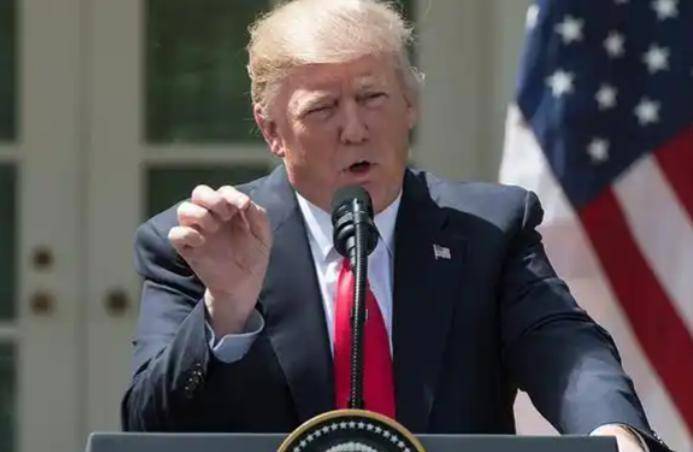
Core Viewpoint - The U.S. military action against Venezuela, including the capture of President Maduro, represents a significant violation of international law and sovereignty, reflecting America's strategic intent to reshape control in the Western Hemisphere [1][3][9]. Group 1: U.S. Military Action - On January 3, U.S. President Trump announced the capture of Venezuelan President Maduro and his wife, following airstrikes on various military and strategic locations in Venezuela, including Caracas and military airports [1][2]. - The airstrikes lasted approximately one hour and targeted multiple regions, causing widespread explosions and power outages in Caracas [2]. - The operation was reportedly executed by U.S. Army Delta Force, with prior authorization from Trump, indicating a premeditated military strategy [3][4]. Group 2: International Reactions - China's Foreign Ministry condemned the U.S. actions as a blatant violation of international law and a threat to peace in Latin America, urging the U.S. to respect sovereignty [3]. - The Venezuelan government has called for international support against the U.S. actions, asserting its right to self-defense and demanding proof of Maduro's well-being [4][11]. - Various international figures and countries, including Russia and Cuba, have denounced the U.S. military intervention, emphasizing its illegality and potential for global condemnation [11][10]. Group 3: Implications for Venezuela - The potential capture of Maduro could lead to significant political instability in Venezuela, with concerns about a power vacuum and the fragmented nature of the opposition [6][7]. - Analysts suggest that the U.S. aims to support pro-American opposition forces to gain control over Venezuela's vast oil resources, which have been nationalized under previous administrations [8][9]. - The situation may lead to a prolonged period of political maneuvering, similar to past conflicts in Iraq and Afghanistan, with no clear path to stability [6][7]. Group 4: Economic Impact - The military actions are likely to create volatility in international oil prices due to Venezuela's status as a major oil producer, with expectations of significant fluctuations in response to the unfolding events [7][10]. - The U.S. intervention is perceived as an attempt to regain influence over Venezuela's oil resources, which have been largely nationalized, limiting U.S. corporate involvement [8][9].
美国最新战略曝光!特朗普为聚焦对我们遏制,竟收缩全球布局转向西半球,国际局势要变天?
Sou Hu Cai Jing· 2025-12-28 18:07
Core Viewpoint - The U.S. is shifting its global strategy, moving away from being a global leader and adopting a more isolationist approach, as articulated in the National Security Strategy report released on December 9, 2025, which states, "The U.S. is no longer the Atlas supporting the world" [1][7] Group 1: Tariff Policy and Economic Impact - On April 2, 2025, President Trump announced a "Liberation Day," imposing a 10% baseline tariff on imports from most countries, with higher tariffs for those with trade deficits, particularly targeting China with tariffs as high as 60% [3][4] - The tariffs are intended to create a "physical decoupling" from China, affecting global supply chains and leading to significant price increases for American consumers [4][5] - The global stock market reacted sharply to the announcement, indicating a potential "indiscriminate attack" on the existing global trade system [3] Group 2: Strategic Shift in U.S. Foreign Policy - The National Security Strategy introduced the "Trump Doctrine," which emphasizes U.S. dominance in the Western Hemisphere and a strategic retreat from global engagement, particularly in Eurasia [7][9] - The U.S. is focusing on strengthening its control over the Americas, including renegotiating control over the Panama Canal and deploying advanced missile defense systems domestically [7] Group 3: Reactions from Global Leaders - European leaders expressed strong concerns over the U.S. shift, with calls for increased European defense capabilities to address geopolitical risks [9][11] - In Asia, the U.S. is adopting an "outsourcing defense" strategy, requiring allies like Japan and South Korea to bear more military costs and enhance their military presence [9][11] Group 4: Economic Consequences and Global Responses - The IMF projected that the global tariffs initiated in April 2025 could lead to a cumulative loss of over $1.5 trillion in global GDP over three years, with small economies being the most affected [13] - European nations are accelerating defense initiatives, including a proposed "European Army" and significant investments in military capabilities [13] - In Asia, countries are emphasizing the need to maintain stable supply chains and oppose trade protectionism, as evidenced by a joint statement from RCEP members [15]