
特朗普推论

Search documents
美国“门罗主义”如何影响大宗商品定价?
Hua Er Jie Jian Wen· 2026-01-29 07:09
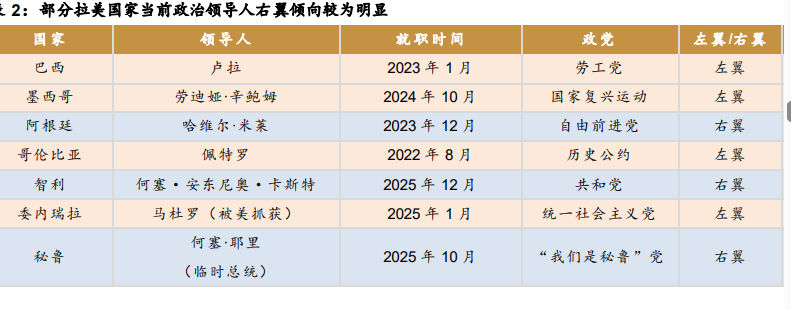
Core Viewpoint - The article discusses the transformation of the commodity market driven by a new Monroe Doctrine centered around the "Trump Doctrine," which emphasizes the U.S. prioritizing the Western Hemisphere for geopolitical and resource security [1][4]. Group 1: Geopolitical Strategy - The U.S. is expected to shift its foreign and security policy direction by early 2026, formally incorporating the "Trump Doctrine" into its National Security Strategy [1]. - This new approach aims to establish a controllable pricing base for resources, shipping routes, and supply chains, integrating them into national security and military deterrence frameworks [1][4]. - The U.S. is likely to adopt a more aggressive stance in securing resources, as evidenced by recent actions regarding Venezuela's oil assets and Greenland's mineral rights [4]. Group 2: Commodity Pricing Changes - Commodity pricing, particularly for copper, lithium, rare earths, energy, and precious metals, is undergoing a fundamental shift, now reflecting "availability, controllability, and political reliability" rather than just marginal supply and demand [2]. - A new commodity cycle characterized by a "security premium" is emerging, indicating that resources are increasingly viewed as geopolitical assets rather than mere commodities [3][25]. Group 3: Regional Political Dynamics - The U.S. strategic focus on the Western Hemisphere coincides with a significant political shift in Latin America, where there is a noticeable rightward movement in the political spectrum [5]. - The political transitions in countries like Argentina and Chile are expected to reduce resistance to U.S. initiatives aimed at enhancing security, trade, and supply chain cooperation [5][6]. Group 4: Resource and Economic Dimensions - The U.S. is highly dependent on imports for critical minerals, with over half of its consumption of 46 minerals reliant on foreign sources, including complete dependence on imports for 15 of them [10]. - The U.S. is attempting to reverse the structural changes in trade and investment in Latin America, where China has become a dominant trade partner in key sectors [6][9]. Group 5: Strategic Resource Management - The U.S. is reclassifying key minerals and energy assets as strategic facilities, integrating them into national security considerations [7]. - Recent trade agreements with countries like Argentina and Ecuador reflect a shift towards a political and security-driven market allocation of Latin American resources [8][9]. Group 6: Pricing Logic and Market Dynamics - The pricing logic for strategic resources is expected to undergo structural changes as they are formally integrated into national security frameworks [16]. - Key minerals are entering a phase dominated by "geopolitical pricing," characterized by heightened sensitivity to geopolitical news and limited price correction space [17][21]. - Precious metals are becoming not only safe-haven assets but also tools for pricing policy uncertainty, with expectations of a bullish trend in the first half of 2026 [18][25].

特朗普:若遭暗杀,将把伊朗“从地球上抹去”!美国的“武力执念”为何这么强?
Mei Ri Jing Ji Xin Wen· 2026-01-28 00:08
Group 1 - The article discusses Trump's warning that if Iran attempts to assassinate him, the U.S. will eliminate Iran from the earth, indicating a significant escalation in U.S.-Iran tensions [1][16] - The U.S. has deployed a larger naval fleet to the Middle East, surpassing its military presence near Venezuela, with the Abraham Lincoln aircraft carrier strike group now in the region [2][17] - Iran has stated its capability to respond strongly to any aggression and has indicated that informal communications with the U.S. are ongoing, although no formal negotiation framework exists [3][18] Group 2 - The article outlines a multi-faceted U.S. strategy towards Iran, which includes military pressure, economic sanctions, and information warfare, reflecting a complex approach rather than straightforward military action [6][20] - The economic situation in Iran is dire, with the currency collapsing to 1,450,000 rials per dollar and inflation soaring to 42.2%, exacerbated by U.S. sanctions [23] - The U.S. aims to isolate Iran economically by threatening countries that engage in trade with Iran, hoping to create internal dissent within the Iranian regime [23] Group 3 - The U.S. military presence in the region is designed to create psychological pressure, with the deployment of aircraft and naval forces serving as a deterrent [22] - The article highlights the strategic importance of oil and the Strait of Hormuz, as controlling Iran would mean controlling significant energy resources and transportation routes [25] - The U.S. strategy is intertwined with domestic political considerations, as Trump's administration seeks to bolster support ahead of the midterm elections by adopting a hardline stance against Iran [27]
特朗普:若遭暗杀 将把伊朗“从地球上抹去”!美航母已抵达中东
Mei Ri Jing Ji Xin Wen· 2026-01-27 09:48
Core Viewpoint - The article discusses the escalating tensions between the United States and Iran, highlighting military deployments, economic sanctions, and diplomatic communications as key elements of the ongoing conflict [1][3][10]. Military Developments - President Trump has deployed a larger naval fleet to the Middle East, including the USS Abraham Lincoln carrier strike group, which is capable of launching military operations within one to two days if ordered [1]. - The carrier strike group consists of three missile destroyers and various advanced aircraft, including F-35C stealth fighters and EA-18G electronic warfare planes [1]. - Iran has responded to U.S. military threats by asserting its capability to respond strongly to any aggression, emphasizing its military readiness [3]. Economic Pressures - The article outlines the severe economic conditions in Iran, with the currency collapsing to 1,450,000 rials per USD and inflation soaring to 42.2%, leading to a 72% increase in food prices [7]. - The U.S. has implemented new tariffs targeting countries that engage in trade with Iran, aiming to isolate Iran economically and create internal dissent [7]. Diplomatic Communications - Iran's Foreign Ministry spokesperson announced that there are informal communications between Iranian officials and U.S. representatives, although no formal negotiation channels exist [2][3]. - Multiple countries have expressed willingness to mediate between the U.S. and Iran amid rising tensions, although specific details remain undisclosed [4]. Strategic Context - The U.S. strategy towards Iran is characterized as a multi-layered approach involving military, economic, and information warfare tactics, aimed at testing the limits of the Iranian regime [5][10]. - The geopolitical significance of Iran is underscored by its vast oil reserves and the strategic importance of the Strait of Hormuz, through which 21 million barrels of oil are transported daily [9]. Domestic Political Implications - The article suggests that Trump's aggressive foreign policy may be influenced by domestic political considerations, particularly with the upcoming midterm elections and declining approval ratings [11][12]. - The administration's approach reflects a shift towards unilateral action and a departure from established international norms, as indicated by Trump's dismissal of international law [14].

解析关键矿产安全与大宗定价:地缘博弈之西半球变局
Southwest Securities· 2026-01-26 09:10
Group 1: Geopolitical Trends - The intensification of global power competition has highlighted the security and scarcity of strategic minerals, leading to a continuous reassessment of their value as core assets in geopolitical games[3] - The U.S. has added copper and silicon to its list of critical minerals and plans to establish a $2.5 billion "strategic resilience reserve" to secure these resources[3] - Strategic resources such as copper, silver, lithium, cobalt, nickel, gallium, germanium, palladium, silicon, tungsten, antimony, and rare earths are expected to experience significant price volatility, especially during periods of heightened geopolitical risk[3] Group 2: Economic Relationships - The U.S. remains the primary trading partner for Latin America, with exports to the U.S. rising from approximately $198.61 billion in 2002 to $599.97 billion in 2023, although the share of total exports has decreased from 57% to 44%[26] - In contrast, exports to China have increased significantly, from $6.5 billion in 2002 to approximately $192.8 billion in 2023, raising its share of total exports from less than 2% to around 14%[26] - The U.S. is still the largest investor in Latin America, with investments accounting for about 38% of total foreign direct investment in 2024, up from 34% in 2023[33] Group 3: Political Dynamics - The political landscape in Latin America is shifting rightward, influenced by economic stagnation and increased U.S. geopolitical influence, with significant elections expected in 2026[6] - The U.S. has engaged in a series of trade agreements with Latin American countries, emphasizing comprehensive, secure, and exclusive frameworks to prevent non-Western competitors from accessing critical assets and supply chains[20] - The Trump administration's "Monroe Doctrine" has re-emerged, focusing on military threats and trade ties to consolidate U.S. dominance in the Western Hemisphere[12]

中国学者谈“马杜罗事件”:美国战略调整的涟漪将对2026年中国周边形势带来风险
Xin Lang Cai Jing· 2026-01-07 11:01
Core Viewpoint - The recent actions of the United States regarding Venezuela, including the forceful control of President Maduro, challenge the fundamental principles of the United Nations Charter and expose U.S. hegemonic tendencies, potentially destabilizing the current international order [2][3][5]. Group 1: U.S. Actions and International Reactions - The U.S. military's forceful control of Venezuelan President Maduro has drawn significant international attention, with experts highlighting that this reflects U.S. hegemonic behavior and could inspire similar actions from other nations, further undermining global peace and stability [3][5]. - Chinese officials have condemned the U.S. actions as a violation of Venezuela's sovereignty and a serious threat to international relations, calling for the immediate release of Maduro and his wife [3][4]. - The incident is seen as a practical application of the Monroe Doctrine under Trump's administration, with experts noting that while the U.S. demonstrates military strength, it also depletes its resources and raises questions about future developments [3][4]. Group 2: Implications for International Order - The U.S. actions in Venezuela signify a severe challenge to the liberal international order established post-World War II, with experts warning that the world may revert to a state of power politics reminiscent of the 19th century [4][5]. - The recent U.S. National Security Strategy report indicates a shift in U.S. foreign policy that could lead to increased instability in international relations, as unilateral actions may undermine multilateral governance [5][6]. - Analysts suggest that the U.S. strategy may embolden traditional allies in the Asia-Pacific region, leading to increased military and political activities that could provoke tensions with China [6].
「起底美国“新门罗主义”」“新门罗主义”比老版更“美国优先”更赤裸霸道
Huan Qiu Shi Bao· 2026-01-07 00:07
Core Viewpoint - The article discusses the resurgence of the Monroe Doctrine in the form of "Trump's Monroe Doctrine," emphasizing the U.S. intention to reassert its dominance in the Western Hemisphere, particularly through military intervention and economic pressure on Latin American countries [1][4]. Historical Context - The Monroe Doctrine, established in 1823, aimed to prevent European powers from colonizing the Americas and asserted that the U.S. would not interfere in European affairs [2]. - The doctrine has evolved through two significant interpretations: Roosevelt's Corollary in 1904, which justified U.S. intervention in Latin America, and Trump's interpretation in 2025, which marks a significant shift in U.S. foreign policy [3][4]. New Characteristics of "New Monroe Doctrine" - The "New Monroe Doctrine" is characterized by a more aggressive and self-serving approach, prioritizing U.S. interests and security over traditional principles of non-interference and anti-colonialism [6]. - The U.S. now views the Western Hemisphere as an "absolute security zone," focusing on territorial expansion, resource extraction, and control of strategic assets [6][7]. Military and Economic Strategies - The U.S. employs a combination of military deployment, economic pressure, and sanctions to achieve its objectives, marking a departure from the political manipulation and diplomatic isolation strategies of the past [6][7]. - Recent actions include threats of tariffs against Colombia and sanctions on Brazilian officials, as well as military maneuvers in Venezuela, highlighting the aggressive nature of U.S. policy [7][8]. Focus on Venezuela - Venezuela is identified as a primary target due to its vast oil reserves and alliances with countries like China and Russia, which challenge U.S. dominance in the region [8]. - The U.S. has previously attempted to orchestrate a coup against the Venezuelan government and has deployed military assets in the vicinity, indicating a clear focus on this nation [8]. Political Implications - The shift towards a more interventionist policy is seen as a response to domestic political pressures and the rise of leftist movements in Latin America, with the U.S. aiming to secure its influence and counter perceived threats [9][10]. - The article suggests that this new approach is a pragmatic adjustment to maintain U.S. hegemony in the face of global competition and domestic challenges [10].
美国为何盯上格陵兰岛?
Ren Min Ri Bao Hai Wai Ban· 2026-01-06 00:21
Core Viewpoint - The U.S. government's interest in Greenland is driven by strategic, military, and resource considerations, with recent actions indicating a desire to exert control over the territory, which is currently an autonomous region of Denmark [1][4][5]. Group 1: U.S. Actions and Statements - President Trump has appointed Louisiana Governor Jeff Landry as a special envoy for Greenland, emphasizing the island's importance to U.S. national security and expressing a desire for it to become part of the U.S. [1][2] - The U.S. plans to transfer Greenland from the European Command to the Northern Command by 2025, which raises political sensitivities regarding its status as a European territory [2][3]. - The U.S. has a historical interest in Greenland, having attempted to purchase it in 1867 and 1946, and currently maintains military bases there under a defense agreement with Denmark [2][3]. Group 2: Strategic Importance of Greenland - Greenland is viewed as strategically valuable due to its rich natural resources, including rare earth elements, oil, and gas, which are crucial for military and semiconductor industries [4][5]. - The island's geographical position is significant for U.S. missile warning systems and military operations in the Arctic region [4][5]. - The U.S. aims to enhance its military presence and intelligence capabilities in Greenland as part of its broader Arctic strategy [5][6]. Group 3: International Reactions - Denmark and other European nations have criticized the U.S. for its attempts to exert influence over Greenland, reaffirming the island's status as part of Denmark and emphasizing respect for international law [5][6]. - The U.S. actions have been interpreted as a form of "predatory diplomacy," straining transatlantic relations and raising concerns about U.S. unilateralism in international affairs [7][8]. - The Danish Defense Intelligence Service has identified the U.S. as a potential security threat, reflecting growing unease about U.S. pressure on allies [7].
美国为何盯上格陵兰岛?(环球热点)
Ren Min Ri Bao Hai Wai Ban· 2026-01-05 22:56
Core Viewpoint - The U.S. government's interest in Greenland is driven by strategic, military, and resource considerations, with recent actions indicating a desire to exert control over the territory, which is currently an autonomous region of Denmark [1][5][6]. Group 1: U.S. Actions and Statements - President Trump has appointed Louisiana Governor Jeff Landry as the U.S. envoy to Greenland, emphasizing the island's importance to U.S. national security and expressing a desire for Greenland to become part of the U.S. [1] - The U.S. plans to transfer Greenland from the European Command to the Northern Command by 2025, which raises political sensitivities regarding its status as a European territory [2][3]. - The U.S. has a historical interest in Greenland, having attempted to purchase the island in 1867 and again in 1946, and currently maintains military bases there [2][3]. Group 2: Strategic Importance of Greenland - Greenland is viewed as a strategic asset due to its rich natural resources, including rare earth elements, oil, and gas, which are crucial for military and semiconductor industries [5][6]. - The island's geographical location is significant for U.S. missile defense systems and military operations in the Arctic region [5][6]. - The U.S. aims to enhance its military presence and intelligence capabilities in Greenland, viewing it as a critical area for national security [7]. Group 3: International Reactions - Denmark and the Greenlandic government have criticized the U.S. actions, asserting that Greenland's territorial integrity is protected by international law [6][8]. - European nations, including Norway, Finland, and France, have expressed support for Denmark's stance on Greenland, emphasizing respect for sovereignty [6][8]. - The U.S. approach has been described as "predatory diplomacy," straining transatlantic relations and raising concerns about U.S. intentions among its allies [8][9].

专家:美国强行控制马杜罗是一次立威
Xin Lang Cai Jing· 2026-01-05 15:36
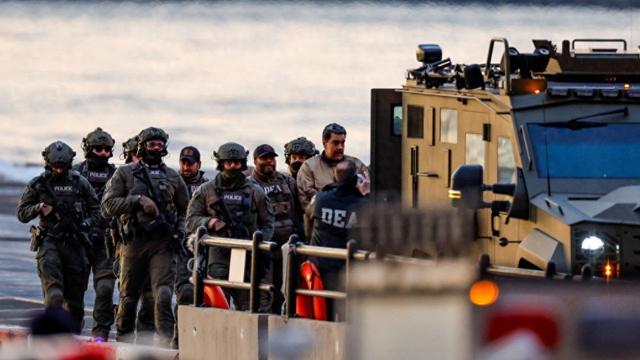
Core Viewpoint - The article discusses the U.S. military operation to forcibly detain Venezuelan President Maduro, highlighting its significance as a demonstration of U.S. power in a multipolar world, signaling to leftist leaders in Latin America that they have no choice in their alliances [1] Group 1 - The operation involved a sudden explosion in Caracas, followed by a citywide blackout and airstrikes on military targets, culminating in the capture of Maduro and his wife [1] - The imagery of Maduro being blindfolded and handcuffed was released, creating a global shockwave [1] - This action is framed not merely as a military adventure but as a strategic move by the U.S. to reinforce its "absolute security zone" amid a global contraction of its military presence [1] Group 2 - The article warns against the misconception that a reduced U.S. military footprint equates to a more benevolent approach, suggesting that a focused and domestic-oriented U.S. could be more dangerous [1]
拉丁美洲的血管再次被美国切开
Huan Qiu Shi Bao· 2026-01-05 07:27
Core Viewpoint - The U.S. military intervention in Venezuela aims to control the country's oil resources and facilitate a regime change, marking a significant escalation in U.S.-Venezuela relations [1][6]. Group 1: U.S. Actions and Strategies - The U.S. has escalated sanctions against Venezuela, imposing a 25% tariff on countries purchasing Venezuelan oil and forcibly selling the country's assets in the U.S. [1][6]. - The U.S. has redefined Maduro as a terrorist and the Venezuelan government as a foreign terrorist organization to justify military actions [1][6]. - Military actions have evolved from targeting drug trafficking vessels to large-scale operations, including air and ground strikes to capture Maduro and his wife [1][6]. Group 2: Political Implications in Latin America - The U.S. aims to reshape the political landscape in Latin America, particularly targeting leftist governments in the region, as part of a broader strategy to establish a new political order aligned with U.S. interests [2][7]. - The U.S. plans to dismantle the "Bolivarian Alliance," a leftist coalition in Latin America, following changes in Venezuela's political situation [3][8]. - The intervention is expected to influence upcoming elections in Colombia, Mexico, and Brazil, potentially leading to a shift towards right-wing politics in the region [4][9]. Group 3: Broader Geopolitical Context - The U.S. intervention reflects a shift from globalism to pragmatism in its foreign policy, with a focus on reasserting dominance in its "backyard" [2][7]. - The political changes in Venezuela may have significant spillover effects, potentially accelerating a rightward shift in Latin American politics and challenging leftist movements in neighboring countries [4][9]. - The rise of conservative alliances in Latin America, as indicated by Argentina's President Milei, aligns with U.S. interests and the goals of the "New Monroe Doctrine" [4][10].