耕地保护

Search documents
直击土壤检测新标准:起草团队重磅解读核心要点!
仪器信息网· 2026-03-17 09:05
Core Viewpoint - The article discusses the upcoming "Seventh Soil Testing Technology and Application" online conference, which will feature expert interpretations of new soil testing standards and regulations, emphasizing the importance of precise soil testing technology for high-quality farmland management and environmental monitoring [2][5]. Group 1: Conference Overview - The "Seventh Soil Testing Technology and Application" online conference is scheduled for April 2, 2026, and will include authoritative interpretations of several important soil testing standards by key authors [2][6]. - The conference aims to address the strategic importance of soil testing in the context of China's 14th Five-Year Plan, which emphasizes high-quality farmland construction and management [2]. Group 2: New Standards and Their Implications - The new standard for the determination of cadmium in soil and sediment (HJ 1426-2025) will be implemented on July 1, 2026, utilizing solid direct sampling technology to significantly improve detection efficiency and data accuracy [3]. - A new standard for measuring total carbon, nitrogen, and sulfur in soil is currently under approval and is expected to be published in 2026, filling a gap in unified detection standards and supporting soil fertility evaluation and carbon accounting [3]. - Two new standards focusing on per- and polyfluoroalkyl substances (PFAS) will establish a complementary detection system for precise quantification and rapid screening of organic fluorine, thereby enhancing the market for new pollution detection instruments [4]. Group 3: Comprehensive Revision of Monitoring Standards - The "Soil Environmental Monitoring Technical Specification" (HJ 166-2026) will undergo its first comprehensive revision in 22 years, set to be implemented on June 1, 2026, optimizing the entire monitoring process and aligning with new soil environmental management requirements [5].


海南省耕地保有量751.6万亩 实现耕地数量稳中有增
Xin Hua Cai Jing· 2026-02-15 08:25
Core Viewpoint - Hainan Province is committed to strict land protection measures, aiming to maintain a stable increase in arable land to ensure food security and high-quality agricultural development by 2025 [1][2]. Group 1: Arable Land Protection Measures - By 2025, Hainan Province will have a total arable land area of 7.516 million acres, exceeding the national target by 299,000 acres [1]. - The province will enhance arable land protection through reforms in land use balance, optimization of land layout, and restoration of previously cultivated land [1]. - Specific actions include the reform of the arable land balance system, optimization of land survey rules, and the implementation of a "field chief system" [1]. Group 2: Future Plans and Strategies - Hainan will focus on five key areas for land protection, including the development of specialized planning for land protection and green space, and the optimization of agricultural land layout [2]. - The province aims to ensure dynamic balance in total arable land through careful identification and restoration of quality farmland [2]. - Advanced technologies such as satellite remote sensing and drones will be utilized to enhance monitoring and problem-solving capabilities in arable land management [2].
湖南临武局推进存量违法用地“清零销号”
Zhong Guo Zi Ran Zi Yuan Bao· 2026-02-11 01:38
Core Viewpoint - The article highlights the successful rectification of illegal land use in Linwu County, Hunan Province, which is crucial for national food security and land management order [1] Group 1: Rectification Efforts - A total of 4.94 acres of illegal land, including 1.56 acres of arable land, was addressed following feedback from the Ministry of Natural Resources and national audits [1] - A special task force was established by the Linwu County Natural Resources Bureau, coordinating with multiple departments to implement a rectification plan [1] - Illegal hardened facilities within the identified area were legally dismantled, and land reclamation and ecological restoration were simultaneously advanced [1] Group 2: Outcomes and Future Actions - As of now, the previously occupied 1.56 acres of arable land has been fully restored for planting, and the remaining land has completed ecological restoration and standardized use [1] - This rectification not only resolves a historical issue but also serves as a wake-up call for arable land protection efforts in the county [1] - Moving forward, the Linwu County Bureau plans to strengthen the "responsibility system" at the town and village levels, enhance regular dynamic inspections, and improve mechanisms for early detection and strict enforcement against new illegal land use [1]
大禹集团高标准农田建设相关技术成果获肯定
Zhong Zheng Wang· 2026-02-10 13:40
Core Insights - The Ministry of Agriculture and Rural Affairs emphasizes the importance of high-standard farmland construction and soil quality improvement, highlighting the significant role of Dayu Group in these areas [1][2] Group 1: Company Achievements - Dayu Group has made notable advancements in agricultural water-saving technologies and has been recognized for its continuous innovation in this field [2] - The company has developed an integrated service model that encompasses design, construction, and operation, aligning with the high-quality development requirements of high-standard farmland construction [2] Group 2: Industry Opportunities - By 2035, the goal is to establish approximately 1.5 billion acres of high-standard farmland, indicating a vast market potential and promising development prospects for the industry [2] - The discussions between Dayu Group and the Ministry focused on opportunities and challenges in farmland protection and agricultural engineering construction during the 14th Five-Year Plan period, emphasizing the need for standard system construction and technological innovation [1][2] Group 3: Future Contributions - Dayu Group aims to leverage its technological, brand, and full industry chain advantages to actively participate in national high-standard farmland construction, contributing to food security and agricultural modernization [2] - The company is committed to enhancing soil quality through continuous innovation and integration of its operational strengths, particularly in saline-alkali land management [2]
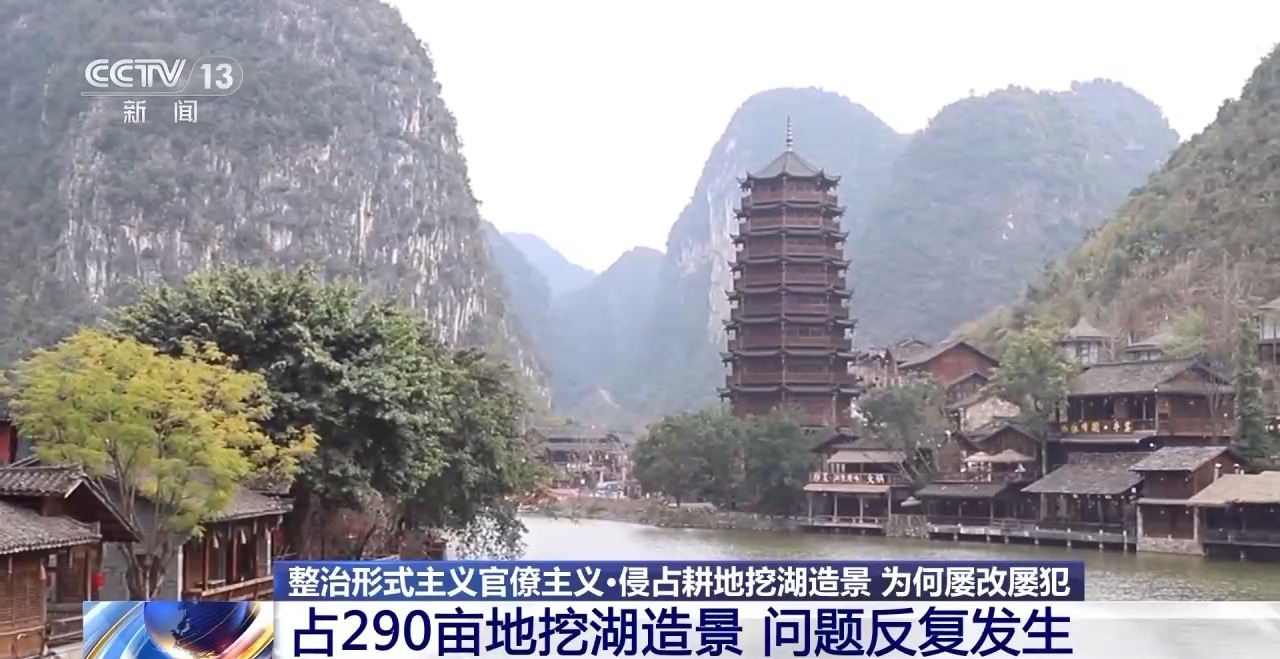
法治在线丨景区占地290亩挖湖造景 复耕复垦确保问题整改彻底
Yang Shi Xin Wen· 2026-02-06 06:09
Core Viewpoint - The article discusses the issue of land occupation and lake excavation in the Fenglin Buyi Scenic Area of Xingyi City, Guizhou Province, highlighting the repeated failures in addressing these problems and the subsequent corrective actions taken by local authorities [1][4][11]. Group 1: Incident Overview - The Fenglin Buyi Scenic Area began construction in 2017, during which the operating company unlawfully occupied 290 acres of land, including 250.3 acres of arable land and 94.18 acres of permanent basic farmland, for lake excavation [2][3][4]. - The issue was publicly reported by the Ministry of Natural Resources in May 2021, prompting local authorities to initiate corrective measures [4]. Group 2: Corrective Actions and Failures - Following the initial report, Xingyi City undertook remediation efforts, including drainage and land restoration, which were completed by March 2022 [7]. - However, the company resumed unauthorized activities, occupying an additional 49.81 acres of arable land for artificial lakes and lawns [9]. Group 3: Accountability and Reforms - In August 2024, the Ministry of Natural Resources criticized the Xingyi City government for inadequate enforcement of land protection responsibilities and ineffective measures against illegal activities [11]. - Local officials acknowledged shortcomings in monitoring and follow-up after the initial remediation, leading to the recurrence of the issue [13]. Group 4: Current Status and Future Measures - The local government has since restored the occupied arable land, with crops like rapeseed being planted, and plans for rice and corn cultivation in the spring [14][17]. - To mitigate future risks, drainage facilities have been constructed, and the local government is conducting ongoing inspections to prevent illegal land occupation and ensure compliance with agricultural regulations [15][21].
泰州姜堰:农村改革试验工作获农业农村部肯定
Zhong Guo Fa Zhan Wang· 2026-02-05 14:16
Group 1 - The core viewpoint of the news highlights the recognition of Jiangyan District's rural reform efforts by national authorities, emphasizing the importance of practical support for related reform pilot projects [1] - Jiangyan District has cultivated over 1,500 family farms, covering an area of 430,000 acres, and established 86 family farm service alliances to achieve comprehensive service coverage [1] - The district has pioneered a new model of coordinated development between "two subjects," effectively revitalizing land resource efficiency [1] Group 2 - The initiative focuses on three aspects: farmland protection, technology integration, and talent cultivation to steadily improve grain yield per unit area [2] - Farmland protection efforts include a comprehensive management approach, achieving over 90% high-standard farmland construction rate, and a 3% increase in rice and wheat yield through a specific soil improvement technique [2] - The establishment of agricultural service networks, consisting of 2 comprehensive service centers, 18 town-level centers, and multiple village service stations, aims to provide comprehensive and precise services to farm owners [2]
媒体关注自然资源部、国家林草局通报去年四季度8个违法违规典型问题
Xin Lang Cai Jing· 2026-02-05 14:07
Core Viewpoint - The Ministry of Natural Resources and the National Forestry and Grassland Administration reported eight typical cases of illegal land use and ecological damage identified in the fourth quarter of 2025, highlighting issues such as illegal occupation of arable land, destruction of permanent basic farmland, and violations of spatial planning regulations [10][20]. Summary by Relevant Categories Illegal Land Use - In Xiqing District, Tianjin, a horse training facility illegally occupied 58.7 acres of arable land for construction without proper authorization, despite previous warnings in 2024 and 2025 [10][23]. - In Mengjin District, Henan Province, 32.04 acres of permanent basic farmland were illegally used for soil extraction to produce bricks, with inadequate regulatory oversight [10][20]. - In Wanzhou District, Chongqing, 216 acres of permanent basic farmland were improperly used for planting decorative grass, again highlighting regulatory failures [10][20]. Ecological Damage - In Hubei Province, illegal logging activities affected 286.05 acres of forest land, indicating significant ecological harm [10][20]. - In Xinjiang, a coal mining company illegally occupied 113.67 acres of natural pasture land, further contributing to ecological degradation [10][20]. Regulatory Oversight and Response - The authorities emphasized the need for local governments to rectify these issues in accordance with the principles established by the 20th National Congress of the Communist Party, ensuring compliance with farmland protection and ecological conservation regulations [11][13]. - Continuous monitoring and follow-up on the rectification of these issues will be conducted by the Ministry of Natural Resources and the National Forestry and Grassland Administration [11][20].

2026年河南省自然资源工作会议召开
Yang Guang Wang· 2026-02-04 05:38
Core Insights - The 2026 Henan Province Natural Resources Work Conference emphasized the importance of implementing the "1+2+4+N" goal task system to promote high-quality development and effective governance in natural resources [1][2] Group 1: Strategic Goals and Planning - The conference highlighted the need to focus on major strategies such as ecological protection and high-quality development in the Yellow River basin, while actively supporting urban renewal actions [2] - A comprehensive planning system will be established to optimize land use and enhance spatial development patterns [2] Group 2: Agricultural and Rural Development - The integration of rural industries will be supported through land use guarantees, promoting the entry of collective rural construction land into the market [3] - The focus will be on high-quality development in the mining sector, particularly for strategic mineral resources, with an emphasis on regulatory compliance and green mining practices [3] Group 3: Environmental Protection and Restoration - The conference stressed the importance of integrated protection and restoration of natural resources, including significant projects for ecological restoration of mountains, rivers, forests, fields, lakes, and grasslands [3] - Efforts will be made to enhance the ecological safety barrier through the remediation of historical abandoned mines [3] Group 4: Technological Innovation and Governance - The construction of a unified data resource platform will be accelerated to improve governance capabilities, facilitating data integration and system collaboration [3] - The integration of new technologies such as artificial intelligence with geographic information will be promoted to enhance the value chain in the geographic information industry [3] Group 5: Legal and Regulatory Framework - Strengthening the legal framework for natural resources is a priority, with a focus on addressing typical issues and enhancing inter-departmental coordination [4] - The enforcement of laws will be intensified to combat illegal activities in the natural resources sector [4] Group 6: Risk Management and Safety - The conference underscored the importance of geological disaster prevention and maintaining safety standards across various sectors, including fire and network security [5]
“严”字当头!2026年中央一号文件里这些红线不能碰
Xin Hua She· 2026-02-04 00:26
Core Viewpoint - The 2026 Central Document outlines a roadmap for agricultural work while establishing strict red lines that must not be crossed in various areas related to agriculture and rural development [3]. Group 1: Food Safety and Regulation - Strict implementation of food safety responsibility systems, enhancing multi-department collaboration and full-chain supervision, with severe penalties for illegal additives and exceeding agricultural and veterinary drug residue limits [5]. - Legal measures will be taken to combat the smuggling of agricultural products [8]. - There will be a crackdown on the production and sale of counterfeit and substandard goods in rural areas [9]. Group 2: Land and Agricultural Management - The document emphasizes the importance of adhering to the arable land red line, optimizing the layout of agricultural land, and strictly managing the balance of land occupation and compensation [6]. - There will be a strong effort to combat illegal activities that damage arable land, including addressing the issue of illegal construction on cultivated land [7]. - The management of rural collective property rights will be deepened, supporting the development of new types of rural collective economies while strictly controlling new village-level debts [10]. Group 3: Rural Development and Construction - The orderly promotion of rural collective operational construction land entering the market will be supported, prioritizing its use for developing collective economies and rural industries, while prohibiting its use for commercial housing construction [11]. - Strengthening the approval management of rural housing and land, with strict checks to prevent illegal purchases of rural housing land [12]. - Comprehensive supervision of agricultural funding projects will be reinforced, with strict penalties for fraudulent practices and misuse of funds [13].

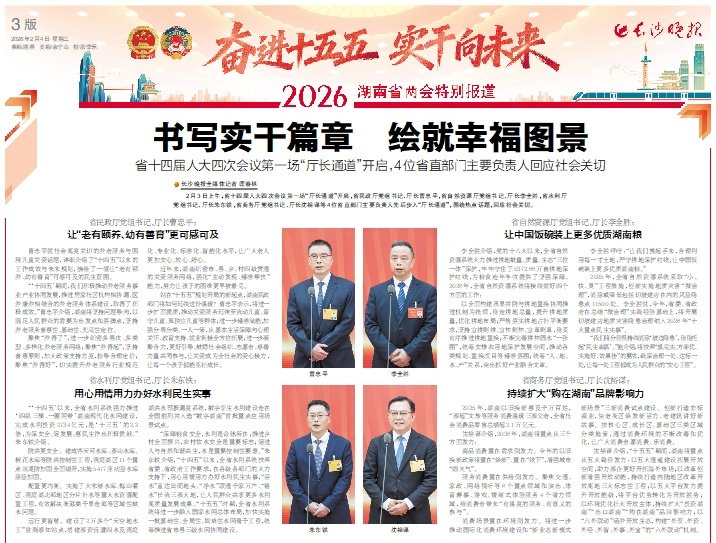
书写实干篇章 绘就幸福图景
Xin Lang Cai Jing· 2026-02-03 23:55
Group 1: Elderly and Child Care Services - The Hunan provincial government is focusing on creating a comprehensive elderly care service system that integrates home, community, and institutional care, as well as medical and health services [5] - The government aims to enhance the accessibility and quality of care for the elderly, ensuring that services are affordable and standardized [5] - There is a commitment to extend care services to vulnerable groups such as migrant children, left-behind children, and children with autism, emphasizing a tailored approach to support [5][6] Group 2: Agricultural and Land Resource Management - The Hunan provincial government has maintained a protective line for 53.7266 million acres of arable land, ensuring food security and agricultural productivity [8] - Future plans include improving land quality, optimizing land use, and implementing a coordinated approach to land management to enhance agricultural output [8][9] - The government is also focusing on geological disaster prevention, with plans to address 11,500 risk points related to land use [9] Group 3: Water Resource Management - The Hunan water resources system has invested 273.4 billion yuan in water infrastructure, significantly increasing investment compared to the previous five-year plan [11] - Key projects include the construction of flood control facilities and the establishment of a smart water management system to enhance monitoring and response capabilities [12] - The government aims to integrate water resource management into broader national strategies, ensuring sustainable development and community access to clean water [12] Group 4: Economic Development and Consumer Services - The Hunan provincial government plans to enhance the "Buy in Hunan" brand, aiming for a retail sales total exceeding 2.1 trillion yuan by 2025 [15] - Strategies include focusing on demand-side initiatives for goods consumption and improving service offerings in key sectors such as transportation and entertainment [15][16] - The government is also working on creating a favorable consumption environment by promoting new business models and revitalizing urban areas [15][16]