
城乡居民养老保险

Search documents
暖心居保进万家 幸福养老在东台
Xin Lang Cai Jing· 2026-02-27 20:32
Group 1 - The core message of the news is the launch of a concentrated promotional activity for urban and rural residents' basic pension insurance in Dongtai City, aimed at enhancing public awareness and participation in the program [1][2][3] - The event, themed "Warm-hearted Insurance, Happy Retirement," took place on February 25, featuring various promotional materials and interactive activities to engage the community [1][2] - The promotional campaign is part of a broader initiative for the 2026 urban and rural residents' pension insurance, with a focus on grassroots service delivery following the Spring Festival [2][3] Group 2 - Since the start of the promotional month at the end of January, over 10 events have been conducted across various towns, distributing 33,600 pieces of promotional materials [2] - The campaign has successfully engaged 29,000 individuals who have completed their 2026 insurance payments, with 6,197 individuals from disadvantaged groups receiving full premium waivers [2] - Future efforts will include ongoing policy education, home service, and online promotion to ensure effective communication and service delivery for the pension insurance program [3]
江苏城乡居民养老保险宣传月启动
Xin Lang Cai Jing· 2026-02-07 20:47
Core Viewpoint - The article highlights the launch of a series of promotional activities for urban and rural residents' pension insurance in Jiangsu Province, emphasizing government support for low-income families and the importance of increasing pension benefits for vulnerable groups [1] Group 1: Government Initiatives - The event is organized by the Provincial Human Resources and Social Security Department and the Provincial Taxation Bureau, aiming to provide comprehensive services such as policy explanations, consultations, and insurance registration [1] - Over 100 promotional events themed "Warm-hearted Pension, Happy Retirement" will be held across the province by the end of the month, targeting individuals over 45 who are uninsured or have lapsed payments, as well as low-income groups and farmers affected by land acquisition [1] Group 2: Pension Benefits and Coverage - Jiangsu Province has steadily increased the pension benefits for urban and rural residents, with the minimum basic pension now set at 248 yuan, ranking among the highest in the country after 15 adjustments over 14 years [1] - As of the end of last year, 22.9054 million residents were enrolled in the pension insurance program, with 12.1009 million receiving benefits, and the government covered 126 million yuan in insurance fees for 484,600 eligible low-income individuals [1]
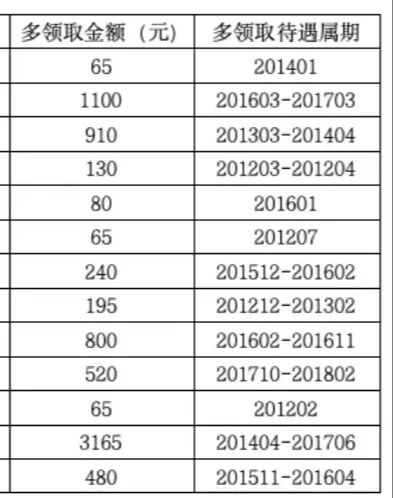
官方通报:赵某芳等1014人存在死后多领养老金情形 有人多领近5年!“责令家属30日内退回”
Mei Ri Jing Ji Xin Wen· 2026-01-24 01:35
Core Points - The Harbin Social Insurance Center announced that 1,014 individuals, including Zhao Moufang, were found to have received urban and rural residents' pension benefits after their deaths, necessitating the return of these funds [1] - The amounts overpaid range from tens to thousands of yuan, with the highest overpayment being 5,974.47 yuan for the period from August 2016 to August 2020 [1][3] - The announcement includes detailed information on the individuals involved and the specific amounts overpaid, with some individuals receiving benefits for nearly five years after their death [1][2] Summary by Category - **Overpayment Details** - The overpayment amounts vary significantly, with the lowest being 65 yuan for a one-month period and the highest being 5,974.47 yuan over a span of two years [1][3] - Specific overpayment periods include various ranges, with some individuals receiving benefits for multiple years [2][3] - **Legal and Administrative Actions** - The announcement mandates that family members must return the overpaid benefits within 30 days of the notice, providing a death certificate and depositing the funds into a designated bank account [4] - Failure to comply within the legal timeframe may result in the Social Insurance Center seeking enforcement through the courts [4]

天水市麦积区:“三个精准”织密养老保障服务网
Xin Lang Cai Jing· 2026-01-16 09:52
Core Viewpoint - The article discusses the efforts of the Maiji District to enhance the quality of pension insurance services for urban and rural residents through a "three precision" approach, ensuring that individuals reaching retirement age by 2026 can smoothly access their pension benefits [1][2]. Group 1: Precision Notification - The district utilizes a "point-to-point, face-to-face" notification system to ensure that information reaches individuals and households effectively, employing various communication methods such as phone calls, WeChat, SMS, and home visits [1]. - The notification includes details on the current payment years, any required back payments, and estimated benefits, ensuring clarity and timeliness in the process [1]. Group 2: Speedy and Warm Services - For individuals facing issues like payment interruptions or insufficient years of contribution, staff provide "one-on-one" guidance to assist with payments through various platforms, including WeChat and Alipay [2]. - A "helping and agency + home service" mechanism is implemented for vulnerable groups, ensuring that services are delivered directly to those who may have difficulty accessing them [2]. Group 3: Policy Guidance and Incentives - The district integrates reminder work with policy promotion, conducting a "Pension Policy into Thousands of Homes" campaign to explain the benefits of higher contribution levels [2]. - Special attention is given to low-income individuals and severely disabled persons, ensuring they are included in government payment assistance programs [2].
港澳台居民在琼可参加城乡居民养老保险
Hai Nan Ri Bao· 2026-01-06 01:01
Core Viewpoint - The article discusses the inclusion of residents from Hong Kong, Macau, and Taiwan in the urban and rural resident pension insurance scheme in Hainan, allowing them to enjoy the same rights and obligations as local residents [1] Group 1: Participation in Pension Insurance - Residents from Hong Kong, Macau, and Taiwan can voluntarily participate in the urban and rural resident pension insurance in Hainan if they have a residence permit [1] - The pension insurance is available to both employed and unemployed individuals from these regions residing in Hainan [1] Group 2: Pension Benefits and Conditions - Eligible participants can apply for monthly pension payments upon reaching the age of 60 and having contributed for at least 15 years [1] - If a participant has not met the 15-year contribution requirement by age 60, they can continue to contribute annually until they reach 65 or make a one-time payment to fulfill the requirement [1]
提高灵活就业者的社保覆盖率|请回答,2026
经济观察报· 2026-01-04 12:24
Core Viewpoint - The article discusses the dilemma faced by flexible employment individuals regarding whether to contribute to employee social insurance, weighing short-term income against long-term retirement benefits [2][3]. Group 1: Social Insurance Coverage - By the end of 2024, China's basic pension insurance will cover 1.012 billion people, with 535 million participating in urban employee pension insurance and 538 million in rural resident pension insurance [2]. - Urban employee pension insurance offers significantly higher retirement benefits compared to rural resident insurance, with an average pension difference exceeding 10 times [2]. Group 2: Challenges and Trends - The compliance rate for employee pension insurance in China has decreased from 85.2% in 2011 to 80.8% in 2022, indicating a rise in the proportion of individuals who have interrupted their contributions [3]. - To encourage more flexible workers to participate in employee social insurance, targeted incentive measures are expected to be introduced in 2026 [3]. Group 3: Policy Initiatives - The Central Economic Work Conference has proposed plans to support income growth for flexible employment individuals and promote a win-win development model for platform companies and their workers [3]. - In 2025, several regions, including Beijing, Hunan, Shanghai, and Guangxi, will raise minimum wage standards to enhance short-term income stability for flexible workers [3]. Group 4: Systemic Improvements - The Ministry of Finance plans to improve the fiscal transfer payment distribution mechanism by 2026, addressing issues related to social insurance and education for the children of migrant workers [4]. - While employee social insurance is a key policy for long-term security, the burdens on companies and the willingness of workers remain critical factors in achieving universal social insurance [4].

提高灵活就业者的社保覆盖率|请回答,2026
Jing Ji Guan Cha Bao· 2026-01-04 11:22
Core Insights - Social security remains a hot topic in the public discourse, with significant developments in 2025 regarding social insurance contributions for gig workers and adjustments to contribution bases across various regions [1] Group 1: Social Security System Overview - China has established the world's largest social security system, with basic pension insurance covering 1.012 billion people by 2024 [1] - Among these, 535 million are enrolled in urban employee pension insurance, while 538 million are part of rural resident pension insurance, highlighting a disparity in retirement benefits [1] - Urban employee pension insurance offers significantly higher retirement benefits compared to rural resident insurance, with an average pension difference exceeding tenfold [1] Group 2: Challenges for Gig Workers - Recent years have seen a decline in the compliance rate for urban employee pension insurance, dropping from 85.2% in 2011 to 80.8% in 2022, indicating a rise in the number of individuals interrupting their contributions [2] - Factors such as income growth pressure and restrictions on social security system transfers have impacted gig workers' willingness to contribute to employee pension insurance [2] Group 3: Future Initiatives and Incentives - Targeted incentives for gig workers to encourage pension contributions are expected to be introduced in 2026, as outlined in the Central Economic Work Conference [3] - Measures to increase income, such as raising minimum wage standards in various regions, aim to provide gig workers with more stable short-term and long-term income expectations, making them more amenable to contributing to social security [3] - The Ministry of Finance plans to improve the fiscal transfer payment distribution mechanism in 2026, addressing issues related to social insurance portability and education for children of migrant workers [3]
江苏农民保障“转轨”升级
Xin Hua Ri Bao· 2025-11-13 21:20
Core Insights - The latest data from Jiangsu's Human Resources and Social Security Department indicates a total of 35.54 million participants in enterprise basic pension insurance (企保) and retirees, an increase of 2.8169 million compared to the end of the 13th Five-Year Plan period [1] - Conversely, the number of participants in urban and rural residents' pension insurance (城乡居保) has decreased to 22.97 million, down by 1.0343 million from the end of the 13th Five-Year Plan [1] - This shift reflects the rising development level in Jiangsu, leading citizens to opt for higher-tier social security options [1] Group 1: Pension Insurance Dynamics - The primary participants in enterprise basic pension insurance are employees of enterprises and individual business owners, with a minimum annual contribution standard exceeding 80,000 yuan [2] - Urban and rural residents' pension insurance targets those without stable employment, with a significantly lower minimum annual contribution of only a few hundred yuan [2] - Despite over 85% of the benefits from urban and rural residents' pension insurance being government-subsidized, there remains a disparity in benefit levels compared to enterprise basic pension insurance [2] Group 2: Transition to Enterprise Pension Insurance - Increasingly, farmers like Xue Yong are choosing to switch from urban and rural residents' pension insurance to enterprise basic pension insurance, motivated by better benefits [2] - The local village committee has actively promoted policies allowing flexible employment individuals to voluntarily participate in enterprise basic pension insurance, with previous urban and rural residents' insurance years being proportionally counted towards enterprise insurance [2] - The transition has led to a significant increase in contributions, with Xue Yong noting that the monthly payment for enterprise insurance is over 900 yuan compared to the annual payment of 400-500 yuan for urban and rural residents' insurance [2]
粤开宏观:城乡养老保险:为何是福利而非保险?待遇如何提升?
Yuekai Securities· 2025-11-05 11:49
Group 1: Pension System Overview - The "14th Five-Year Plan" suggests gradually increasing the basic pension for urban and rural residents to address the low benefit levels currently faced by this demographic[3] - The basic pension system includes urban employee pensions and rural resident pensions, with the latter primarily funded by government subsidies[3] - In 2024, the central government will provide a basic pension of 123 yuan/month, with local governments covering 50% in eastern regions[3] Group 2: Welfare vs. Insurance Attributes - Urban and rural resident pension insurance has a stronger welfare attribute than insurance, as 85% of benefits come from government funding[4] - The average pension for rural residents in 2024 is projected to be only 246 yuan/month, which is below food expenditure and minimum living standards[4][26] - The pension system's design aims for "full coverage," but the current benefits are insufficient to meet basic living needs[4][26] Group 3: Proposed Improvements - The basic pension should be renamed to "Universal Minimum Pension" to clarify its welfare nature and differentiate it from employee pensions[5] - The proposed increase for the Universal Minimum Pension is to 500 yuan/month, requiring an additional funding of approximately 800 billion yuan annually[6][34] - This adjustment aligns the pension level with rural residents' food expenditure (519 yuan/month) and minimum living standards (594 yuan/month)[6][34] Group 4: Funding Sources - To cover the increased pension costs, raising the proportion of state-owned enterprise profits allocated to the government budget is a viable option[7] - State-owned enterprises reported profits exceeding 6.5 trillion yuan, indicating sufficient capacity to support pension increases[7][39] - Adjusting the profit allocation to 40% could generate an additional 1.4 trillion yuan, meeting the funding needs for the proposed pension increase[7][49]
蔡昉:养老三支柱不是“三足鼎立”|直击外滩年会
Jing Ji Guan Cha Bao· 2025-10-24 06:52
Core Viewpoint - The current pension system in China requires exploration of new insurance models, emphasizing the importance of including urban and rural residents in discussions about pension reforms [1][2]. Group 1: Current Pension Landscape - Over 50% of pension recipients are receiving urban and rural resident pension insurance, indicating a need to include this demographic in pension reform discussions [2]. - There are over 300 million private laborers and individual workers, along with more than 200 million flexible employment individuals, who have low pension insurance coverage [2]. - The rise of digital economy and flexible employment is leading to a shift in traditional employment patterns, necessitating new approaches to pension coverage [2]. Group 2: Structural Insights - The status of the resident pension insurance system should be a key criterion for evaluating the first pillar of the pension system [4]. - The three pillars of pension insurance should not be viewed as equal or independent; rather, the first pillar is foundational, and without it, the second and third pillars cannot effectively function [4]. - The development of artificial intelligence is expected to bring revolutionary changes, necessitating a rethinking of pension insurance models and the establishment of effective sharing mechanisms for productivity gains [4].