基金薪酬调整

Search documents
薪酬新规透视 | 嘉实归凯在管189亿规模6产品近三年全线跑输基准,嘉实新兴产业跑输超34.09%
Xin Lang Cai Jing· 2025-12-10 09:22
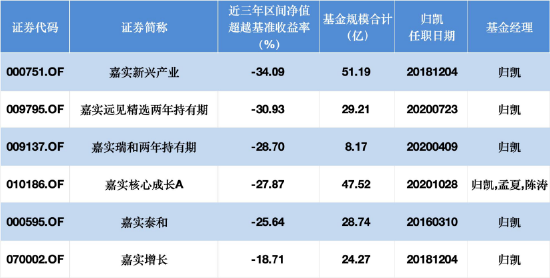
Core Viewpoint - The fund industry is undergoing significant reform in its compensation system, with nearly a thousand fund managers facing potential salary reductions due to underperformance over the past three years [1][5]. Group 1: Compensation Reform - New regulations from the Asset Management Association of China stipulate that if a fund manager's product returns are more than 10 percentage points below the benchmark and the fund's profit is negative, their performance-based compensation must be reduced by at least 30% [1][5]. - Fund companies are required to assess fund managers managing multiple products based on weighted performance metrics, considering fund size and management duration, while excluding funds managed for less than a year from evaluations [1][5]. Group 2: Performance of Guikai - Guikai, a fund manager with nearly ten years of experience at Harvest Fund, manages six funds with a total scale of 18.911 billion yuan, all of which have underperformed their respective benchmarks over the past three years [6][8]. - The performance data shows that the funds managed by Guikai have all recorded negative returns, with the worst performer, Harvest Emerging Industries, lagging the benchmark by 34.09% [2][3][7]. Group 3: Fund Size and Performance Pressure - Among the funds that underperformed by over 30%, Harvest Emerging Industries has a scale of 5.119 billion yuan, and Harvest Vision Select has a scale of 2.921 billion yuan, together accounting for 42.5% of Guikai's total managed assets [3][8]. - The new "tiered salary adjustment" mechanism creates significant pressure, as all six funds managed by Guikai have underperformed by more than 18 percentage points, exceeding the 10 percentage point threshold [8]. Group 4: Future Outlook - The implementation of the new regulations is expected to lead to a more refined and transparent assessment system within the fund industry [4][8]. - Fund managers like Guikai may need to reassess their investment strategies and focus areas, while fund companies should balance product distribution and research resources more effectively to avoid over-reliance on individual managers [4][8].

公募基金经理离职潮起,明星基金经理“公奔私”,继任者业绩承压
Sou Hu Cai Jing· 2025-08-14 03:44
Group 1 - The public fund industry is experiencing a significant increase in talent turnover, with 240 fund managers leaving their positions by August 12, compared to 212 in the same period last year, marking a growth of 28 individuals and an increase of approximately 13.21% [1] - Notably, the departure of star fund manager Zhai Xiangdong from China Merchants Fund has drawn considerable attention, as he left his position managing the China Merchants Advantage Enterprise Mixed Fund, which had a total scale of 8.132 billion yuan and year-to-date returns of 23.88% and 23.44% for A and C shares respectively [1][3] - The frequent departures of fund managers are closely linked to industry fee reforms and salary adjustments, with the introduction of floating fee structures making managers' income more closely tied to performance, thus influencing their career decisions [3] Group 2 - Private equity funds are becoming a significant destination for departing public fund managers due to their more flexible investment strategies, higher performance sharing ratios, and fewer regulatory constraints, with 863 managers from public backgrounds managing 320 private products by June 2025 [4] - The departure of star fund managers poses challenges for public fund companies, potentially leading to significant redemptions in certain funds, as evidenced by Zhonggeng Fund's assets shrinking from 18.972 billion yuan to 11.607 billion yuan after the exit of top manager Qiu Dongrong, a nearly 40% decrease year-on-year [8] - In response to this trend, some public fund companies are focusing on team building and developing a more diversified investment team to reduce reliance on individual star managers [8]