增值税税率

Search documents
快速查验发票真伪,这份操作指南请查收!
蓝色柳林财税室· 2026-03-18 01:33
Core Viewpoint - The article provides detailed instructions on how to verify invoices through various methods, emphasizing the importance of ensuring the authenticity of invoices for financial reporting and tax compliance [3][4][6]. Group 1: Invoice Verification Methods - Users can verify invoices individually by entering details such as invoice source, issue date, and invoice number, which allows them to check for risks, redemptions, and cancellations [3]. - For third-party invoices, users must input the invoice amount (including tax) to perform the verification [4]. - The article outlines a batch verification option where users can download a template for bulk invoice checks, but this feature is limited to invoices issued or received by the user's own unit [3]. Group 2: Verification Results - There are three possible outcomes when verifying an invoice: 1. The invoice information matches, allowing users to preview the invoice [4]. 2. The information does not match, preventing users from previewing the invoice [5]. 3. No invoice information is found, indicating potential issues with the invoice [5]. Group 3: Accessing Verification Platforms - Users can access the National Taxation Administration's invoice verification platform online, where they can input relevant information or upload invoice files in various formats for verification [6]. - The platform provides clear indications of whether an invoice is valid or if there are issues such as "void," "inconsistent," or "not found," which would disqualify the invoice as a financial reimbursement document [6].


收藏!2026最新增值税税率表来了
蓝色柳林财税室· 2026-03-16 01:40
Group 1 - The article discusses the tax rates applicable to various services, including transportation, postal, telecommunications, and financial services, with rates ranging from 6% to 13% depending on the service type [3][4]. - Specific tax rates are outlined for different categories, such as 9% for transportation services and postal services, 6% for value-added telecommunications services, and 13% for leasing and repair services [3][4]. - The article also mentions zero tax rates for certain exports and cross-border services, including research and development services and international transportation services [4][10]. Group 2 - The implementation date for the new tax regulations is set for December 1, 2024, as per the announcement from the relevant authorities [10][11]. - The article emphasizes the importance of electronic invoicing for passenger transport services, detailing how electronic travel documents will be managed and verified through tax digital accounts [10]. - It provides guidance on income recognition for companies, stating that revenue should be recognized when goods are delivered, regardless of when payment is received, in accordance with the accrual basis of accounting [15][16].

【操作指引】选择按小规模纳税人纳税的情况说明操作指引
蓝色柳林财税室· 2026-02-21 01:59
Group 1 - The article provides a step-by-step guide for taxpayers to choose or cancel the small-scale taxpayer status in the electronic tax bureau [2][3] - The process includes logging into the electronic tax bureau, filling out necessary information, and submitting the application for review by tax authorities [2][3] - Taxpayers must confirm their eligibility based on their sales volume and provide explanations if they exceed the threshold for small-scale taxpayers [2][3] Group 2 - The article outlines the different VAT rates applicable to various goods and services, including 13%, 9%, and 6% rates for specific categories [7][8][9] - It specifies that certain services and goods, such as agricultural products and utilities, are subject to a 6% VAT rate, while other services may qualify for zero VAT [9][10][11] - The article emphasizes the importance of correctly categorizing taxable transactions to apply the appropriate VAT rates [16]

【关注】运输中的各种“租”,增值税税率到底怎么分?一文带您了解→
蓝色柳林财税室· 2026-02-10 01:46
Core Viewpoint - The article discusses the different leasing models in the shipping and aviation industries, specifically focusing on the distinctions between "transportation services" and "operating lease services" for tax purposes [2][3]. Group 1: Transportation Services - Transportation services involve using transport tools to deliver goods or passengers, including land, water, air, and pipeline transport [4]. - The article identifies two types of transportation leasing: - **Voyage Charter (程租)**: A service where a transport company completes a specific voyage for the charterer and charges a fee [5]. - **Time Charter (期租)**: A service where a transport company leases a vessel with crew for a specified period, charging daily fees regardless of operation [5]. - **Wet Lease (湿租)**: An aviation service where an airline leases an aircraft with crew for a specified period, charging fees while the charterer covers fixed costs [5]. - Tax treatment for these services falls under transportation services with a VAT rate of 9% [6]. Group 2: Operating Lease Services - Operating lease services involve leasing tangible assets without transferring ownership, categorized under modern service leasing [6]. - The article specifies two types of operating leasing: - **Bareboat Charter (光租)**: A service where a transport company leases a vessel without crew, charging a fixed fee and not covering operational costs [6]. - **Dry Lease (干租)**: An aviation service where an airline leases an aircraft without crew, also charging a fixed fee and not covering operational costs [6]. - Tax treatment for these services falls under tangible asset operating lease services with a VAT rate of 13% [6].

游戏等行业增值税税率要提高?游戏股“深V”震荡,专家:没有可信度
Hua Xia Shi Bao· 2026-02-03 10:40
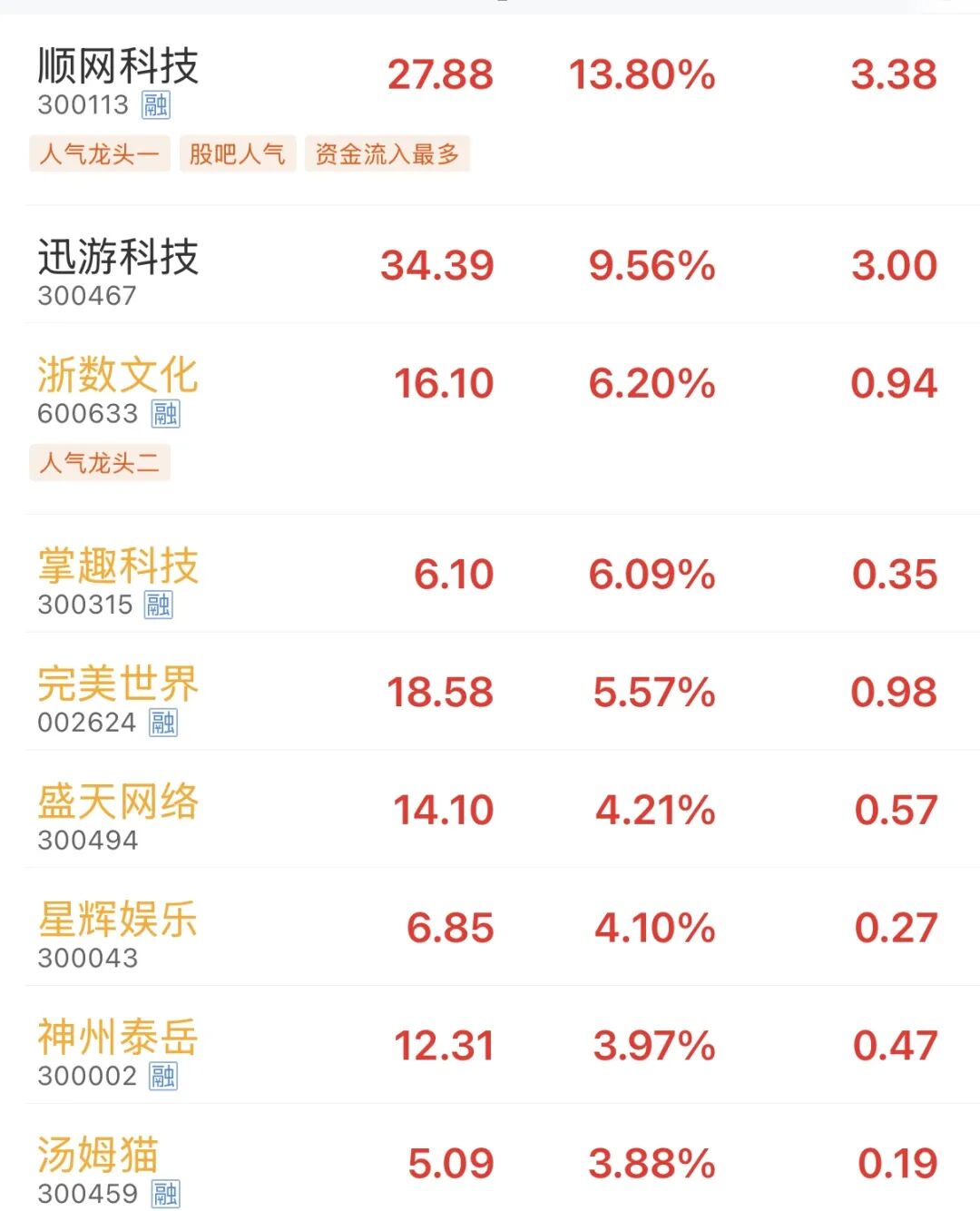
Core Viewpoint - Recent rumors regarding potential increases in value-added tax (VAT) rates for the gaming and financial industries have caused significant fluctuations in gaming stocks, but these rumors have been debunked by industry experts and authorities [3][4]. Group 1: Stock Market Reactions - On February 3, gaming stocks experienced a sharp decline, with Tencent (00700.HK) dropping over 6% and NetEase (09999.HK) falling more than 3% during intraday trading [1]. - A recovery was observed by the end of the trading day, with A-share gaming stocks rebounding, including Century Huatong and Gigabit Technology, both rising over 2% [1]. - The gaming index (BK1406) increased by more than 3.4%, with several component stocks, such as Shunwang Technology, surging by 13.8% [1]. Group 2: Tax Rumors and Clarifications - Recent rumors suggested that the VAT rate for the gaming industry could rise from 6% to 32%, which sparked concern among investors [3]. - Experts confirmed that these rumors lack credibility, stating that the maximum VAT rate in China is capped at 13%, and no adjustments to the tax policies for the gaming and financial sectors have been made [4]. - The implementation of the new VAT law and related announcements by the tax authorities have clarified that the tax rates for these industries are stable and well-defined [4].




今年起卖货带安装统一按13%税率征增值税
Di Yi Cai Jing· 2026-02-03 04:17
Core Viewpoint - The announcement by the Ministry of Finance and the State Taxation Administration clarifies how to determine the applicable VAT rate for mixed sales by general VAT taxpayers, emphasizing the need to apply the rate of the main business activity involved in the transaction [1][2]. Group 1: VAT Rate Determination - The announcement specifies four scenarios for determining the applicable VAT rate for mixed sales, including software sales with related services, sales of goods with installation services, electric power sales with battery services, and vehicle rental with IT services [1][3]. - The previous practice of separately accounting for sales and installation services, which allowed for different tax rates, has been replaced by a unified application of the higher tax rate based on the main business activity [2][3]. Group 2: Implications for Businesses - The new regulation aims to prevent businesses from attempting to evade taxes by splitting transactions into separate taxable activities to benefit from lower tax rates [3]. - The announcement also indicates that similar taxable transactions should be treated in accordance with the specified scenarios, reinforcing the need for compliance among taxpayers [3].
公司员工年中首次取得工资,专项附加扣除可否从年初开始累计享受?
蓝色柳林财税室· 2026-02-02 02:01
Group 1 - The article discusses the VAT rate applicable to feed, which is set at 9% according to the "Value-Added Tax Law of the People's Republic of China" [7] - It highlights that the new VAT law will come into effect on January 1, 2026, and will replace the "Interim Regulations on Value-Added Tax" [7]

官宣!适用9%和6%增值税税率范围定了
第一财经· 2026-02-01 07:47
Core Viewpoint - The article discusses the implementation of the new VAT law and its specific provisions regarding the applicable tax rates, particularly the 9% rate, which will take effect from January 1, 2026 [3]. Group 1: VAT Tax Rates - The main VAT tax rates in China are 13%, 9%, and 6%, with the basic rate being 13% [3]. - The recent announcement clarifies the specific range of goods and services applicable to the 9% VAT rate, including various categories of agricultural products and services [3]. Group 2: Specific Goods and Services - The 9% VAT rate will apply to a range of goods, including agricultural products, edible oils, salt, tap water, and natural gas, with a total of twenty major categories listed [3]. - In the category of edible oils, the announcement expands the list to include palm oil, fennel oil, coconut oil, walnut oil, olive oil, and several others beyond the previously listed oils [4]. - For agricultural machinery, the announcement adds livestock machinery, fishery machinery, forestry machinery, and small farming tools to the existing list of ten types of agricultural machinery [5]. Group 3: Changes in Service Taxation - The announcement modifies the definitions related to sales services, intangible assets, and real estate, including the removal of the "modern service" concept and changes in the classification of intangible assets [5]. - Sales services are categorized into six major types, including transportation, postal, telecommunications, construction, financial, and production/living services, each with detailed distinctions [5][6]. - The transportation, construction, and real estate transactions will be subject to the 9% VAT rate, while tangible asset leasing will be taxed at 13%, and other services will generally be taxed at 6% [6].

增值税法系列宣传丨增值税税率、征收率
蓝色柳林财税室· 2025-12-12 08:25
Core Viewpoint - The article outlines the tax rates and collection rates under the Value-Added Tax (VAT) Law of the People's Republic of China, detailing the applicable rates for different categories of goods and services [3][4][7]. Tax Rates - The tax rate for the sale of goods, processing, repair services, tangible asset leasing services, and importation of goods is set at 13% [3]. - A reduced tax rate of 9% applies to the sale of transportation, postal, telecommunications, construction services, real estate leasing, sale of real estate, transfer of land use rights, and specific goods such as agricultural products, utilities, and publications [3]. - The tax rate for the sale of services and intangible assets, excluding certain specified items, is 6% [4]. - Exports of goods are taxed at a rate of 0%, unless otherwise specified by the State Council [5]. - For cross-border sales of services and intangible assets by domestic entities and individuals, the tax rate is also 0% [6]. Collection Rate - The collection rate for VAT calculated using the simplified tax method is set at 3% [7].

山西省财政厅 国家税务总局山西省税务局 山西省水利厅 关于明确我省水资源税改革试点有关政策的通知
蓝色柳林财税室· 2025-11-09 00:55
Key Points - The article discusses the implementation of a water resource tax in Shanxi Province, detailing the applicable tax rates for different types of water usage [3][4]. - The tax rates vary based on the type of water used, with specific rates for agricultural production, public water supply, and special water usage [3]. - There are penalties for unauthorized water extraction, with increased tax rates applied based on the extent of the over-extraction [4]. - The new tax regulations will take effect on December 1, 2024 [4]. Tax Rates Summary - Surface water for agricultural production is taxed at 0.05 yuan per cubic meter, while for special water usage, the rate is 5 yuan per cubic meter [3]. - Groundwater for agricultural production is taxed at 0.2 yuan per cubic meter, with special usage at 20 yuan per cubic meter [3]. - Other water usage types, such as geothermal water, have varying rates, with some at 1.4 yuan per cubic meter [3]. Penalty Structure - Unauthorized water extraction exceeding the planned amount by 20% incurs a penalty of double the applicable tax rate [4]. - If the over-extraction is between 20% and 40%, the penalty increases to 2.5 times the applicable tax rate [4]. - For over-extraction exceeding 40%, the penalty is three times the applicable tax rate [4]. Implementation Date - The new water resource tax regulations will be implemented starting December 1, 2024 [4].