复用火箭

Search documents
中金公司:全球商业航天蓬勃发展牵引火箭发射需求,国内复用火箭有望逐步成熟
Mei Ri Jing Ji Xin Wen· 2025-12-05 00:08
Core Insights - The report from CICC highlights the robust growth of the global commercial aerospace sector, which is driving the demand for rocket launches [1] Group 1: Global Launch Demand - The demand for rocket launches is being propelled by the construction of commercial remote sensing and communication satellite constellations [1] - Global space launches are projected to increase from 112 times in 2020 to 263 times in 2024, with commercial rockets becoming the mainstay of global launches [1] Group 2: Domestic Rocket Development - Since 2014, domestic commercial rocket companies have rapidly developed, achieving consecutive successful launches and executing commercial launch missions [1] - Reusable rocket models such as Zhuque-3 and Tianlong-3 are expected to have their maiden flights concentrated between 2025 and 2026, which is anticipated to significantly enhance domestic rocket capacity [1]

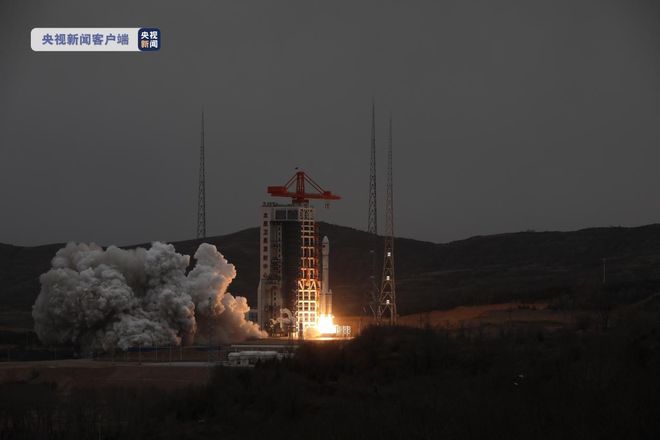
21天5次发射,中国星网为什么这么急?
Guan Cha Zhe Wang· 2025-08-20 00:20
Core Viewpoint - China's Starlink program is racing against time to deploy a massive constellation of satellites, with a goal of launching approximately 13,000 satellites by 2034, driven by international regulatory deadlines set by the International Telecommunication Union (ITU) [1][3][5] Group 1: Launch Strategy and Goals - China has executed five satellite launches in just 21 days, marking an unprecedented pace in its satellite deployment efforts [1][10] - The ITU has established strict timelines for satellite deployment, requiring at least one satellite in orbit within seven years, 10% of the total by the ninth year, 50% by the twelfth year, and 100% by the fourteenth year [3][5][6] - By 2029, China needs to have approximately 1,300 satellites in orbit, with a significant ramp-up in launch frequency required to meet these targets [11][12] Group 2: Competitive Landscape - SpaceX's Starlink has set a high bar with its rapid deployment of thousands of satellites, creating pressure on other competitors like China's Starlink and Amazon's Project Kuiper [6][9] - Amazon's Kuiper project, aiming to deploy 3,200 satellites, is also under time constraints, having launched over 100 satellites recently [7][9] - The competitive environment is characterized by a race to secure frequency and orbital resources, with the potential for significant consequences for those who fail to meet deployment milestones [6][18] Group 3: Challenges and Solutions - China's current strategy involves multiple rocket types being launched in parallel to meet immediate deployment needs, but this approach may not be sustainable long-term due to complexity and cost pressures [11][15] - To meet future demands, China must increase the payload capacity of its rockets and establish a more efficient launch cadence, potentially moving towards reusable rocket technology [12][14][15] - The development of the Long March 12 rocket, which may evolve into a reusable platform, is seen as a critical step in enhancing China's launch capabilities [14][15] Group 4: Regulatory Environment and Implications - The ITU's deadlines are not just formalities; failure to meet them could result in reduced frequency allocations or even project termination [18][19] - The case of Rivada, which received a waiver despite not launching any satellites, illustrates that demonstrating credible progress can provide some leeway in regulatory compliance [18][19] - For China, the focus must be on consistent satellite launches and production capabilities to avoid reliance on potential regulatory leniency [19]