外汇储备再平衡

Search documents
央行购金潮遭数据打脸!黄金涨势另有推手?
Jin Shi Shu Ju· 2026-01-27 14:48
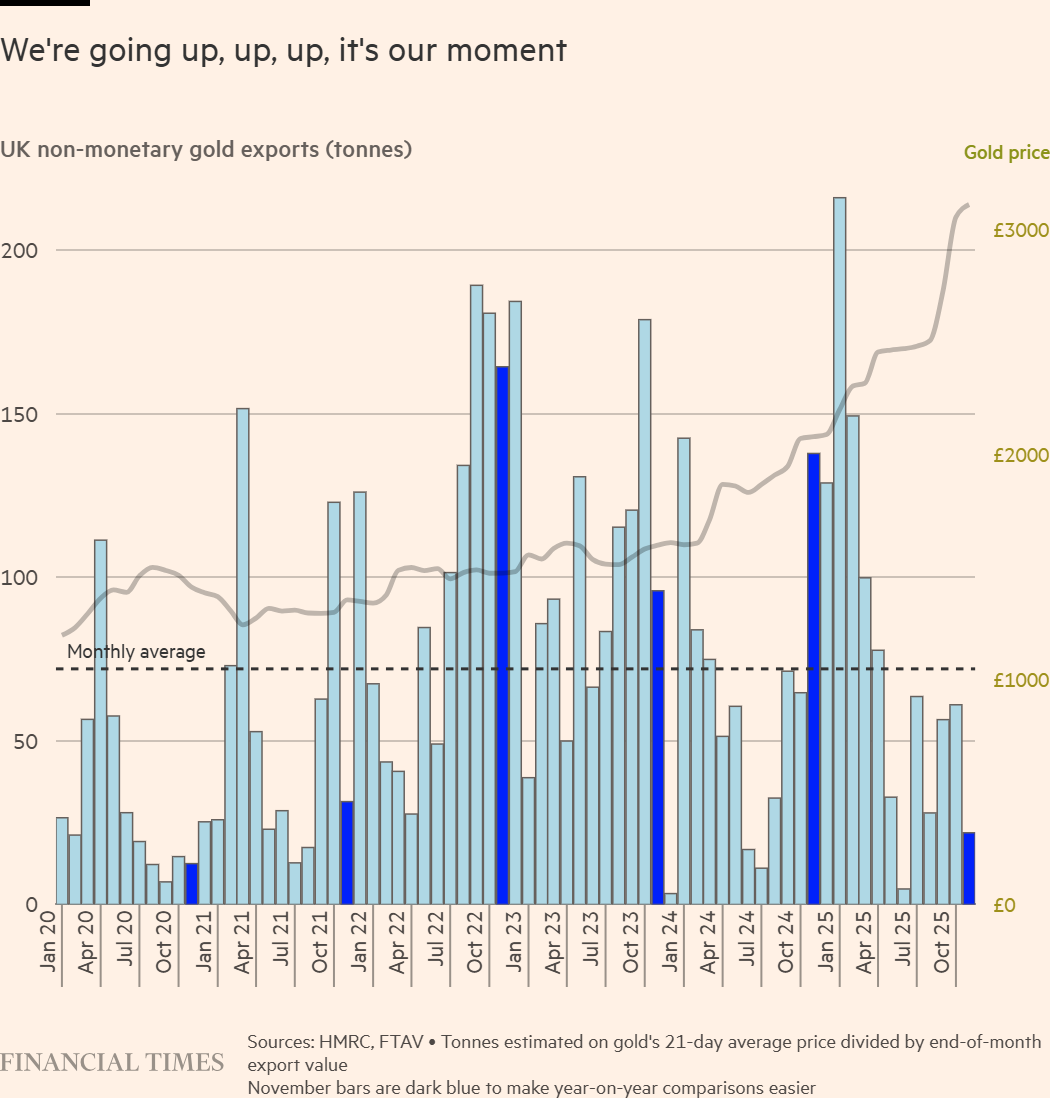
Group 1 - Central banks are increasingly shifting their foreign exchange reserves from US dollars to gold, viewing this as a more effective measure of currency devaluation compared to bond markets [1] - Ray Dalio, founder of Bridgewater Associates, highlighted the severe imbalances in the global economy and the interdependence among countries, leading to a trend of central banks increasing their gold reserves [1] - The article notes that while many believe central banks are diversifying into gold, there is a lack of empirical support for this narrative [1] Group 2 - Data from the UK’s HM Revenue and Customs indicates that gold exports are a key indicator of central bank buying activity, with a significant increase in gold purchases following Russia's military actions in Ukraine [2] - In November 2022, UK gold exports by weight plummeted over 80%, challenging the notion that central banks are continuously increasing their gold allocations [4] - China has emerged as the largest gold buyer, with its gold reserves projected to exceed 2300 tons by December 2025, representing 8.5% of its total foreign exchange reserves [4] Group 3 - Analysts suggest that central banks may slow their gold purchases as the value of their existing gold assets increases, which is a predictable response [5] - Poland's central bank has shifted its focus from a percentage-based gold reserve target to an absolute tonnage target, indicating a continued intent to increase gold reserves despite high prices [5] - Data from the London Bullion Market Association shows a significant increase in gold vault inventories, which often correlates with low gold export volumes [6][7] Group 4 - The overall trend suggests that the process of rebalancing foreign exchange reserves from dollars to gold may be nearing its end, with recent gold price increases attributed more to speculative buying than to central bank activity [7]