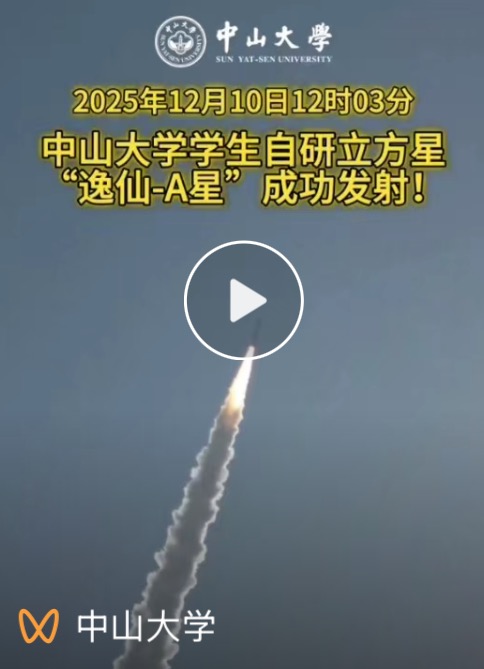
多学科交叉融合创新

Search documents
几个“90后”,造了颗“星”!
Xin Lang Cai Jing· 2025-12-20 00:33
Core Viewpoint - The article highlights the successful launch of the "Yixian-A" satellite, developed by a team of students from Sun Yat-sen University, marking a significant achievement in space exploration and innovation in materials science [1][2]. Group 1: Development and Launch of "Yixian-A" - The "Yixian-A" satellite is the world's first satellite to conduct in-orbit verification of wooden outer panels, aimed at addressing space debris and atmospheric pollution [2][7]. - The satellite was launched on December 10, 2023, successfully entering orbit and completing its initial mission phase [5][7]. - The satellite is designed to operate in space for six months, performing tasks such as satellite imaging, testing the wooden outer panel, and validating software-defined satellite technologies [7]. Group 2: Team and Research Background - The project was led by Wang Hui, a postdoctoral researcher born in the 1990s, who has been passionate about space for over 22 years [1][2]. - The team, consisting of nine young members, faced significant challenges due to the extreme conditions of space, including temperature variations and radiation [2]. - The development process involved collaboration across multiple disciplines, utilizing various wood types and processing techniques to enhance material durability for space conditions [2]. Group 3: Future Aspirations and Educational Outreach - Following the success of "Yixian-A," the team is already working on the next satellite in the series, "Yixian-B," focusing on breakthroughs in medical engineering and other advanced fields [7]. - Wang Hui actively engages in educational outreach, inspiring younger generations about space exploration through lectures and workshops [7].

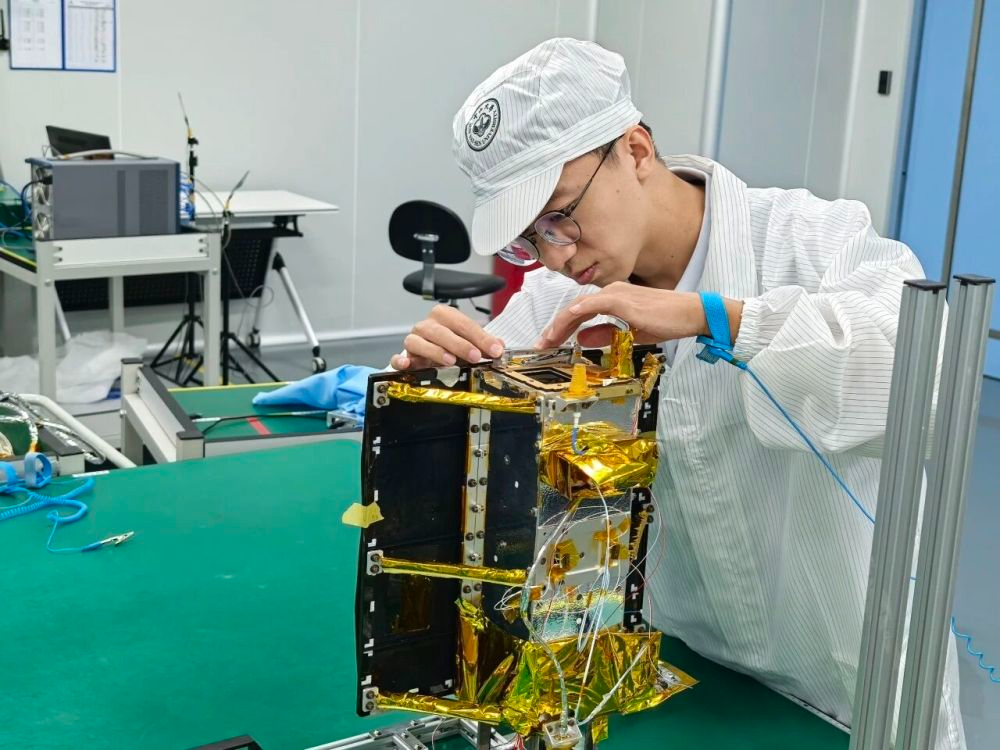
“90后”的他们造了一颗“星”
Xin Hua She· 2025-12-19 13:26
Core Viewpoint - The successful launch of the "Yixian-A Star," the world's first satellite to conduct in-orbit verification of wooden outer panels, marks a significant achievement in space technology and innovation led by a team of young researchers from Sun Yat-sen University [1][5]. Group 1: Development and Innovation - The "Yixian-A Star" was developed by a team primarily composed of nine young members, with postdoctoral researcher Wang Hui as the team leader, who has pursued his dream of space exploration for 22 years [1][2]. - The satellite serves as a platform for scientific experiments, technology validation, and educational training, focusing on innovative materials to address space debris and atmospheric pollution [3]. - The team faced significant challenges due to the extreme conditions of space, including temperature fluctuations, vacuum, and radiation, which posed risks to material stability [3]. Group 2: Research and Collaboration - Wang Hui established the Micro-Nano Satellite Association at Sun Yat-sen University in 2021, which formalized the "satellite-making" initiative [3]. - The team collaborated with various departments, including materials science and advanced manufacturing, to explore different types of wood and processing techniques to enhance the durability of wooden materials for space [3]. Group 3: Launch and Future Plans - The "Yixian-A Star" was successfully launched on December 10, 2023, and is set to operate in space for six months, conducting tasks such as satellite imaging, testing the wooden outer panel, and validating software-defined satellite technologies [5][8]. - Following the success of "Yixian-A Star," the team is already working on the next satellite in the series, "Yixian-B," aiming for breakthroughs in fields like medical engineering [8].
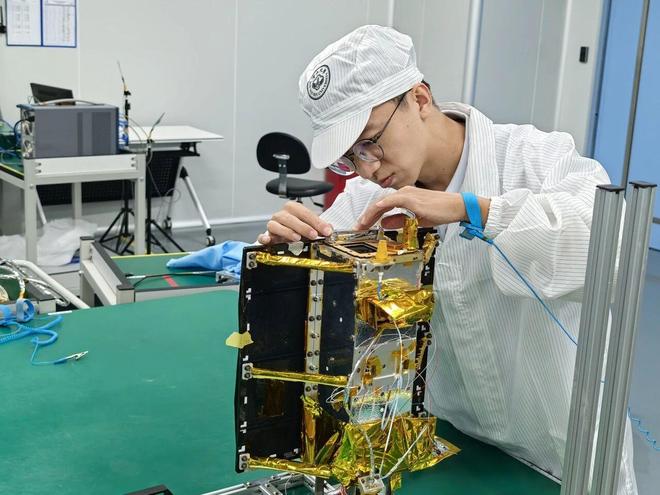
世界首颗!中山大学深圳校区学生团队自研卫星成功发射
Nan Fang Du Shi Bao· 2025-12-11 05:19
Core Viewpoint - The successful launch of the "Yixian-A" satellite, developed by a student team from Sun Yat-sen University, marks a significant achievement in the university's aerospace research and education efforts, showcasing interdisciplinary collaboration and innovation in satellite technology [5][6]. Group 1: Satellite Development and Launch - The "Yixian-A" satellite was successfully launched on December 10 at 12:03 PM from the Jiuquan Satellite Launch Center using the Kuaizhou-1A rocket, entering its designated orbit at 12:17 PM [5]. - The satellite is the world's first to validate wooden exterior panels in orbit, demonstrating the potential of wood as a material for space applications [5][6]. - The development of "Yixian-A" took four years, involving a multidisciplinary team from the School of Aerospace Engineering, School of Materials Science, and School of Advanced Manufacturing [6][9]. Group 2: Research and Educational Impact - "Yixian-A" is intended for scientific experiments, technology validation, and educational purposes, with a planned operational period of six months [6]. - The satellite will conduct tasks such as space imaging, testing of wooden exterior panels, and development of software-defined satellite payloads using Raspberry Pi technology [6]. - The successful launch is seen as a landmark achievement in the university's efforts to foster new engineering disciplines and cultivate innovative talent [6][8]. Group 3: Institutional Background and Support - The School of Aerospace Engineering at Sun Yat-sen University has been actively involved in national aerospace strategies since its establishment in 2017, promoting interdisciplinary collaboration and practical innovation among students [8][13]. - The university has established the Micro-Nano Satellite Association to enhance practical training and innovation in aerospace engineering, further supporting the development of the "Yixian" satellite series [8][9]. - The collaboration between different schools within the university, such as the School of Materials and the School of Advanced Manufacturing, has been crucial in overcoming technical challenges related to the satellite's wooden materials [9].
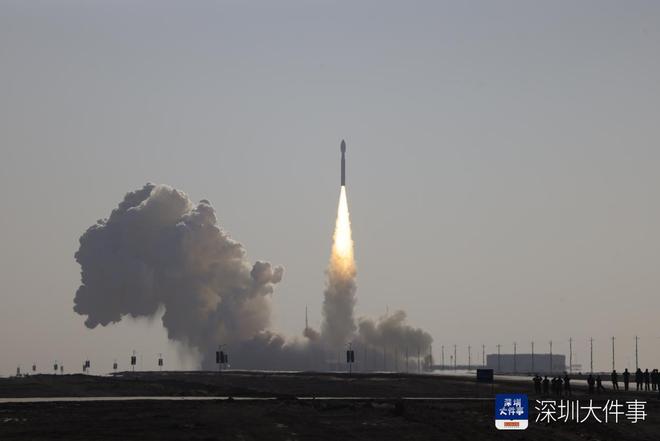
中山大学“90后”学生带队自研立方星发射成功
第一财经· 2025-12-10 15:33
Core Viewpoint - The article highlights the successful launch of the "Yixian-A" satellite, developed by a student team from Sun Yat-sen University, marking a significant achievement in the field of satellite technology and environmental innovation [3][5]. Group 1: Satellite Launch and Purpose - The "Yixian-A" satellite was launched on December 10, 2025, from the Jiuquan Satellite Launch Center, becoming the world's first satellite to validate wooden outer panels in orbit [3][5]. - The satellite is designed for scientific experiments, technology validation, and educational purposes, with a planned operational duration of six months [3][5]. Group 2: Development Team and Leadership - The project was led by Wang Hui, a postdoctoral researcher at Sun Yat-sen University, who founded the university's Micro-Nano Satellite Association in 2021 to facilitate satellite development [5][6]. - Wang's innovative approach involved a student-led design and management model, breaking down the satellite development into manageable sub-projects to accelerate progress [5][6]. Group 3: Technical Innovations - The use of wooden outer panels represents a bold innovation, aimed at reducing atmospheric pollution upon re-entry while facing challenges from extreme space conditions [5][6]. - The development team collaborated with various departments to experiment with different types of wood and surface treatments, ultimately enhancing the durability of the wooden materials for space environments [6][7]. Group 4: Future Plans - Following the success of "Yixian-A," the team plans to develop a series of satellites, including "Yixian-B," which will focus on biomedical experiments in space [3][5].

中山大学“90后”学生带队自研立方星发射成功
Di Yi Cai Jing· 2025-12-10 14:46
Core Viewpoint - The successful launch of the "Yixian-A" satellite marks a significant milestone as the world's first satellite to validate wooden outer panels in orbit, with future plans for innovation in medical engineering integration [3][5]. Group 1: Satellite Development - The "Yixian-A" satellite, developed by a student team from Sun Yat-sen University, was launched on December 10 and is designed for scientific experiments, technology validation, and educational purposes, with a planned operational duration of six months [3]. - The satellite will conduct tasks including space imaging, testing of wooden outer panels, and development of software-defined satellite payloads based on Raspberry Pi technology [3]. - The team aims to develop a series of "Yixian" satellites, with a focus on breakthroughs in medical engineering integration [3]. Group 2: Team Leadership and Innovation - The lead of the "Yixian-A" development team, Wang Hui, is a PhD candidate at Sun Yat-sen University and has been instrumental in establishing the university's micro-nano satellite association [5]. - Wang Hui's innovative approach involved a "student-led design and management" model, breaking down the satellite development into manageable sub-projects to expedite the research process [5]. - The team faced technical challenges, particularly with the use of wooden outer panels, which required extensive experimentation to ensure durability in the harsh conditions of space [5][6]. Group 3: Material Innovation - The team collaborated with the College of Materials and the College of Advanced Manufacturing to leverage interdisciplinary innovation, experimenting with various types of wood and surface treatment techniques [6]. - Through numerous experiments, the team successfully identified suitable wood and treatment methods that enhanced the durability of the wooden materials, allowing them to withstand the extreme conditions of space [6]. - This achievement positions the team ahead of researchers from Finland, Japan, and other countries in the practical application of wooden satellite outer panels [6].