
力箭一号遥十一运载火箭

Search documents
回望2025 多个“大国重器”取得新突破 “中国力量”闪耀寰宇
Yang Shi Wang· 2026-01-01 11:20
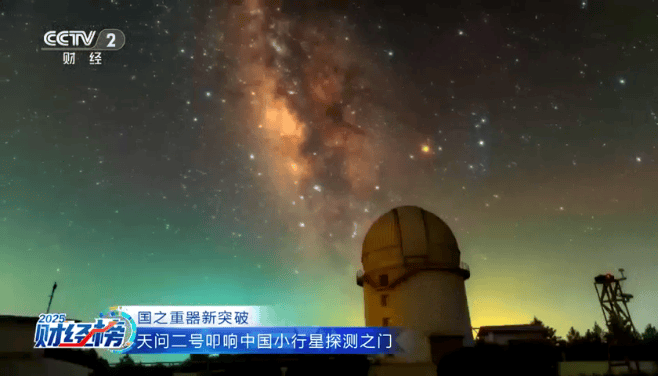
Group 1 - China's space exploration has achieved significant milestones with the successful launch of the Tianwen-2 asteroid probe, which aims to conduct dual-target exploration of asteroid 2016HO3 and comet 311P [3] - The Long March 3B rocket successfully launched the Tianwen-2 probe, marking a breakthrough in China's planetary exploration capabilities [3] - The successful launch of the Lijian-1 rocket, which deployed nine satellites in a single mission, signifies the scaling up of international business in China's commercial space sector [5] Group 2 - China's manned submersible technology continues to advance, with the Jiaolong submersible completing its first dive in the Arctic region, showcasing a new collaborative underwater operation model [7] - Two ultra-large dredging vessels, Tongjun and Jun Guang, have been launched, featuring the largest dredging capacity in Asia and world-leading loading efficiency [9] Group 3 - The world's largest 26 MW offshore wind turbine has successfully connected to the grid in Shandong, capable of generating up to 100 million kWh annually under optimal conditions [12] - The first unit of the "Hualong One" nuclear power plant in Fujian has successfully connected to the grid, with an expected annual output of 20 billion kWh [14] Group 4 - China's largest diameter shield tunneling machine has been completed and is set for export, featuring advanced intelligent technologies and a diameter of 15.7 meters [15] - The AG600 amphibious aircraft has entered mass production, becoming the world's largest civil amphibious aircraft, enhancing China's aerial rescue capabilities [16] Group 5 - The CR450 high-speed train has set a new record with a speed of 453 km/h, marking a significant advancement in China's high-speed rail technology [17] - The Jiangmen neutrino experiment facility has commenced operations, achieving a major milestone in measuring solar neutrino oscillation parameters with improved precision [18] - The AIMS telescope has successfully measured solar magnetic fields, providing new capabilities for solar observation [19]

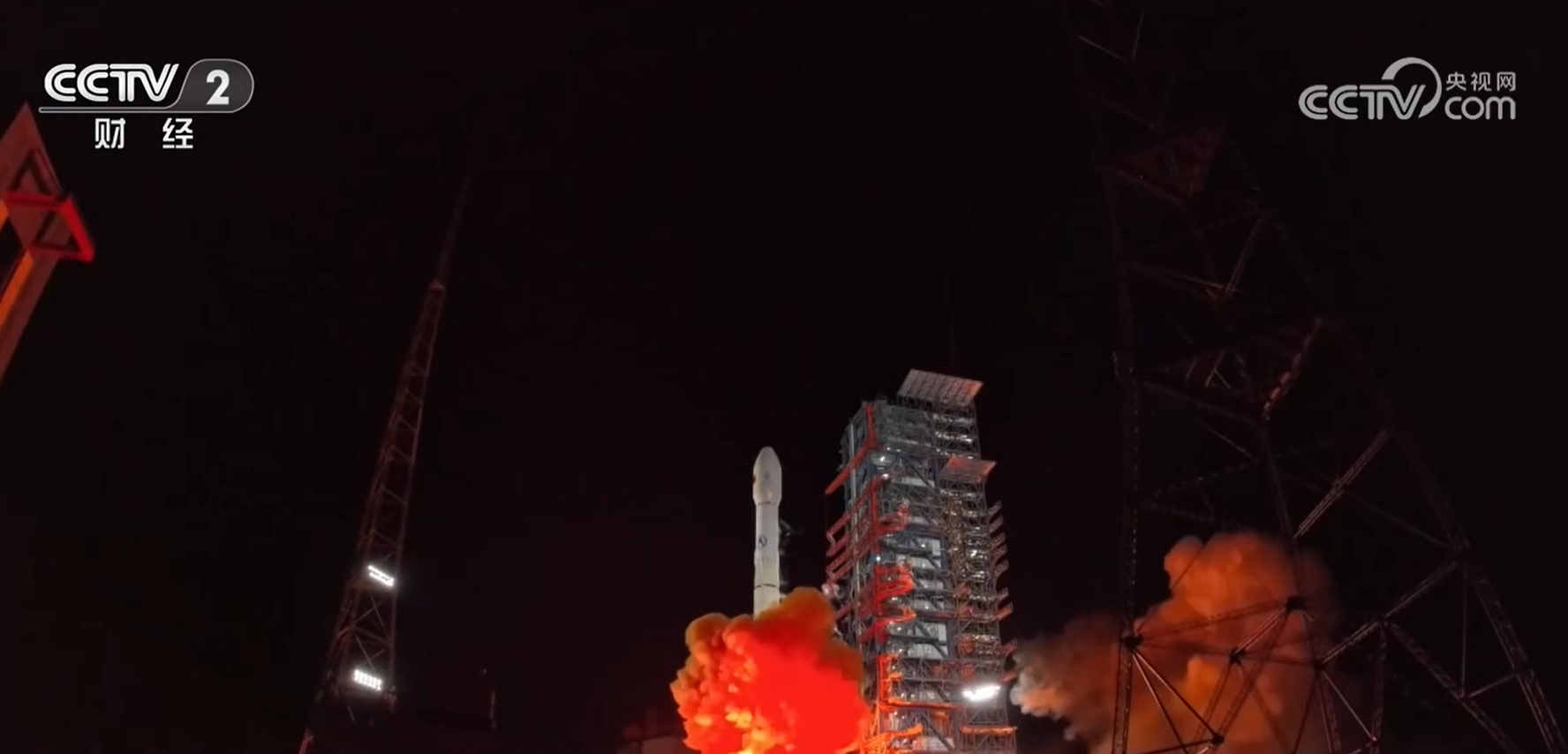
上天入地、钻山探海,2025年我国多个“大国重器”迎高光时刻!
Sou Hu Cai Jing· 2025-12-31 16:12
Group 1: Agricultural Innovation - In 2025, Yunnan Academy of Agricultural Sciences will launch over a thousand new "Chinese-style" rose cut flower varieties, aiming to embed "Chinese core" into fresh flowers [1] Group 2: Aerospace Advancements - China's aerospace sector is experiencing "technological breakthroughs" and "scale explosion," highlighted by the successful launch of the Tianwen-2 probe and the "one rocket, nine satellites" mission, marking a significant step in international business [3] Group 3: Deep-Sea Technology - In 2025, China's manned submersible application level will continue to improve, with the "Jiaolong" submersible completing its first dive in the Arctic and two large dredging vessels launched, setting records in dredging depth and capacity [5] Group 4: Energy Technology - A 26 MW offshore wind turbine developed in China successfully connected to the grid, capable of generating 100 million kWh annually, and the "Hualong One" nuclear power unit in Fujian has also successfully connected to the grid, with an expected annual output of 20 billion kWh [7] Group 5: Manufacturing Strength - China's self-developed large-diameter shield tunneling machine and the AG600 amphibious aircraft have entered mass production, while the CR450 high-speed train prototype has set a new speed record of 453 km/h, showcasing advancements in manufacturing capabilities [9] Group 6: Scientific Research - The Jiangmen neutrino experiment has successfully completed the infusion of 20,000 tons of liquid scintillator, becoming the first large-scale neutrino facility, and the AIMS telescope has been accepted for operation, enhancing solar magnetic field observation [11]
商业航天“蓄势待发”:火箭射上去,价格打下来
第一财经· 2025-12-26 13:06
Core Viewpoint - The article emphasizes that the Chinese commercial aerospace industry is entering a rapid development phase, driven by government policies and capital investments, particularly in the areas of rocket launches and satellite applications [3][4][5]. Group 1: Policy and Investment - The National Venture Capital Guidance Fund has officially started operations, focusing on increasing investments in early-stage projects in aerospace and other innovative sectors [3]. - The Shanghai Stock Exchange has released guidelines for commercial rocket companies, allowing them to apply for listing under specific standards that emphasize "hard technology" attributes [3]. Group 2: Industry Development and Challenges - The commercial aerospace industry is facing a bottleneck in rocket launches, characterized by low supply, insufficient payload capacity, and high costs, which limits the economic feasibility of deploying large satellite constellations [7][10]. - The industry is experiencing a significant push for rocket capacity expansion, particularly for satellite internet and space computing deployments, with companies like Zhongke Xingtou actively engaging in the entire aerospace value chain [7][11]. Group 3: Technological Advancements and Market Dynamics - The focus on reducing costs through the maturation of reusable rocket technology and the mass production of satellites is critical for the industry's future [8][12]. - The successful launch of new rocket models and the ability to secure customer orders are essential for establishing a sustainable commercial value in the aerospace sector [12][16]. Group 4: Market Growth and Financial Metrics - By 2025, the Chinese commercial aerospace industry is projected to reach a scale of 2.5 to 2.8 trillion yuan, with an annual growth rate exceeding 20% and over 600 companies operating in the sector [15]. - The total financing in the industry is expected to reach 18.6 billion yuan in 2025, with satellite applications receiving the highest funding [15]. Group 5: Regulatory Environment and Future Directions - The establishment of the Commercial Aerospace Department aims to enhance regulatory efficiency and coordination across various aspects of the industry, including launch approvals and satellite operation licenses [18]. - The focus for the future will be on creating a commercial closed-loop system and optimizing regulatory frameworks to support large-scale, high-adhesion commercial applications [15][17].

商业航天“蓄势待发”:火箭射上去,价格打下来
Di Yi Cai Jing· 2025-12-26 12:16
Core Insights - The Chinese commercial space industry is experiencing a significant push due to favorable policies and capital influx, with the National Venture Capital Guidance Fund officially launched to support early-stage projects in aerospace [1] - The industry is currently facing a "three shortages" situation: a lack of rockets, launch sites, and satellites, which poses a bottleneck for development [5][9] Group 1: Industry Development - The launch of the National Venture Capital Guidance Fund aims to enhance investment in early-stage aerospace projects, particularly in active innovation regions [1] - The Shanghai Stock Exchange has released guidelines for commercial rocket companies, emphasizing the importance of "hard technology" and prioritizing companies involved in national projects [1] - The commercial space sector is expected to grow significantly, with projections indicating a market size of 2.5-2.8 trillion yuan by 2025, with a compound annual growth rate of over 20% [10] Group 2: Technological Advancements - The industry is at a critical juncture for technological breakthroughs and scale expansion, focusing on reducing costs through reusable rocket technology and mass satellite manufacturing [4] - The successful launch of the "Yixian-A" satellite by a student team demonstrates the potential for innovative satellite applications in the commercial space sector [2] - Companies are accelerating technological advancements, with expectations for new rocket models to achieve competitive launch costs close to those of SpaceX by 2025-2026 [7] Group 3: Market Dynamics - The current imbalance in the commercial space ecosystem highlights the rocket launch segment as a key constraint, with limited supply and high costs affecting satellite deployment [3] - The demand for satellite resources is increasing, but the supply of launch sites is insufficient, leading to delays in satellite launches [8][9] - The industry is witnessing a surge in IPO activities, with over 10 companies initiating listing processes, primarily in rocket manufacturing [5][6] Group 4: Regulatory Environment - The establishment of the Commercial Space Administration aims to enhance regulatory efficiency and support the development of the commercial space sector [13] - The recent action plan emphasizes the need for low-cost, reliable, and reusable rockets, as well as the development of commercial launch sites and integrated measurement and control systems [12][13] - The industry is encouraged to explore new application scenarios and products to support a trillion-level market [11]
美国推进重返月球计划,太空战略布局或将带来国际竞争
Orient Securities· 2025-12-22 06:54
Investment Rating - The report maintains a "Positive" outlook for the defense and military industry [4] Core Insights - The U.S. is advancing its lunar return plan, which may lead to increased international competition in space strategy, benefiting China's rocket technology and space operations [8][11] - The proximity of low Earth orbit satellites between China and the U.S. highlights the need for enhanced space traffic management and situational awareness [12][16] - The upcoming "14th Five-Year Plan" is expected to clarify new equipment construction plans, emphasizing the importance of unmanned and anti-unmanned equipment, deep-sea technology, and operational informatization [17] Summary by Sections Investment Recommendations and Targets - The report suggests focusing on commercial aerospace, military trade, and new quality combat capabilities as key investment areas [9][17] - Specific recommended stocks include: - Commercial Aerospace: Aerospace Electronics (600879, Buy), Haige Communication (002465, Buy), and others [17] - Engine & Fuel Chain: West Superconductor (688122, Buy) and others [17] - New Quality Domains: New Light Optoelectronics (688011, Increase) and others [17] - Military Electronics: Aerospace Electric (002025, Buy) and others [17] - Military Trade/Main Equipment: Aerospace Electronics (600879, Buy) and others [17] Industry Performance - The defense and military industry index (Shenwan) rose by 1.53%, outperforming the Shanghai and Shenzhen 300 index [19][21] - The report notes that the defense and military sector ranked 11th out of 31 in terms of weekly performance [22] Key News and Developments - The report highlights significant developments such as the successful first flight of the Rainbow-7 high-altitude stealth drone and the establishment of a permanent lunar outpost by 2030 as part of the U.S. space strategy [26][27] - It also mentions the ongoing military trade dynamics and the implications of recent geopolitical events on the defense sector [28][29]


仅200米,中美卫星惊险“擦肩”,SpaceX高管指责中国企业,中企反驳,究竟谁在碰瓷?航天专家解读→
3 6 Ke· 2025-12-16 01:11
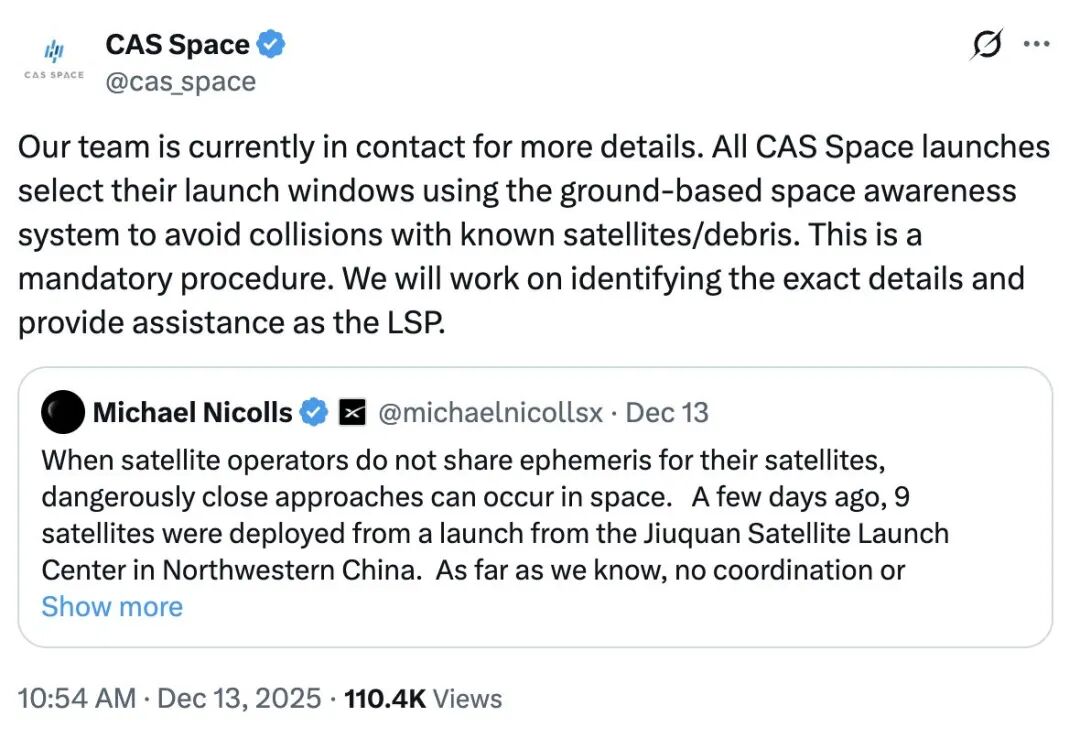
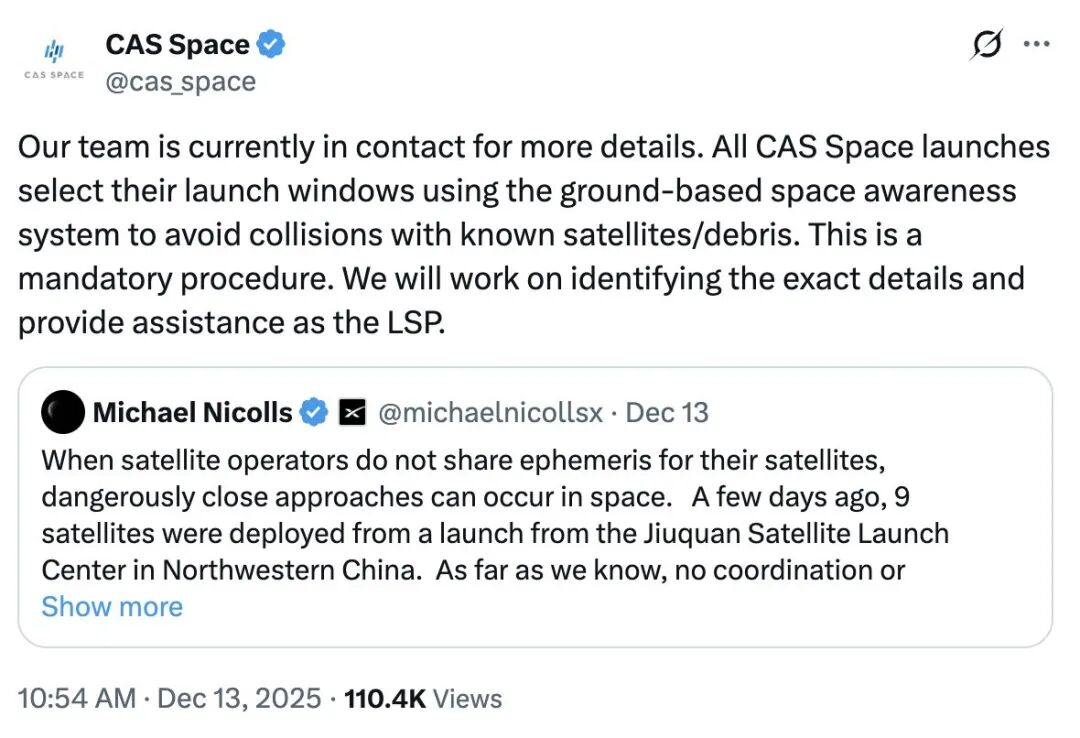
Core Viewpoint - The recent close approach of a Chinese satellite to a SpaceX Starlink satellite has raised concerns about space safety and coordination among satellite operators [1][3]. Group 1: Incident Details - SpaceX's Starlink Vice President Michael Nichols reported a 200-meter close approach between a Chinese satellite and a Starlink satellite, claiming no coordination was made for the launch [1]. - China Aerospace Science and Technology Corporation (CASC) responded, stating that all their launches use ground-based space awareness systems to avoid collisions, emphasizing this is a mandatory procedure [1][3]. - CASC clarified that if the close approach event is confirmed, it occurred 48 hours after the satellite payload separation, indicating the launch mission had already concluded [3]. Group 2: Starlink Operations and Challenges - Starlink has faced multiple collision threats, including two incidents in 2021 where Starlink satellites came close to the Chinese space station, prompting emergency collision avoidance maneuvers [3]. - As of February 2025, Starlink has over 6,750 satellites in orbit, with plans to expand to a constellation of 42,000 satellites [3]. - International space experts noted that while the number of Starlink satellites is significant, the greater threat to space safety comes from the larger quantity of space debris [3]. Group 3: Maneuvering and Coordination Issues - From December 2024 to May 2025, Starlink satellites executed over 140,000 maneuvers to avoid collisions, which is 2.8 times more than the previous six months [4]. - The frequent maneuvers complicate collision predictions for other organizations, as the operational status of satellites can change rapidly [4]. - Experts emphasized the need for responsible spacefaring nations to notify relevant parties when satellites change orbits to prevent collisions, especially for operational satellites [5]. Group 4: Call for Improved Coordination - Nichols highlighted that the lack of coordination among satellite operators poses risks for close approaches in space, calling for a change in this practice [6]. - CASC indicated that a new cooperative relationship is needed between the two emerging space ecosystems to enhance safety and coordination [6].
仅200米 中美卫星惊险“擦肩”!SpaceX高管指责中国企业 中企反驳 究竟谁在碰瓷?
Mei Ri Jing Ji Xin Wen· 2025-12-15 13:49
Core Viewpoint - SpaceX's Starlink program has raised concerns regarding satellite collision risks, particularly following a recent incident where a Chinese satellite came within 200 meters of a Starlink satellite, leading to a dispute between SpaceX and China Aerospace Corporation over collision avoidance protocols [1][4]. Group 1: Incident Details - Michael Nichols, Vice President of SpaceX's Starlink program, reported a close approach incident involving a Chinese satellite and a Starlink satellite, which occurred without prior coordination [1]. - China Aerospace Corporation responded, asserting that all their launch missions utilize ground-based space awareness systems to select launch windows and avoid collisions with known satellites or debris, emphasizing this as a mandatory procedure [1][4]. Group 2: Starlink Operations and Challenges - Starlink has faced multiple collision threats, including two incidents in 2021 where Starlink satellites came close to the Chinese space station, prompting emergency collision avoidance maneuvers [4]. - As of February 2025, Starlink has over 6,750 satellites in orbit, with plans to expand to a constellation of 12,000 and eventually 42,000 satellites [4]. Group 3: Maneuvering and Collision Avoidance - From December 2024 to May 2025, Starlink satellites executed over 140,000 maneuvers to avoid collisions, which is 2.8 times more than the previous six months, complicating collision predictions for other organizations [5]. - Starlink satellites are designed to frequently adjust their orbits using electric propulsion systems, which is necessary due to their lightweight design and large solar panel area, making them susceptible to atmospheric drag [5]. Group 4: Coordination and Communication - Experts emphasize the need for responsible spacefaring nations to notify relevant parties when satellites change orbits to prevent collisions, particularly among operational satellites [6]. - Nichols highlighted that the lack of coordination among satellite operators poses significant risks, advocating for the sharing of satellite ephemeris data to enhance safety in space operations [7].
仅200米,中美卫星惊险“擦肩”!SpaceX高管指责中国企业,中企反驳,究竟谁在碰瓷?航天专家解读→
Mei Ri Jing Ji Xin Wen· 2025-12-15 12:24
Group 1 - SpaceX's Starlink program faced criticism from China Aerospace Corporation after a recent satellite launch resulted in a close approach of 200 meters with a Starlink satellite, which was not coordinated [1][3] - China Aerospace Corporation emphasized that all its launch missions utilize ground-based space awareness systems to select launch windows and avoid collisions with known satellites or debris, highlighting this as a mandatory procedure [1][3] - The close approach incident, if confirmed, occurred 48 hours after the satellite payload separation, indicating that the launch mission had already concluded [3] Group 2 - Starlink has previously faced collision threats, including two incidents in 2021 where Starlink satellites came close to the Chinese space station, prompting emergency collision avoidance maneuvers [3] - As of February 2025, Starlink has over 6,750 satellites in orbit, with plans to expand to a constellation of 42,000 satellites [3] - International space experts noted that while the number of Starlink satellites is significant, the primary threat to space safety comes from the larger quantity of space debris, rather than the satellites themselves [3][5] Group 3 - From December 2024 to May 2025, Starlink satellites executed over 140,000 maneuvers to avoid collisions, which is 2.8 times more than the previous six months, complicating collision predictions for other organizations [5] - Starlink satellites are designed to be lightweight with large solar panels, making them susceptible to atmospheric drag, necessitating frequent orbit maintenance [5] - The need for frequent maneuvers is also driven by the requirement to maintain a uniform spatial distribution of the satellite constellation for consistent service [5] Group 4 - Experts highlighted the importance of satellite operators sharing trajectory data to prevent collisions, as uncoordinated maneuvers can lead to dangerous close approaches in space [6] - Michael Nichols from SpaceX stated that the lack of coordination among satellite operators is a significant risk factor in space operations, calling for improved collaboration [6][7] - China Aerospace Corporation acknowledged the need to establish cooperative relationships between the two emerging space ecosystems [7]
中国商业航天迎突破,多只个股逆势涨停
Mei Ri Jing Ji Xin Wen· 2025-12-11 10:01
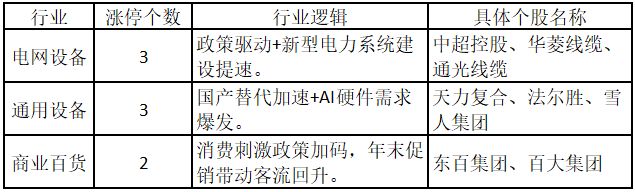
Market Overview - The Shanghai Composite Index closed down by 0.70%, and the Shenzhen Component Index fell by 1.27% with a median decline of 1.77% in A-shares [1][2] - A total of 34 stocks hit the daily limit up, a decrease of 23 from the previous day, while 19 stocks hit the limit down, an increase of 16 [2] Sector Characteristics - The sectors with the most limit-up stocks included power grid equipment, general equipment, and commercial retail [3][4] - The aerospace sector had the highest number of limit-up stocks, indicating strong market interest [5] Conceptual Characteristics - The most popular concepts among limit-up stocks were aerospace, consumer goods, and optical communication [5] - The aerospace sector saw 8 limit-up stocks, driven by policy support and accelerated domestic substitution [5] Limit-Up Stocks - Four stocks reached historical highs, indicating strong market momentum: Yongding Co., Yaxiang Integration, Dongbai Group, and Tianli Composite [6] - Eleven stocks reached near one-year highs, suggesting significant breakthroughs in their price trends [6] Main Capital Inflows - The top five stocks by net capital inflow included Jin Feng Technology, Yongding Co., Xue Ren Group, Galaxy Electronics, and Putian Technology [8] - Stocks with the highest net capital inflow as a percentage of market value included Chicheng Co., Xue Ren Group, and Galaxy Electronics, indicating strong market interest [9] Limit-Up Stock Funding - The top five stocks by limit-up funding included Nandu Property, Zhongyao Holdings, Xue Ren Group, Yongding Co., and Hualing Cable [10] - Stocks with multiple consecutive limit-ups included Dongbai Group, Anni Co., and Zai Sheng Technology, indicating strong investor interest [11]
中科宇航将9颗卫星送入轨道
Bei Jing Shang Bao· 2025-12-11 07:48
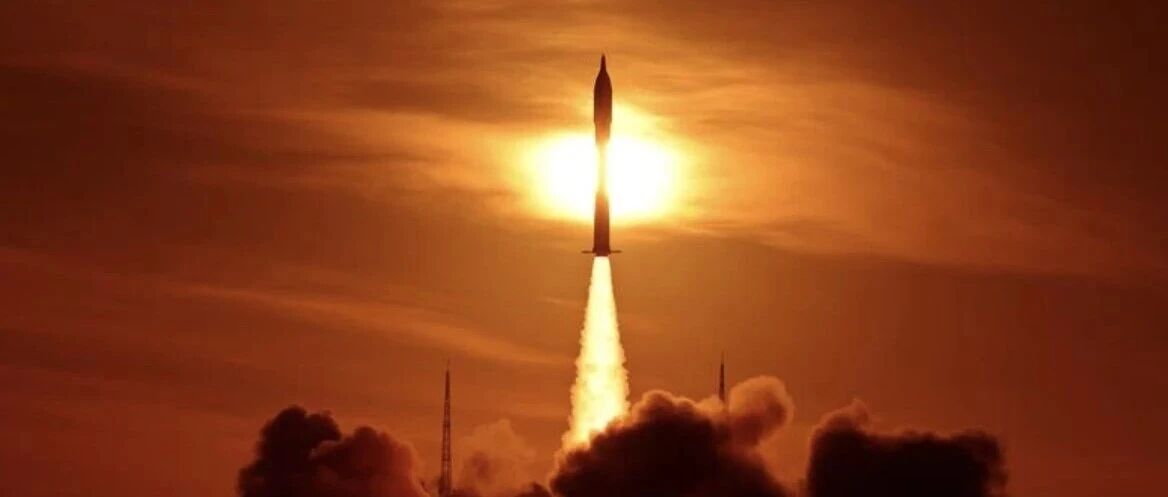
Core Viewpoint - Zhongke Aerospace successfully launched the "Li Jian No. 1" rocket, delivering nine satellites into orbit, marking a significant milestone in the commercialization of space launch services [1] Group 1: Launch Details - The "Li Jian No. 1" rocket launched on December 10 at 12:03 PM from the Dongfeng Commercial Aerospace Innovation Test Zone [1] - The mission utilized a "one rocket, nine satellites" approach, successfully placing satellites for various applications including urban planning, disaster reduction, and meteorology [1] Group 2: Operational Milestones - This launch represents the eleventh flight of the "Li Jian No. 1" rocket, entering a mature phase characterized by large-scale production, batch delivery, and regular operations [1] - The rocket has achieved a total of 84 satellites launched into space, with a cumulative payload mass exceeding 11 tons [1] Group 3: Market Position and Strategy - The company has established a virtuous cycle of "high-reliability launches—large-scale orders—industry chain collaboration," aiming to reduce costs through technological innovation and industry synergy [1] - The "Li Jian No. 1" rocket maintains the highest market share in the commercial rocket launch service sector due to its cost-effectiveness, reliability, and strong performance capabilities [1]